Showing posts with label Wagner. Show all posts

Sunday, January 28, 2024

Gundula Janowitz had a way of
fooling us with music it didn't seem she ought to be singing

SUNDAY BONUS UPDATE: I thought we might add one more of Tove's Gurre songs -- see below. -- Ken

THIS, CLEARLY, IS SOMETHING G.J. WAS BORN TO SING --

"Ich weiss, dass mein Erlöser lebet, und dass er erscheint am letzten Tage dieser Erd'. Wenn Verwesung mir gleich drohet, wird dies mein Auge Gott doch sehn." -- Hib 19:25-26
"Ich weiss, dass mein Erlöser lebet: Denn Christ ist erstanden von dem Tod, der Erstling derer, die schlafen." -- I Korinther 15:20

"I know that my redeemer liveth, and that He shall stand at the latter day upon the earth. And tho' worms destroy this body, yet in my flesh shall I see God." -- Job 19:25-26
"I know that my Redeemer liveth: For now is Christ risen from the dead, the first fruits of them that sleep." -- I Corinthians 15:20

Gundula Janowitz, soprano; Munich Bach Orchestra, Karl Richter, cond. DG, recorded in the Herkulessaal of the Residenz, June 12-28, 1964

by Ken

Further to last week's post ("Before we take our closer look at Gurre-Lieder, I want to think about two performers who make one performance a special case"): Yes, I suppose the above is essentially the first aural image that comes to mind when I think of Gundula Janowitz: purity of expression in a lyric soprano of narrow tonal range but almost unearthly beauty.
For those unfamiliar with Karl Richter's German-language Messiah recording, which DG emphatically did not put out on its "authentic" early-music "Archiv" label, I've always loved it. I know Richter is regarded almost as an enemy by latter-day Pure-Authentic Baroquians. For me, however, what he was was a great musician, whose greatness not surprisingly reached its peak, just as the Baroque era did, in the music of Bach and Handel. Richter made a later Messiah recording in English -- in London, in 1972 -- which DG didn't put out on Archiv either. I like that version too, but Richter's Messias with his Munich Bach cohorts remains special for me, not least for its solo quartet, which we might think of as simply a DG "house cast": in addition to Janowitz, Marga Höffgen, Ernst Häfliger, and Franz Crass. But in the grand scheme of things, goodness, what a lineup!
If the Janowitz of "Ich weiss, dass mein Erlöser lebet" might be thought of as her "essential" vocal self, we already heard it represented in last week's short version of the rapt moment she made -- in a live Vienna State Opera performance, remember -- of the minuscule but highly exposed (to put it mildly; it's unaccompanied!) role of the Young Shepherd in Act I of Wagner's Tannhäuser, at the moment of the scene change from the fleshly pleasures of the Venusberg to the late-spring radiance of the Wartburg valley.

It just so happens that I also made a clip of a fuller version of this prime Wagnerian scene-change coup de théâtre -- which will now encompass the entire role of the Shepherd.

Monday, January 22, 2024

Before we take our closer look at Gurre-Lieder, I want to think about two performers who make one performance a special case

The ruins of Gurre Castle (as of 2007), in the far northeast of Denmark (on the map Gurre looks like a stone's throw across the water from Sweden) where King Valdemar I is supposed to have tucked away his beautiful, dearly beloved mistress Tove -- until, well, thereupon hangs a tale.

Which we'll get to. Just maybe not right away.


So it begins --


Bavarian Radio Symphony Orchestra, Rafael Kubelik, cond. DG, recorded live in the Kongress-Saal of the Deutsches Museum, Munich, March 9-12, 1965

Staatskapelle Dresden, Giuseppe Sinopoli, cond. Teldec, recorded live in the Semper Oper, August 1995

Bergen Philharmonic Orchestra, Andrew Litton, cond. Live performance from Grieg Hall, in the Bergen International Festival, June 4, 2008

Vienna Symphony Orchestra, Josef Krips, cond. Live performance from the Vienna Festival, in the Vienna Konzerthaus, June 10, 1969

In time, these Gurre-Lieder, or Songs of Gurre, come to Tove's declaration, "Nun sag' ich dir zum ersten Mal, 'König Volmer, ich liebe dich'" (replaying the performances we've already heard) --
Now I say to you for the first time, "King Volmer, I love you."
Now I kiss you for the first time, and fling my arms around you.
And if you were to say I had earlier said it
and ever given you my kiss,
then I say, "The king is a fool,
who recalls vague rubbish."
And if you say, "Indeed I am such a fool,"
then I'll say, "The king is right."
But if you say, "No, I'm not that,"
Then I'll say, "The king is bad."
For I have kissed all my roses to death,
all the while I was thinking of you.

Gundula Janowitz (s), Tove; Vienna Symphony Orchestra, Josef Krips, cond. Live performance from the Vienna Festival, in the Vienna Konzerthaus, June 10, 1969

Jessye Norman (s), Tove; Boston Symphony Orchestra, Seiji Ozawa, cond. Philips, recorded live in Symphony Hall, April 1979

by Ken

Believe it or not, we're making progress, even if it's of a kind of sidewise sort. I remember there was a plan to illustrate the special qualities I hear in the conducting of Josef Krips (1902-1974), which at the time seemed to require nothing more than plucking an abundance of for-instances out of the Sunday Classics Archive. I'm not so good at just-plucking-out, however, and as soon as I started, the project began to grow and shift, especially when I found myself taking a better listen than I have before to a performance I've owned for ages: Krips's 1969 Vienna Festival rendering of Arnold Schoenberg's monumental cantata-oratorio-or-whatever (I'm not aware of a term that begins to cover it), Gurre-Lieder.

At that point it seemed necessary to pause the Krips quick-tour and spend a jot of time with Gurre-Lieder, one of the most arresting and astonishing musical creations I know. No sooner had I set out on that tack (well, maybe many, many hours of toil after I set out on that tack), I realized that before we got to that, it might be useful for me to explain why that particular performance exerted such a fascination for me. Which meant a closer look at conductor Krips and the singer who incarnated King Waldemar's inamorata Tove, which is to say the soprano Gundula Janowitz (born 1937).

Again, I first thought this could be accomplished easily and painlessly by a simple raid of the archives. And probably it could have. But again, my mind doesn't work that way. Soon enough I was back at work crafting whole new sets of audio clips and puzzling out a navigable path through them. And in just a moment we're going to partake of a teasing taste of G.J.


BUT FIRST, BACK TO THE BEGINNING -- OF GURRE-LIEDER

Sunday, December 10, 2023

Josef Krips's Requiem

INTERIM UPDATE (Monday afternoon): I've begun raiding the SC Archive for the promised Krips music files, which should have been just a copy-and-paste job, in itself way more laborious and persnickety than it sounds (I can't help rethinking things), and totally stalled when I came to Schoenberg's Gurre-Lieder. I've wound up not just remaking the three existing clips from Part I -- to ensure contextually fuller lead-ins and lead-outs (in some cases overlapping them), and while I was at it resampling them at a higher rate -- but in addition making a new and larger clip: the climax of Part I, with Christa Ludwig singing the transfixing "Song of the Wood-Dove."

That's still a work in progress, but I have added some music: (a) the start of the Meistersinger performance from which we were already hearing the start of Act III, and also the scene change in Act III, and (b) our first Mozart: as full-throated and open-hearted a performance as I've heard of the Marriage of Figaro Overture.
-- Ken


Maestro Krips (1902-1974)

MOZART: Requiem, K. 626:
i. Introitus: Requiem aeternam


Lucia Popp, soprano; Margaret Lilowa, mezzo-soprano; Anton Dermota, tenor; Walter Berry, bass-baritone; Vienna Singverein, Vienna Philharmonic, Josef Krips, cond. Live perforamnce from the Musikverein, Dec. 13, 1973
[Note: FWIW, this isn't the CRQ edition.]

by Ken

Sorry about the long silence. But even as I was reconciling myself to yet another week's failure to bring to completion my latest brainstorm for a publishable post, I clicked through a link to a "New release from CRQ Editions," which describes itself as "a specialist label devoted to the re-release of unusual out-of-copyright recordings which are of interest to collectors world-wide," available via "Streaming + Download," which "includes unlimited streaming via the free Bandcamp app, plus high-quality download in MP3, FLAC and more." The "unusual out-of-copyright recordings," include both out-of-copyright commercial recordings and live peformances, often never-previously-released ones.

From CRQ I've bought a download of long-OP Sibelius by Alexander Gibson, as a result of which I'm on their e-mail list, and since then I've been motivated a number of times by notices of new releases to learn my way a bit around their website -- enough to know that the page for each release includes, along with lots of other information, a complete list of tracks with "play" icons, and I've been under the impression that clicking "play" for Track 1 enabled me to hear for free not just Track 1, as I would have expected, but the whole blessed release.

Recalling this, I decided that -- even as I had other important matters to tend to, like sealing the lid on yet another failed-to-post Sunday -- I just had to click through to find out more about:
CRQ 591 JOSEF KRIPS: THE FINAL PERFORMANCE: MOZART REQUIEM: VIENNA 13 12 1973
As long-time readers may recall, I have a special affection for Krips (see, for example, the March 2013 post "Our 'J' and 'K' conductors shine in Mozart's Don Giovanni and Così fan tutte" (the other "J" and "K" conductors, fyi, were Eugen Jochum and Rudolf Kempe), who despite (or maybe because of?) a life marked with serious hardships, had an innate kindness, geniality, and generosity that often lifted his performances to a special realm, and if there's any composer whose music thrives on such qualities, it's Mozart. Krips's now-ancient Decca recording of Don Giovanni is still the performance that more than any other I've encountered (in a substantial lifetime of Don Giovanni encounters) embodied the full dimension of this centerpiece of our musical heritage, including its celebration of the power of human interconnectedness.


SO THERE I WAS, ON THE CRQ 591 WEB PAGE --

Sunday, April 17, 2022

Quite right, Sir Georg: We'll need to hear not just Haydn's orchestral depiction of "pre-Creation" chaos but the "breathtaking" explosion when suddenly "there was light!"

[PLUS: Some serial aural remembrances of Kurt Moll]

[MONDAY EVENING UPDATE: Now with various sorts of upgrading, to bring the post a tiny bit closer to what I'd hoped to make -- notably fleshing out the section of Moll archival clips, with English text added, along with minimal comments and some non-Moll performances]

CHORUS: "Und es ward licht!" ("And there was light!")
[from "The First Day," in Part I of Haydn's Creation]

"I can think of no other work by any composer in which a single chord comes as such a surprise." -- Georg Solti (see below)

Bavarian Radio Chorus and Symphony Orchestra, Leonard Bernstein, cond. DG, recorded live in the Herkulessaal of the Residenz, Munich, June 1986

Stockholm Radio Chorus, Stockholm Chamber Chorus, Berlin Philharmonic, James Levine, cond. DG, recorded in the Jesus-Christus-Kirche, December 1987

Chicago Symphony Chorus and Orchestra, Sir Georg Solti, cond. Decca, recorded live in Orchestra Hall, Oct. 29-30 & Nov. 2, 1993

"A personal note by Sir Georg Solti" -- from the CD booklet for his 1993 re-recording of Haydn's Creation

The older I get, the more deeply I love the genius of Haydn, especially his two late oratorio masterpieces, The Creation and The Seasons.
In re-recording The Creation, I was struck by the incredible modernity as well as the startling originiality of so much of the score. To mention just two examples: the opening "Representation of Chaos," with music that so poignantly symbolizes the emptiness and hopelessness before creation; and, immediately thereafter, the breathtaking C major of "Light." I can think of no other work by any composer in which a single chord comes as such a surprise. How completely I can understand the reactions at the first public performance, as my friend Robbins Landon so well describes in his article [a reprint in the CD booklet of a long, wide-ranging background piece by the great Haydn scholar H. C. Robbins Landon].

I was joined in my excitement and passion for this work by all my colleagues, soloists, orchestra and chorus alike. Rarely can I recall such exuberant joy and sheer enchantment as we shared during these Chicago concerts. I hope this will come across to the listener.


[Note: In the first paragraph I've taken the shocking liberty of reversing the order of Sir Georg's reference to the great late-Haydn oratorios, so that The Creation comes before The Seasons, as they did in real life. Is it possible that an editor suggested this to him c1994? I don't think so; I think he'd not only have approved but been grateful. Now I'm afraid it's too late to ask. -- Ed.]
by Ken

I was surprised how moved I was re-encountering this "personal note" from Georg Solti (1912-1997) about his experience re-recording Haydn's Creation -- days after his 81st birthday. In that late period of his life he memorably re-recorded a number of big vocal works that were clearly close to his heart, some of which had gone just fine in his earlier efforts -- I think in particular of Mozart's Così fan tutte and Magic Flute and Verdi's Falstaff; the latter two, notably if possibly coincidentally, are works that as a fledgling conductor in the 1930s he had helped Arturo Toscanini prepare at Salzburg) -- and others, at least to me, not so fine, like Mozart's Don Giovanni, Wagner's Meistersinger, Verdi's Otello -- and The Creation. (Among those happy late-life "big works" recording projects we should note as well Sir Georg's companion recording, this one his first ever, of Haydn's final "big work," The Seasons.)

What's so moving about Solti's Creation note is that it rings so true. "The older I get, the more deeply I love" declarations are so common as to be commonplace as applied to, say, Mozart, but Haydn [seen here as sculpted on the Frieze of Parnassus, encircling the base of London's Albert Memorial -- from the blog London Remembers], not so much. In fact, real imaginative identification with Haydn isn't common at all. A lot of performers you sense approach Haydn's music as kind of like Mozart's only not quite -- an approach that hardly ever works. We can talk about this more after we've heard today's Creation clips.

For those who weren't here for yesterday's preview post ("I won't go out on a limb and say this is the most beautiful bass voice I've ever heard, or this the most beautiful minute-and-a-half of singing. Then again --"), the explosions of light we "heard" above are from the same recordings of The Creation I teased therein, offering their accounts of the remarkable hushed lines uttered by the angel Raphael -- the first singing heard in the oratorio, Haydn's setting of some of the most famous words in the human record, the opening of the Book of Genesis.

The plan for today, in addition to filling in the somehow-missing performer identifications (notably of the bass soloists), was to fill in Haydn's introductory orchestral depiction of the chaos out of which the world would be created. Now in addition, inspired by Sir Georg's personal note, I've realized we also have to continue on a few extra minutes, to hear God conjure up light. I've remade the ready-made audio clips accordingly.

Sunday, March 20, 2022

Preview: Fricka vs. Wotan --
The final confrontation*

*When we get to the main post, you'll see that we can maybe think of this as "Part 1a" of our Josephine Veasey remembrance.

Or: How Fricka & Wotan get from "Example 1" --


to "Example 2" --


Both clips: Berlin Philharmonic, Herbert von Karajan, cond. DG (1966)

by Ken

In a moment we're going to hear fuller versions of the above "examples," and in multiple performances. First I should explain, though, that (ever so unusually!) we're encountering a mild detour. I thought we would be continuing with the remembrance, begun two weeks ago, of the fondly remembered English mezzo Josephine Veasey (tentatively labeled "Part 1?"), and I've been pondering some intereting repertory. What I should have realized is that the chances were never great that we might tiptoe past the great Fricka-Wotan scene of Act II of Die Walküre with just a polite wave. Sure enough, I got sucked in.

Some of it had to do with the curious moment in time we stumbled into with the Covent Garden Walküre we sampled, from late September 1965, in which Veasey sang Fricka with Georg Solti conducting, as he was weeks away from heading to Vienna to complete the Ring recording, the first ever, with Walküre, with Christa Ludwig as Fricka, even as Herbert von Karajan was preparing to being the second-ever Ring recording the following year with, of all things, Walküre -- and with, of all people, Josephine Veasey as Fricka both in Walküre and, the following year, Das Rheingold. Meanwhile, when Karajan actually launched Ring stage production, in 1967 at the brand-new Salzburg Easter Festival (engineered by guess-who), the Fricka of the broadcast was not Veasey but Ludwig, who was also Karajan's Fricka when he brought the Salzburg Walküre production to the Met that fall! So I've been rooting around among this material, trying to hear what there is to hear.

Some of this we're going to hear in this week's main post, currently in production -- along with some of the other material I've retrieved from the Sunday Classics Archive, I mentioned in last week's under-construction post. Plus, I actually wound up typing out an English text for the whole Fricka-Wotan scene, which again has entailed all manner of complications -- and opportunities.


FOR NOW LET'S JUST HEAR OUR ASSORTED TAKES
ON THAT FULLER VERSION OF EXAMPLES 1 AND 2


Monday, March 14, 2022

Raiding the archive for sounds
of Fricka and Wotan from Die Walküre [Caution: Post under construction -- step carefully!]

Mark Delevan and Stephanie Blythe as Wotan and Fricka at the Met
[Ruby Washington/New York Times]

IN CASE YOU HAVEN'T FIGURED THIS OUT --
I haven't quite figured out yet just what to make of all this, or how to make it. But I reached the point, as often happens in the making of these posts, where I needed to be able to hear the audio clips that were piling up -- all having to do, obviously, with the great confrontation between Fricka and Wotan in Scene 1 of Act II of Die Walküre, which we stumbled into last week in Part 1 of a remembrance of the fine English mezzo-soprano Josephine Veasey. I should have known better than to think that I could get by with just a passing wave at this scene, which I've written about in one form or another, in one place or another, a heckuva lot over the many years I've been living with it.

One thing that happened since I put that post up was that I took a peek in the Sunday Classics Archive to see what was already stockpiled there, and hardly surprisingly found a bunch, some of which you can hear here (everything that's in place as of now except the performances of the complete Fricka-Wotan scene). Another thing that happened, while I was trying to focus in on Veasey's Fricka, which I've admired (on records only, I should specify) since the Karajan-DG Walküre was released. -- Ken


WAGNER: Die Walküre: Act II, Scene 1,
from the Fricka-Wotan scene:
from Fricka, "Wo in Bergen du dich birgst"
("Here in the mountains, where you hide")

On the rocky pass, as the raging FRICKA, after leaping from her chariot drawn by rams, nears WOTAN, she moderates her pace and approaches him in a dignified manner.

FRICKA: Here in the mountains, where you hide
in order to escape your wife's eye,
here in solitude
I seek you out,
that you may promise me help.
WOTAN: What it is that troubles Fricka
let her freely tell.
FRICKA: I have learned of Hunding's distress;
he called on me for vengeance:
the guardian of wedlock
heard him
and promised to punish
with severity the deed
of the shameless impious pair
who so boldly wronged the husband.

Irene Dalis (ms), Fricka; Otto Edelmann (bs-b), Wotan; Metropolitan Opera Orchestra, Erich Leinsdorf, cond. Live performance, Dec. 23 1961

Mignon Dunn (ms), Fricka; Donald McIntyre (bs-b), Wotan; Metropolitan Opera Orchestra, Sixten Ehrling, cond. Live performance, Mar. 1 1975

Christa Ludwig (ms), Fricka; James Morris (bs-b), Wotan; Metropolitan Opera Orchestra, James Levine, cond. DG, recorded in Manhattan Center, April 1987

Yvonne Minton (ms), Fricka; Theo Adam (bs-b), Wotan; Staatskapelle Dresden, Marek Janowski, cond. Eurodisc-BMG, recorded in the Lukaskirche, Aug. 22-29, 1981

Sunday, March 6, 2022

Josephine Veasey (1930-2022) [part 1?]

TUESDAY UPDATE: The Dido and Aeneas clip was too important to be left sounding so crummy. I swallowed hard and did what had to be done to upgrade it. I feel better. -- K
FOLLOW-UP UPDATE: The promised synopsis of the Walküre Act II Fricka-Wotan scene, time-cued to our audio clip, is in place, for better or worse (or both). -- K again


The fine London-born mezzo, retired since 1982, died Feb. 22 at 91.
Recit., Dido: Thy hand, Belinda. Darkness shades me;
on thy bosom let me rest.
More I would, but death invades me;
death is now a welcome guest.

Song: When I am laid in earth,
may my wrongs create
no trouble in thy breast.
When I am laid in earth, &c.
Remember me, remember me, but ah! forget my fate.
Remember me, but ah! forget my fate. &c.
-- libretto by Nahum Tate, based on Book IV of Virgil's Aeneid

["When I am laid in earth" at 1:04]
Josephine Veasey (ms), Dido; John Constable, harpsichord; Academy of St. Martin in the Fields, Colin Davis, cond. Philips-Pentatone, recorded in Walthamstow Assembly Hall, Aug. 5-8, 1970
[TUESDAY UPDATE: The new clip sounds swell, I think. Phew! -- Ed.]

by Ken

If you've listened to the clip of the not-quite-conclusion (the chorus still has some obligatory moaning to do) of Purcell's amazingly concise opera Dido and Aeneas, I'm thinking there's not much chance you'll forget Josephine Veasey. With that generous midrange vocal weight (and the needed upward reach too), not something we necessarily expect in a Purcell Dido, she makes those "Remember me"s pretty unforgettable.

The thing is, for anyone who had significant experience of her singing, there wasn't much chance she was going to be forgotten, thanks to the generous aural documentation of her fine 30-year career -- her significant body of commercial recordings supplemented by an array of good-quality live-performance material. She's never been out of my "listening rotation." As it happens, I'd just recently been resampling with undiminished pleasure her Béatrice in the first-ever recording of Berlioz's opera Béatrice et Bénédict. (Don't worry. Though we've heard the clip of Béatrice's heart-rending -- but ultimately inspiring -- Act II monologue before, we're going to be hearing it again momentarily.)


SOME COMMEMORATIVE ROADS NOT TAKEN

I hope the Dido excerpt isn't too "on the nose" for a "remembrance" piece, though I like to think she wouldn't mind being remembered for such classy piece of singing. Initially, as I thought about this piece, I expected it to open with a taste of her Fricka, specifically the Walküre Fricka. As longtime readers may recall, I'm a big fan of her Fricka, and we've heard samples of the very different Rheingold and Walküre roles, one of the unalloyed casting successes of the Karajan-DG Ring cycle. Again, don't worry, we're still going to hear that -- and not from the Karajan recording. In fact, we're going to hear a complete performance of the great Fricka-Wotan scene of Act II of Die Walküre, with the conductor most responsible for grooming her as a legit Wagnerian.

Alternatively, we could have opened with a different Wagner excerpt, if only for the sheer beauty of the singing, though with Veasey, at least in my hearing experience, "characterfulness" was never a separate thing from vocal production.


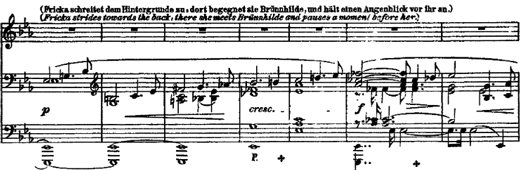
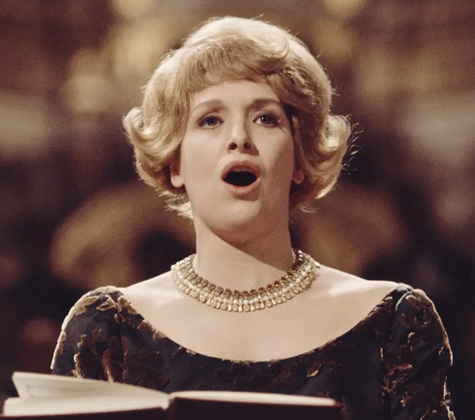
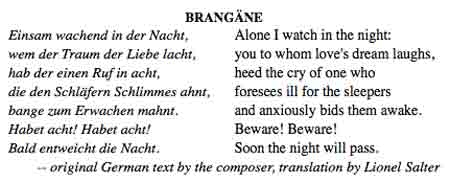
Josephine Veasey (ms), Brangäne; BBC Symphony Orchestra, Colin Davis, cond. Recorded for broadcast, 1969

Sunday, October 31, 2021

Bernard Haitink (1929-2021),
part 1

1st Addition: Finale of the Beethoven Ninth Symphony (added at the end)
2nd Addition: the Adagio of the Shostakovich Seventh Symphony, plus texts for the Siegfried scene (now moved toward the end of the post) and for the Mahler songs -- and, oh yes, some blocks of text.
Final Addition: Note the "part 1" now appended to the post title. Rather than continue stuffing more stuff into this post, I decided it makes more sense to spin it off into a separate post. Prime exhibit: what we might call -- if we were the sort of person who was inclined to think in such terms -- "Haitink vs. Jochum, in Mahler and Bruckner." Of course it's not really a competition (and so, as Dave Letterman used to say, "No wagering!"). Nevertheless, the careers of these two important conductors, of decidedly different generations, intersected importantly in Amsterdam in the early 1960s. Among the exhibits (and helping plug the Bruckner gap so troubling in part 1 of this post): the Adagio from Haitink's first and last recordings, from September 1966 and June 2019, thus more than half a century apart, of the Bruckner Seventh Symphony.
Wait, One Post-Final Addition: a block of text explaining the inclusion of the Beethoven Ninth finale.

Now, back to business --


FIRST, SOME QUICK MUSICAL IMPRESSIONS OF B.H.

Haitink, who turned 92 in March, remained active up to the end [well, not quite the end; I note that he did a round of "farewell" performances in 2019 -- Ed.], and is reported to have died peacefully in his sleep on the 21st of this month. Not a fancy or excess-prone conductor, but a committed and sincerely musical one -- it was a heckuva career.

HANDEL: Music for the Royal Fireworks:
i. Ouverture


Concertgebouw Orchestra (Amsterdam), Bernard Haitink, cond. Philips, recorded in the Concertgebouw, c1962

BRAHMS: Double Concerto in A minor, Op. 102:
ii. Andante


Henryk Szeryng, violin; János Starker, cello; Concertgebouw Orchestra (Amsterdam), Bernard Haitink, cond. Philips, recorded in the Concertgebouw, September 1970

SHOSTAKOVICH: The Age of Gold (ballet suite), Op. 22a:
iii. Polka: Allegretto


London Philharmonic Orchestra, Bernard Haitink, cond. Decca, recorded in Kingsway Hall, November 1979

SHOSTAKOVICH: Symphony No. 6 in B minor, Op. 54:
iii. Presto


Concertgebouw Orchestra (Amsterdam), Bernard Haitink, cond. Decca, recorded in the Concertgebouw, December 1983
[NOTE: For those unfamiliar with the strange musical beast that is Shostakovich 6, it begins with a fairly long and quite lovely Largo -- worthy of Mahler, who has to have been on Shostakovich's mind -- and then dashes into a startlingly goofy Allegro that segues into this giddy, dare I say foot-stomping Presto, about the last thing we could have seen coming from that opening Largo. AFTERTHOUGHT: I'm thinking we ought to spend some time with Shostakovich 6, perhaps with some hindsight-driven wonder at its position in the otherworldly sequence of Shostakovich's Sixth through Ninth Symphonies.]

by Ken

After I'd been thinking for a while as to what music might go into a proper Haitink memorial, I thought I'd just take a peek in the DWT Archive. I had no idea how much there is there, so at this preliminary stage, before I've given much thought to making this a proper Haitink memorial post, I thought we might just listen to a small portion of music we've already heard from him, starting with another Brahms concerto slow movement, hearing how he adjusts to noticeably different sorts of soloist -- note how he's a little more assertive with Brendel, more supportive with the more self-starting Arrau (with whom, we might recall, Haitink had already recorded a cycle of the five Beethoven piano concertos).

BRAHMS: Piano Concerto No. 2 in B-flat, Op. 83:
iii. Andante


Claudio Arrau, piano; Concertgebouw Orchestra (Amsterdam), Bernard Haitink, cond. Philips, recorded in the Concertgebouw, October 1969

Alfred Brendel, piano; Concertgebouw Orchestra (Amsterdam), Bernard Haitink, cond. Philips, recorded in the Concertgebouw, December 1973

And while we're following up on our opening selections, we might look at a very different side of Shostakovich from the jolly music we heard above: the searing Adagio of the Leningrad Symphony. Haitink, we might recall, recorded all 15 Shostakovich symphonies, split between the Concertgebouw and his beloved second orchestra, the London Philharmonic.

SHOSTAKOVICH: Symphony No. 7 in C, Op. 60 (Leningrad):
iii. Adagio


London Philharmonic Orchestra, Bernard Haitink, cond. Decca, recorded in Kingsway Hall, 1979


OF COURSE WE'VE GOT MAHLER . . .

Sunday, December 27, 2020

"Made wise through empathy, the pure fool" -- is Parsifal even more, er, "innocent" than Siegfried?

"Seeking his wife he flew up --
to circle with him over the lake
and gloriously to hallow them both.
"
-- Gurnemanz, deep into Scene 1 of Act I of Parsifal


[We hear first Donald McIntyre, with Reginald Goodall conducting (in 1984), then Hans Hotter, with Hans Knappertsbusch (in 1962). We'll be hearing a bit more of these performances later in the post. Sorry the second clip is so conspicuously louder; I don't know how to adjust that.]
__          __          __          __          __
GURNEMANZ: A blessed radiance emanated from the Grail;
a holy vision clearly spoke to him [i.e., Amfortas]
this message in words of fire:
"Made wise through empathy, the pure fool;
await him, the one I have chosen."
ESQUIRES: "Made wise through empathy, the pure fool --"

Ludwig Weber (bs), Gurnemanz; Elisabeth Rutgers (s), Sieglinde Wagner (ms), Erich Majkut (t), and Hermann Gallos (t), Esquires; Vienna Symphony Orchestra, Rudolf Moralt, cond. Myto, live concert performance, [Oct. 1?] 1948

Franz Crass (bs), Gurnemanz; Elisabeth Schwarzenberg (s), Sieglinde Wagner (ms), R. A.  Hartmann-Griffke (t), and Heinz Zednik (t), Esquires; Bayreuth Festival Orchestra, Eugen Jochum, cond. Live performance, July 24, 1971

Kurt Moll (bs), Gurnemanz; Regina Marheineke (s), Claudia Hellmann (ms), Helmut Holzapfel (t), and Karl-Heinz Eichler (t), Esquires; Bavarian Radio Symphony Orchestra, Rafael Kubelik, cond. Recorded for broadcast, May 1980

Kurt Moll (bs), Gurnemanz; Heidi Grant Murphy (s), Jane Bunnell (ms), Paul Groves (t), and Anthony Laciura (t), Esquires; Metropolitan Opera Orchestra, James Levine, cond. DG, recorded 1991-92

Cesare Siepi (bs), Gurnemanz; Loretta Di Franco (s), Ivanka Myhal (ms), Leo Goeke (t), and Robert Schmorr (t), Esquires; Metropolitan Opera Orchestra, Leopold Ludwig, cond. Live performance, Apr. 3, 1971

by Ken

We'll come back to the very first morsel we heard above, regarding the murdered swan's flight. The bit we just heard immediately above precedes the chunk we heard last week in the second of our pair of post "teases" ("Two case studies in ignorance -- Siegfried and Parsifal" and "Tease 2: Case studies in ignorance -- Siegfried and Parsifal (continued)," from the later stage of the first scene of Act I of Parisal but as part of a larger chunk of this scene from the later stages of the first of the two scenes of Act I of Parsifal. For all the difficulty I've had figuring out how to proceed from those teases, not to mention the amount of menial labor that will go into executing the provisional new roadmap, there was never any question that one thing we would need to do is to backup into this earlier part of the scene, and shortly we're going to hear a fuller context for these crucial lines.

I also realized that I needed to make clearer that labeling Siegfried and Parsifal as "ignorant" isn't meant as any kind of judgment but merely as a statement of fact -- both of our heroes have come to strapping young-manhood without any significant opportunity to learn the basics of life most of us take for granted, learning them as we do from a combination of normal socialization and instruction.


BEFORE WE PROCEED, LET'S HEAR A LITTLE MUSIC
TO HELP GET US INTO A "PARSIFAL FRAME OF MIND"


On this initial pass at this post, the most we'll be able to do is set out the bare bones, to be filled in tonight and tomorrow with more performances, better context, and more comment. And I do think it'll help if we use the pairing of the Prelude to Act I and the "Good Friday Spell" from Act III to orient ears and brains to the Parsifal sound world. The Jochum recording we've heard before; I don't believe we've heard the Bruno Walter one.

Parsifal: Prelude (Act I) and "Good Friday Spell" (Act III)


Bavarian Radio Symphony Orchestra, Eugen Jochum, cond. DG, recorded December 1957

Columbia Symphony Orchestra, Bruno Walter, cond. Columbia-CBS-Sony, recorded Feb. 25, 1959


ANOTHER THING I DIDN'T DO LAST WEEK . . .

Sunday, December 20, 2020

Post tease 2: Case studies in ignorance -- Siegfried and Parsifal (continued)

Gottlob Frick as Gurnemanz -- in 1960, when he was 54; would
you believe the recording we're about to hear was made in 1971-72?
(Later we're also going to hear him from about the time of the photo.)
GURNEMANZ [to PARSIFAL]:
You could murder, here in this holy forest,
where tranquil peace surrounded you?
Did not the woodland beasts tamely come near
and innocently greet you as friends?
What did the birds sing to you from the branches?
What harm did that faithful swan do you?
Seeking his mate, he flew up
to circle with it over the lake
and gloriously to hallow the both.
This did not impress you? It but tempted you
to a wild, childish shot from your bow?
He was pleasing to us; what is he now to you?
Here -- look! -- here you struck him,
the blood still congealing, the wings drooping lifeless,
the snowy plumage stained dark,
the eyes glazed -- do you see his look?
[PARSIFAL has followed GURNEMANZ with growing emotion; now he breaks his bow and hurls his arrows away.]
Now do you appreciate your misdeed?
[PARSIFAL passes his hand over his eyes.]
Say, boy, do you realize your great guilt?
How could you commit this crime?
PARSIFAL: I didn't know.
-- translation by Lionel Salter

Gottlob Frick (bs), Gurnemanz; René Kollo (t), Parsifal; members of the Vienna State Opera Chorus, Vienna Philharmonic, Georg Solti, cond. Decca, recorded 1971-72

by Ken

In the earlier "tease" for this week's post, I noted the connection I typically feel from the difficult-to-conceptualize ignorance of the young Siegfried and that of his Wagnerian comrade-in-arms Parsifal (even if the "arm" in question in the latter's case is a bow and arrows), but without so much as a note of the latter's music. This follow-up tease aims to set that right.

NOTE: On present schedule, look for the main post tomorrow. (I don't rule out the possibility of additions to, or other tamperings with, one or both of the teases.)


NOW WE HAVE A FULLER VERSION OF THIS EXCERPT

Post tease: Two case studies in ignorance -- Siegfried and Parsifal

Siegfried meets Fafner: Oh joy, Fafner's turned into a murderous dragon!

by Ken

One issue that's extensively tested in Wagner's Ring cycle, and that has been quietly bedeviling us in our enquiries, is whether we really know how to deal with innocence: recognizing it, understanding it, coping with it. I thought that at this point, as we're meeting Siegfried at perhaps his most exposed, we needed at least to drag it out into the open -- as it were, outside the opening to the cave where the giant Fafner, since murdering his brother Fasolt at the end of Das Rheingold and taking sole possession of the Nibelung hoard, including the all-power-conferring Ring and the Tarnhelm that enables the wearer to transform into any form desired, has Tarnhelmed into a murderous dragon and taken up solitary (he hopes) residence in a remote deep-forest cave, where he mostly sleeps on top of the hoard, guarding it against any would-be hoard-snatchers.

We're in Act II of Siegfried, earlier in the act than we were last week ("Not just a tease for next week's post: A little birdie told him"), when we heard Siegfried actually hearing and understanding tidings shared by a newsy Woodbird. Those mutually antagonistic lordlings Alberich and Wotan have just met for the first time since the final scene of Das Rheingold, when Wotan stole the Nibelung hoard from Alberich (who is of course "the Nibelung" of The Ring of the Nibelung) and Alberich, powerless to do anything else, placed a curse on the Ring -- as if that order of wealth didn't come with its own built-in curse. Or maybe Alberich was aiming his curse at some kind of certainty of enforcement of the curse implied by acquisition of all that treasure?


IT'S BEEN OCCURRING TO ME THAT THE THEME
OF SIEGFRIED'S HOPELESS IGNORANCE . . .


Sunday, December 6, 2020

On the pleasures of getting lost
in Götterdämmerung: revisiting the path to here, Part 2

SUNDAY 8:30pm UPDATE: After the earlier fillings-in, mostly around the Götterdämmerung and Walküre selections, I've added some Siegfried performance notes, and barring some likely (hoped for?) post cleanup, that should be about it!

OH WAIT! The missing "Norn Scene" audio clip is found -- and is now in place below! It's from the Met, March 1974: the beautiful (and beautifully cast) Götterdämmerung broadcast conducted by Rafael Kubelik during his sadly brief time as music director.

Brünnhilde (Deborah Voigt) has been awakened by Siegfried
(Jay Hunter Morris), at the Met, 2013.
[photo by Ken Howard]
After being kissed by SIEGFRIED, BRÜNNHILDE opens her eyes. SIEGFRIED stands up and stands before her. BRÜNNHILDE slowly rises to a sitting position. She raises her arms in solemn gestures, greeting the heaven and earth that now she sees again.

BRÜNNHILDE: Hail to you, sun! Hail to you, light!
Hail to you, radiant day!
My sleep was long; I am awakened.
Who is the hero who awoke me?
SIEGFRIED [deeply moved by her look and her voice, stands as if rooted to the spot]:
Through the fire I struggled, which blazes around the rock;
I broke you out of your tight helmet;
I am Siegfried, who awakens you.
BRÜNNHILDE [sitting straight up]: Hail to you, gods!
Hail to you, world!
Hail to you, shining earth!
My sleep is at an end.
I am awakened: it is Siegfried who awakens me!
SIEGFRIED [breaks out in ecstasy]:
I bless my mother, giving me birth!
bless the earth that gave me my strength!
Now I behold those eyes,
bright stars which laugh on my joy!
BRÜNNHILDE [overlapping, in impassioned accents]:
I bless your mother, giving you birth!
bless the earth, that gave you your strength.
Your eyes alone could behold me,
my heart to you alone wakes!
[Each remains in radiant, rapt contemplation of the other.]

Deborah Voigt (s), Brünnhilde; Plácido Domingo (t), Siegfried; Orchestra of the Royal Opera House, Covent Garden, Antonio Pappano, cond. EMI, from a Voigt-Domingo Wagner CD recorded January 2000

[kind of scrunched to fit the 78 side] Frida Leider (s), Brünnhilde; Rudolf Laubenthal (t), Siegfried; Berlin State Opera Orchestra, Leo Blech, cond. EMI, recorded Aug. 27, 1927

Kirsten Flagstad (s), Brünnhilde; Lauritz Melchior (t), Siegfried; Metropolitan Opera Orchestra, Artur Bodanzky, cond. Live performance, Jan. 30, 1937

Helen Traubel (s), Brünnhilde; Set Svanholm (t), Siegfried; Metropolitan Opera Orchestra, Fritz Stiedry, cond. Live performance, Feb. 10, 1951

Birgit Nilsson (s), Brünnhilde; Wolfgang Windgassen (t), Siegfried; Bayreuth Festival Orchestra, Karl Böhm, cond. Philips, recorded live, July 1966

by Ken

For a post that flaunts Götterdämmerung in the title -- and doesn't it seem to go on for inches and inches? -- we're going to be hearing precious little of it today. There will be a little, though, coming up in just a moment, as we revisit, in somewhat expanded form, the first two of the three iterations of what we're calling "the 'Awakening' music," from the "Second Day" (Siegfried) and "Third Day" (Götterdämmerung) of Wagner's Ring of the Nibelung.

So no, there won't be any trace this week of the third iteration, which comes so, um, dramatically in the next-to-last scene of Götterdämmerung. We've still got too much ground to cover before we might logically come to it. Nevertheless, even though it wasn't part of my original plan, I'm thinking that maybe we do want to get there at some point, but for sure not this week, or likely even next.

My thinking for this week is that, considering that last week ("On the pleasures of getting lost in Götterdämmerung: revisiting the path to here, Part 1") we were poking around the actual awakening of Brünnhilde, in Scene 3 of Act III of Siegfried, why not start with the awakening itself? And as long as we're awakening her, why not revisit the great succession of Brünnhildes, from Frida Leider to Kirsten Flagstad to Helen Traubel (maybe not unequivocally part of this line of succession, but so close, I think, to rating a place in this line of succession) to Birgit Nilsson?

By the way we're not done with this scene, which is on today's itinerary. But before we come back to it, I thought we might have another reminder of the point we're aiming to get back to, which is the second of the three "Awakening" iterations, in such strikingly altered musical form. Trust Wagner to begin the vastest of his operatic creations in such seemingly understated, and yet such richly detailed, form. And so, without further ado --

WE'RE BACK AT THE START OF GÖTTERDÄMMERUNG, AND NOW (AS PROMISED) WE'RE GOING JUST A BIT DEEPER IN

Sunday, November 29, 2020

On the pleasures of getting lost
in Götterdämmerung: revisiting the path to here, Part 1

Siegfried tries to awaken Brünnhilde
[As SIEGFRIED approaches the sleeper again, he is again filled with tender emotion at the sight of her. He bends over her.]
Sweet and quivering, her lovely mouth.
A gentle gladness charms fear from my heart!
Ah! how enchanting her warm, fragrant breath!
[As if in despair] Awaken! Awaken! Holiest maid!
-- from Siegfried, Act III, Scene 3 (singing translation by
Andrew Porter, used in the Remedios-Goodall performance)

[in English] Alberto Remedios (t), Siegfried; Sadler's Wells Opera Orchestra, Reginald Goodall, cond. EMI-Chandos, recorded live, August 1973

Lauritz Melchior (t), Siegfried; Berlin State Opera Orchestra, Robert Heger, cond. EMI, recorded May 12, 1930

Lauritz Melchior (t), Siegfried; Metropolitan Opera Orchestra, Artur Bodanzky, cond. Live performance, Jan. 30, 1937

Günther Treptow (t), Siegfried; Vienna Symphony Orchestra, Rudolf Moralt, cond. Myto, live recording of a 1949 concert performance of the act

Set Svanholm (t), Siegfried; Orchestra of the Teatro alla Scala, Wilhelm Furtwängler, cond. Live performance, Mar. 23, 1950

Wolfgang Windgassen (t), Siegfried; Bayreuth Festival Orchestra, Karl Böhm, cond. Philips, recorded live, July 1966

Siegfried Jerusalem (t), Siegfried; Bayreuth Festival Orchestra, Daniel Barenboim, cond. Teldec, recorded live, June-July 1992

[Note: We'll be hearing a fuller version of this scene in Part 2 of this post, when we'll talk a little about the performances. Meanwhile, I hope you're storing up your impressions of them! -- Ed.]

by Ken

As I explained in last week's still-unfollowed-up-on "post taste," "This is where we'd really like to start this week, but --," our inquiry into that starkly mysterious and foreboding character Hagen has led us back to the start of Götterdämmerung. Because what precedes in Wagner's Ring cycle is such a vast expanse of meticulously detailed music drama, it can be easy to forget how massive its final leg is in its own right -- at least until we're buckled in for the nearly two-hour expanse of Götterdämmerung's Prologue and Act I.

Götterdämmerung: Prologue: Orchestral prelude


Bavarian State Orchestra, Wolfgang Sawallisch, cond. EMI, recorded live at the Bavarian State Opera, November 1989

This two-minute prelude is the low-keyed and nevertheless magisterial opening of Götterdämmerung, aka Twilight of the Gods, the "Third Day" of The Ring of the Nibelung -- or by normal counting standards the fourth opera, since Wagner counted Das Rheingold, a massive expanse in its own right (running an uninterrupted two and a half to two and three-quarters hours), strictly as a prologue to the three "days" that follow.

What I'm trying to give a feel for is the way Wagner's unique operatic method enables him to create such finely detailed moments -- and there are no moments in the entire expanse of The Ring (let's call it roughly 14-15 hours; even among the handful of recorded Rings I spot-checked there were outliers: Böhm-Bayreuth 1966-67 at the quick end, at 13:39, and Goodall-English National Opera,1973-77, at the gradual end, at 16:03) that aren't finely detailed -- that are nevertheless bound musicodramatically to countless other moments in that vast expanse. In a bit we're going to hear the little Götterdämmerung orchestral prelude again and this time continue on a bit in the Prologue, taking in just a little of the chillingly awesome Norn Scene.

For now, though, let's just note that the music out of which this two-minute orchestral intro is fashioned is what I'm going to call "the 'Awakening' music," the music to which we witness Brünnhilde awakening from her long sleep in the final act of Siegfried, the "Second Day" of The Ring.


AS YOU'VE PROBABLY GATHERED, ONE OF OUR DESTINATIONS
TODAY IS THE "AWAKENING" ITSELF, BUT NOT BEFORE . . .


Sunday, November 15, 2020

"About the Nibelung I recently heard a rumor . . . "

TUESDAY NIGHT UPDATE: Progress is made. We've got the Götterdämmerung Prologue-to-Act I texts in place, and the cleaning up and filling in of the post text has begun.

It all started with Alberich (here, Eric Owens at the Met) and his discovery of the superpower he could enjoy if he managed to get hold of the Rhinegold and shape it into a ring.

by Ken

FIRST, A FEW EXPLANATORY NOTES
(in case you're wondering what the heck this is you're looking at!)

Explanatory Note No. 1: Last week we met the character who for me is one of the most engrossing not just in opera but in any theatrical or for that matter any fictional medium: Hagen, one of the final trio of characters Wagner presents to us in The Ring of the Nibelung, in the company of his half-siblings Gunther and Gutrune. We meet them chatting in their home, the Hall of the Gibichungs, as the curtain rises on Act I of the final installment of The Ring, Götterdämmerung (Twilight of the Gods) -- following, that is, the 40-minute-or-so Prologue, which together will form one of Wagner's super-acts, clocking in at not a whole lot less than two hours.

I pointed out that we were not meeting Hagen at the point of his actual presentation to the audience, though I promised we'd eventually get back to that. Instead we met him at a stunningly personal moment: as he is left alone to sit watch over the hall while Gunther heads off on a mad adventure with their recently arrived guest Siegfried -- a scheme of Hagen's devising, aimed at bringing within his reach the much-sought-after superpower-giving Ring of the Nibelung.


JUST TO REFRESH OUR MEMORIES --

Sunday, November 8, 2020

Ladies and gents, meet Hagen
[in fullest and final(ish) post form]

TUESDAY MORNING (FINAL) UPDATE: I did finally add some extra thumbs-up versions of our chosen scenelet, but this still leaves loads of stuff undone, as summarized in the note at the end.

Let's eavesdrop -- for now just a bit --
on Hagen, left alone with his thoughts


"Hier sitz' ich zur Wacht": William Wildermann as Hagen
"sits watch" over the Hall of the Gibichungs in Seattle, 1975.
You sons of freedom,
joyful companions,
merrily sail on your way!
Though you may scorn me,
you'll serve me soon,
the Nibelung's son.
-- singing translation by Andrew Porter,
used in our English-language recording
[1]

[Suggestion: Dial back the volume on [1]; my source is loud (and noisy).]
[2]

[3]

[4 (in English)]

Patience, Hagen fans! Credits for the performances will appear in due time.

by Ken

Not a "whistle a happy tune" kind of guy is our Hagen.

One of the above performances is very much not like the others, and I'm not thinking about the difference in language between our first performance and the others. I've intentionally omitted identification of the performances so we can focus on the performances themselves, but be assured that eventually they'll be fully identified, when we'll also clarify another, even more obvious trick embedded in the layout of the performances. For now, I'm just curious whether the difference I have in mind will be as obvious to other listeners.

Now, this isn't literally our meeting with Hagen, as might have been assumed from the post title. That occurred roughly 40 minutes earlier in Götterdämmerung, at the start of Act I -- and we need to remember that Act I isn't the start of Götterdämmerung, inseparably attached as it is to the roughly 40-minute Prologue, counting the extraordinary orchestral bridge known as "Siegfried's Rhine Journey," which takes us from the ecstasies of Brünnhilde's sendoff to her beloved Siegfried, as he sets out on his journey on the Rhine, to the more workaday world of the Gibichungs, specifically the king and queen of the Gibichungs, the brother and sister Gunther and Gutrune, and their half-brother (same mother, different fathers) Hagen.

(According to present plan -- and for those of you who are new to these parts, "plans" hereabouts have a way of, er, mutating -- we are eventually going to hear our initial encounter with Hagen.)

Let's hop on the boat with Siegfried for his "Rhine Journey"!

Sunday, November 1, 2020

A closer look at, or anyway listen to, "persondom" at play in Act I of Die Walküre

Furtwängler rehearses with the Vienna Philharmonic on tour in London's Royal Festival Hall, 1948.

by Ken

For all sorts of reasons, this week's sights are set low: We're not going to do much more than cover the same ground we did last week ("If we're aiming to focus on Hunding -- and we are -- then first we need to get him onstage"), the chunk of Act I of Die Walküre from the start of the pounding orchestral prelude through Hunding's reply to Siegmund, with a small tack-on, the stage business as Hunding sends his wife off off to prepare a meal for himself and their uninvited guest, including his startled observation of the physical resemblance between his wife and the stranger, and with two changes of "reference":

* attention-wise, as close consideration as possible of what I described last week as the characters' "persondom," which is to say the way the writing for them connects to our experience of being human, and --

* performance-wise, listening to a set of recordings I've hankered for some time to butt up against one another: the four recorded performances of this seminal act we have by that unique Wagner conductor Wilhelm Furtwängler.

Of course "persondom" is easier to detect in Die Walküre Act I than in much of the rest of The Ring. This doesn't mean it's any less important in the rest of The Ring, as I hope has been clear in the considerable assortment of excerpts we've heard over the years. I'm thinking that maybe if we pay due attention here, it'll be more apparent elsewhere.

(Next week, according to plan, as we finish up with Hunding we're slated to eavesdrop on the chilling and yet riveting Hagen in Götterdämmerung. And you know, it might be interesting at some point to dive into the SC audio archive and, from this perspective of "persondom," revisit the Ring excerpts we've heard. Think of, say, the giants Fasolt and Fafner in Rheingold fighting to get fair payment for their labors, and then fighting with each other, or the Nibelung Mime, arguably the least sympathetic character in The Ring, grappling with his humongous problem in the singularly tormented opening of Siegfried.)


WHAT, FOUR FURTWANGLER RECORDINGS?

Sunday, October 25, 2020

If we're aiming to focus on Hunding -- and we are -- then first we need to get him onstage

BUT FIRST WE'LL NEED TO GET OUR OTHER
WALKÜRE ACT I PRINCIPALS ONSTAGE


The "oil sketch" for Walküre Act I by the Austrian painter
and scenic designer Josef Hoffmann (1831-1904)

Revivified by the drink of water provided by Sieglinde,
Siegmund sings, "Kühlende Labung gab mir der Quell"

SIEGMUND: Cooling relief
the draught has given me;
the burden of my weariness
is lightened;
my courage revives;
my eyes enjoy
the pleasure of sight.
Who is it who has so restored me?

Lauritz Melchior (t), Siegmund; Vienna Philharmonic, Bruno Walter, cond. EMI, recorded June 20-22, 1935

Ramón Vinay (t), Siegmund; Bayreuth Festival Orchestra, Joseph Keilberth, cond. Testament, recorded live, July 25, 1955

Siegfried Jerusalem (t), Siegmund; Staatskapelle Dresden, Marek Janowski, cond. Eurodisc, recorded Aug. 22-29, 1981

Plácido Domingo (t), Siegmund; Bayreuth Festival Orchestra, Giuseppe Sinopoli, cond. Live performance, July 27, 2000

by Ken

Right off the bat you're probably suspicious, and not just because this week's Sunday Classics offering is now slipping out late-ish of a Sunday that's already a full week overdue. You're thinking, "No, wait! If our announced goal is to get Hunding onstage, how come we're listening here to Siegmund?"

A fair question, to which the simple answer is that before we can get Hunding onstage, we've got to get Siegmund onstage -- and, really, Sieglinde as well. Technically speaking we managed in the last post ("Probably next week we'll hear what higher-class singing can mean for even a grim character like Hunding -- this week we've got some other business"). We could read in the stage directions about Siegmund making his appearance, stealing wordlessly into Hunding's house before collapsing by the hearth, but I ended the relevant audio clip just before we would have heard him.

We're going to fix that in a moment, but for now, if you think it would help get us on track -- I mean, to hear a bit of Hunding -- we can do that!


SURE, WE COULD HEAR A BIT OF HUNDING --
WE'LL JUST NEED TO JUMP AHEAD IN ACT I


Sunday, October 11, 2020

Probably next week we'll hear what higher-class singing can mean for even a grim character like Hunding -- this week we've got some other business

STORMY WEATHER -- AS IF SIEGMUND DIDN'T HAVE ENOUGH
TROUBLES! NO WONDER HE'S SO DESPERATE FOR SHELTER


Inside a dwelling. In the middle stands a mighty ash tree, whose prominent roots spread wide and lose themselves in the ground. The summit of the tree is cut off by a jointed roof, so pierced that the trunk and the boughs branching out on every side pass through it, through openings made exactly to fit. We assume that the top of the tree spreads out above he roof. Around the trunk of the ash, as central point, a room has been constructed. The walls are of rudely hewn wood, here and thre hung with plaited and woven rugs.

In the foreground, right, is a hearth, whose chimney goes up sideways to the roof; behind the hearth is an inner room, like a store room, reached by a few wooden steps. In front of it, half drawn, is a plaited hanging. In the background, an entrance door with a simple wooden latch. Left, the door to an inner chamber, similarly reached by steps. Further forward, on the same side, a table with a broad bench fastened to the wall behind it and wooden stools in front of it.

A short orchestral prelude of violent, stormy character introduces the scene. When the curtain rises,
SIEGMUND from without, hastily opens the main door and enters. It is towards evening; a fierce thunderstorm is just about to die down. For a moment, SIEGMUND keeps his hand on the latch and looks around the room; he seems to be exhausted by tremendous exertions; his raiment and general appearance proclaim him a fugitive. Seeing no one, he closes the door behind him, walks to the hearth, and throws himself down there, exhausted, on a bearskin rug.
-- translation by Andrew Porter
This storm has more menacing weight:

Bayreuth Festival Orchestra, Daniel Barenboim, cond. Teldec, recorded live, June-July 1992
While this storm has more slashing drive:

Cleveland Orchestra, Christoph von Dohnányi, cond. Decca, recorded 1992

by Ken

The above should provide a gentle reminder that coming off last week's post ("Last week I stuck up for Josef Greindl as Wagner's Daland, and this week too, as both Daland and Hunding -- but only up to a point"), we're lodged in Act I of Die Walküre, with particular focus on that shrouded-in-darkness householder Hunding, into whose house we have just slipped, mere minutes in advance of Siegmund. The idea for this week was that we were going to listen closely to Hunding's contributions to the grisly little domestic scene. We're looking to see what singing of real vocal distinction, allied with seriousness of purpose, of course, can add to the character's dimension.


I STILL WANT TO DO THAT -- JUST NOT RIGHT NOW

Monday, September 28, 2020

Here it is: our Garrulous Old Moneygrubbers' Week bonus -- and now it's a double bonus!

THURSDAY UPDATE: The second part of the bonus isn't just ready but now has additional circumventions and digressions.

I tried like heck to find an image that might be taken as somehow relating to a ship's crewman falling asleep while sitting watch. This is as close as I got.

After the worst of the storm in Act I of The Flying Dutchman --
The STEERSMAN, having been left on deck to stand watch while captain Daland and the rest of the crew, exhausted by their exertions coping with the near-fatal storm, rest below deck. He made one more round of the deck, then sat near the rudder. Now he yawns, then rouses himself as sleep comes over him.

Steersman's Song
Through thunder and storm, from distant seas
I draw near, my lass!
Through towering waves, from the south
I am here, my lass!
My lass, were there no south wind,
I could never come to you:
ah, dear south wind, blow once more!
My lass longs for me.
Hoyohe! Halloho! Yoloho! Hoho!
[A wave breaks against the ship, shaking it violently. The STEERSMAN starts up and looks around. Having satisfied himself that no harm has been done, he sits down again and sings, while sleep gradually overcomes him.]
On southern shores, in distant lands,
I have thought of you.
Through storm and sea, from Moorish strands
a gift I have brought for you.
My lass, praise the fair south wind,
for I bring you a golden ring.
Ah, dear south wind, then blow!
My lass would fain have her gift.
Hoyohe! Halloho! Hoyohe! Halloho!

The STEERSMAN struggles with his fatigue and finally falls asleep. The storm begins to rage violently; it grows darker. In the distance appears the ship of the "Flying Dutchman" with blood-red sails and black masts. She rapidly nears the shore, on the side opposite the Norwegian ship; with a fearful crash, she casts anchor. -- DALAND's STEERSMAN starts up from his sleep; without leaving his place he glances hastily at the helm and, reassured that no harm has been done, murmurs the beginning of his song,

My lass, were there no south wind --

and falls asleep again. -- Mute and without making the slightest noise, the spectral crewmen of the DUTCHMAN furl the sails.
-- translation by Lionel Salter

Fritz Wunderlich (t), Steersman; Staatskapelle Berlin, Franz Konwitschny, cond. EMI-Deutsche Schallplatten, recorded 1959

Harald Ek (t), Steersman; Bayreuth Festival Orchestra, Karl Böhm, cond. DG, recorded live, July-Aug. 1971

Ernst Häfliger (t), Steersman; RIAS Symphony Orchestra (Berlin), Ferenc Fricsay, cond. DG, recorded 1952

Uwe Heilmann (t), Steersman; Vienna Philharmonic, Christoph von Dohnányi, cond. Decca, recorded March-Nov. 1991

by Ken

I didn't see how it could be done: to get as close as we got, in this week's post ("Ohmygosh, it's turned into Garrulous Old Moneygrubbers' Week here at Sunday Classics -- or has it?"), to the Steersman's Song in Act I of The Flying Dutchman and not hear the song itself. At any rate, I don't know how to do it. And since, as I mentioned, we had a fine sampling of performances in the Sunday Classics audio archive, I gave up trying to resist.

Actually, we're going to significantly more: something I've long longed to hear. Again, I can't help myself. For now, though, here we are, with the sea captain Daland's little ship anchored offshore after being blown violently off course by a sudden storm that attacked it just as it was within sight of home -- Daland could literally see his house. The little Act I excerpt we heard took us right up to the point of the Steersman is left alone on deck, just as he was about to break into song in an effort to keep himself awake.


READY TO JUMP TO THE SECOND HALF OF OUR BONUS?

Ohmygosh, it's turned into Garrulous Old Moneygrubbers' Week here at Sunday Classics --
or has it?

NOTE: If the audio clips don't all load, try refreshing the post -- more than once if necessary. They're all ready and waiting.

His chance encounter-at-sea with the mysterious -- and rich as all get-out -- Dutchman (Darren Jeffery) gives Daland (Steven Gallop) ideas about his marriageable daughter's future, in Melbourne's 2019 Flying Dutchman.


CAUTIONARY NOTE ABOUT THIS SET OF AUDIO CLIPS: They're all, er, special, in a particular way, and are here for a reason. (Okay, okay: We might call these "Garrulous Old Moneygrubbers' versions.") If your ears and brain are screaming, "Yuck, I can't stand it!," farther down we've got a heap of clips, of both selections, that are special in a way different way. -- Ed.

BEETHOVEN: Fidelio: Act I, Rocco, "Hat man nicht auch Gold beineben" ("If you don't have money too")
[FOR ENGLISH TEXT, SCROLL DOWN IN POST]


Kurt Böhme (bs), Rocco; Vienna Philharmonic, Lorin Maazel, cond. Decca, recorded March 1964

Herbert Alsen (bs), Rocco; Vienna Philharmonic, Wilhelm Furtwängler, cond. Live performance from the Salzburg Festival, Aug. 3, 1948

WAGNER: The Flying Dutchman: Act II, Daland, "Mein Kind, du siehst mich" ("My child, you see me") . . . "Mögst du, mein Kind" ("Might you, my child")
[FOR ENGLISH TEXT, SCROLL DOWN IN POST]


["Mögst du, mein Kind" at 1:43] Josef Greindl (bs), Daland; Annelies Kupper (s), Senta; RIAS Symphony Orchestra (Berlin), Ferenc Fricsay, cond. DG, recorded 1952

["Mögst du, mein Kind" at 1:45] Josef Greindl (bs), Daland; Anja Silja (s), Senta; Bayreuth Festival Orchestra, Wolfgang Sawallisch, cond. Philips, recorded live, August 1961

by Ken

We've got so many balls hanging precariously in the air that I was really hoping we snatch and ground one or two this week. Instead we're tossing up another.

The obvious follow-up to the "post-taste" I offered earlier today (or maybe it was yesterday -- you know, one of those days in there), which included performances of Beethoven's Creatures of Prometheus Overture, would have been something I've had in mind for several weeks, for some point in the future: a look into the mystery of the master's overture-making skills, as reflected in the four specimens he created over that nine-year period for Fidelio, which include two gems and -- yes, I'm going to use the word -- two duds.

First page of the Fidelio Overture
The mystery becomes a little less mysterious when we factor in that, as I pointed out in the post-taste, while by 1805 the 35-year-old Beethoven had already have produced a large body of music of a high level of mastery in a wide variety of genres, as an overture-writer he was still a novice, whereas by 2014, when he sealed the deal with the fourth and final overture for the opera, the one we know as the Fidelio Overture, he was one of music's all-time master overturists. What may be most amazing is that in his second attempt at an operatic overture, as early as 1806, he gave us what may not be a useful operatic curtain-raiser but nevertheless is one of the great masterpieces of music. And then he produced a real dud. Maybe it just goes to show that by and large "easy" wasn't in Beethoven's working vocabulary.

Again, though, this was a subject for the future -- no way it was going to be doable on the spot, even if I curtailed the plan I'd roughed out, which would have included hearing all of the canonical Beethoven overtures.

Similarly, I didn't see any way of jumping from where we are to the lesson of Fidelio.


WHAT WE'RE DOING, THOUGH, ISN'T UNRELATED