Showing posts with label Requiem. Show all posts

Sunday, December 10, 2023

Josef Krips's Requiem

INTERIM UPDATE (Monday afternoon): I've begun raiding the SC Archive for the promised Krips music files, which should have been just a copy-and-paste job, in itself way more laborious and persnickety than it sounds (I can't help rethinking things), and totally stalled when I came to Schoenberg's Gurre-Lieder. I've wound up not just remaking the three existing clips from Part I -- to ensure contextually fuller lead-ins and lead-outs (in some cases overlapping them), and while I was at it resampling them at a higher rate -- but in addition making a new and larger clip: the climax of Part I, with Christa Ludwig singing the transfixing "Song of the Wood-Dove."

That's still a work in progress, but I have added some music: (a) the start of the Meistersinger performance from which we were already hearing the start of Act III, and also the scene change in Act III, and (b) our first Mozart: as full-throated and open-hearted a performance as I've heard of the Marriage of Figaro Overture.
-- Ken


Maestro Krips (1902-1974)

MOZART: Requiem, K. 626:
i. Introitus: Requiem aeternam


Lucia Popp, soprano; Margaret Lilowa, mezzo-soprano; Anton Dermota, tenor; Walter Berry, bass-baritone; Vienna Singverein, Vienna Philharmonic, Josef Krips, cond. Live perforamnce from the Musikverein, Dec. 13, 1973
[Note: FWIW, this isn't the CRQ edition.]

by Ken

Sorry about the long silence. But even as I was reconciling myself to yet another week's failure to bring to completion my latest brainstorm for a publishable post, I clicked through a link to a "New release from CRQ Editions," which describes itself as "a specialist label devoted to the re-release of unusual out-of-copyright recordings which are of interest to collectors world-wide," available via "Streaming + Download," which "includes unlimited streaming via the free Bandcamp app, plus high-quality download in MP3, FLAC and more." The "unusual out-of-copyright recordings," include both out-of-copyright commercial recordings and live peformances, often never-previously-released ones.

From CRQ I've bought a download of long-OP Sibelius by Alexander Gibson, as a result of which I'm on their e-mail list, and since then I've been motivated a number of times by notices of new releases to learn my way a bit around their website -- enough to know that the page for each release includes, along with lots of other information, a complete list of tracks with "play" icons, and I've been under the impression that clicking "play" for Track 1 enabled me to hear for free not just Track 1, as I would have expected, but the whole blessed release.

Recalling this, I decided that -- even as I had other important matters to tend to, like sealing the lid on yet another failed-to-post Sunday -- I just had to click through to find out more about:
CRQ 591 JOSEF KRIPS: THE FINAL PERFORMANCE: MOZART REQUIEM: VIENNA 13 12 1973
As long-time readers may recall, I have a special affection for Krips (see, for example, the March 2013 post "Our 'J' and 'K' conductors shine in Mozart's Don Giovanni and Così fan tutte" (the other "J" and "K" conductors, fyi, were Eugen Jochum and Rudolf Kempe), who despite (or maybe because of?) a life marked with serious hardships, had an innate kindness, geniality, and generosity that often lifted his performances to a special realm, and if there's any composer whose music thrives on such qualities, it's Mozart. Krips's now-ancient Decca recording of Don Giovanni is still the performance that more than any other I've encountered (in a substantial lifetime of Don Giovanni encounters) embodied the full dimension of this centerpiece of our musical heritage, including its celebration of the power of human interconnectedness.


SO THERE I WAS, ON THE CRQ 591 WEB PAGE --

Sunday, March 6, 2022

Josephine Veasey (1930-2022) [part 1?]

TUESDAY UPDATE: The Dido and Aeneas clip was too important to be left sounding so crummy. I swallowed hard and did what had to be done to upgrade it. I feel better. -- K
FOLLOW-UP UPDATE: The promised synopsis of the Walküre Act II Fricka-Wotan scene, time-cued to our audio clip, is in place, for better or worse (or both). -- K again


The fine London-born mezzo, retired since 1982, died Feb. 22 at 91.
Recit., Dido: Thy hand, Belinda. Darkness shades me;
on thy bosom let me rest.
More I would, but death invades me;
death is now a welcome guest.

Song: When I am laid in earth,
may my wrongs create
no trouble in thy breast.
When I am laid in earth, &c.
Remember me, remember me, but ah! forget my fate.
Remember me, but ah! forget my fate. &c.
-- libretto by Nahum Tate, based on Book IV of Virgil's Aeneid

["When I am laid in earth" at 1:04]
Josephine Veasey (ms), Dido; John Constable, harpsichord; Academy of St. Martin in the Fields, Colin Davis, cond. Philips-Pentatone, recorded in Walthamstow Assembly Hall, Aug. 5-8, 1970
[TUESDAY UPDATE: The new clip sounds swell, I think. Phew! -- Ed.]

by Ken

If you've listened to the clip of the not-quite-conclusion (the chorus still has some obligatory moaning to do) of Purcell's amazingly concise opera Dido and Aeneas, I'm thinking there's not much chance you'll forget Josephine Veasey. With that generous midrange vocal weight (and the needed upward reach too), not something we necessarily expect in a Purcell Dido, she makes those "Remember me"s pretty unforgettable.

The thing is, for anyone who had significant experience of her singing, there wasn't much chance she was going to be forgotten, thanks to the generous aural documentation of her fine 30-year career -- her significant body of commercial recordings supplemented by an array of good-quality live-performance material. She's never been out of my "listening rotation." As it happens, I'd just recently been resampling with undiminished pleasure her Béatrice in the first-ever recording of Berlioz's opera Béatrice et Bénédict. (Don't worry. Though we've heard the clip of Béatrice's heart-rending -- but ultimately inspiring -- Act II monologue before, we're going to be hearing it again momentarily.)


SOME COMMEMORATIVE ROADS NOT TAKEN

I hope the Dido excerpt isn't too "on the nose" for a "remembrance" piece, though I like to think she wouldn't mind being remembered for such classy piece of singing. Initially, as I thought about this piece, I expected it to open with a taste of her Fricka, specifically the Walküre Fricka. As longtime readers may recall, I'm a big fan of her Fricka, and we've heard samples of the very different Rheingold and Walküre roles, one of the unalloyed casting successes of the Karajan-DG Ring cycle. Again, don't worry, we're still going to hear that -- and not from the Karajan recording. In fact, we're going to hear a complete performance of the great Fricka-Wotan scene of Act II of Die Walküre, with the conductor most responsible for grooming her as a legit Wagnerian.

Alternatively, we could have opened with a different Wagner excerpt, if only for the sheer beauty of the singing, though with Veasey, at least in my hearing experience, "characterfulness" was never a separate thing from vocal production.


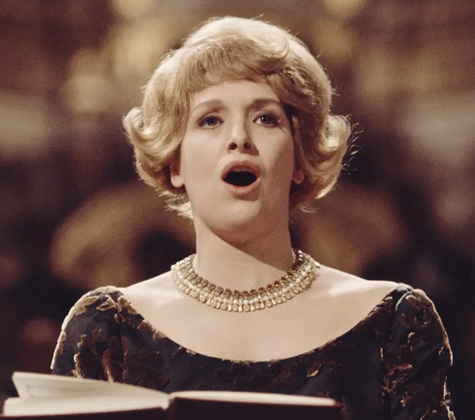
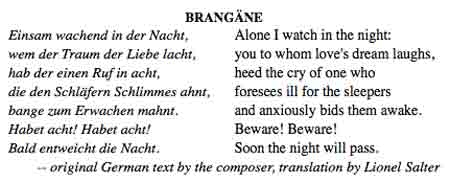
Josephine Veasey (ms), Brangäne; BBC Symphony Orchestra, Colin Davis, cond. Recorded for broadcast, 1969

Sunday, July 26, 2015

Sunday Classics snapshots: Jon Vickers in consolatory, even happy mode

"Froh, froh, wie seine Sonnen fliegen"

Gladly, like the heavenly bodies
which he set on their courses,
through the splendor of the firmament;
thus, brothers, you should run your race,
like a hero going to conquest.

Jon Vickers, tenor; London Symphony Chorus and Orchestra, Pierre Monteux, cond. Westminster-MCA-DG, recorded June 1962

Jon Vickers, tenor; Cleveland Orchestra Chorus, Cleveland Orchestra, Lorin Maazel, cond. CBS/Sony, recorded Oct. 13-15, 1978
-- from the finale of Beethoven's Ninth Symphony

by Ken

Last week I put together, from audio clips we'd already heard over the years, a quick tribute to the late Jon Vickers, and still feel guilty about not including at least English texts for the selections, on the shabby ground that digging them out would have involved too much time and effort. (Well, oo-hoo!) Nobody complained, which is even more discouraging. One of these days I will go back and fix that post.

I led that post off with the above excerpt from the epochal finale of the Beethoven Ninth Symphony, precisely to hear Vickers in a "froh" frame of musical mind, since his greatest musical assumptions, despite moments of triumph, were on the desolate side. Again, we have two versions, one early-ish, the other much later. I thought you might like to hear the complete performances of the finale from which the excerpts are drawn (which we have in fact heard before, so you'll find them at the end.)


NOW FOR SOMETHING PRETTY DIFFERENT

Sunday, April 12, 2015

Sunday Classics snapshots: "Is life a boon?"


Longtime D'Oyly Carte Opera Company principal tenor Thomas Round was not only long gone from the company but, unfortunately, in his late 50s by the time he made the recordings below.
Is life a boon?
If so, it must be befall
that Death, whene'er he call
must call too soon.
Though fourscore year he give,
yet one would wish to live
another moon!
What kind of plaint have I,
who perish in July?
who perish in July?
I might have had to die
perchance in June!
I might have had to die
perchance in June!

Is life a thorn?
Then count it not a whit!
Man is well done with it
soon as he's born.
He should all means essay
to put the plague away,
to put the plague away;
and I, war-worn,
poor captured fugitive,
my life most gladly give.
I might have had to live
another morn!
I might have had to live
another morn!
Revised (standard) version

Thomas Round (t), Col. Fairfax; Gilbert and Sullivan Festival Orchestra, Peter Murray, cond. G and S for All, recorded 1972
Original version

Thomas Round (t), Col. Fairfax; Gilbert and Sullivan Festival Orchestra, Peter Murray, cond. Pearl, recorded in Battersea Town Hall (London), Sept. 12, 1972

by Ken

We'll come back to "Is life a boon?," the song that blossomed from tedium to magnificence when the composer was nudged by his wordsmith partner to start over. But first, let me explain as quickly as possible that it and our other musical snapshot today arise from two convergences:

• While I was waiting for the Museum of the Moving Image screening of Paddy Chayefsky and Delbert Mann's 1957 film The Bachelor Party (an adaptation of their 1953 live-TV version), part of the Matthew Weiner-curated series of films that impacted him in the making of Mad Men, I forced myself to finally finish Ben McGrath's April 13 New Yorker piece on fantasy sports, from which I learned that fantasy sports has pretty well eliminated any connection to the play of sports even as it has exploded all over the place and apparently provided the only reason to live for a lot of people who therefore may be thought to have no reason to live. This was a dangerous convergence because The Bachelor Party depicts a night in the life of five humdrum office mates, where four of them take the fifth out for a bachelor party that unswittingly slipslides into a crossroads that none of them is well-equipped to cope with, at least not without throwing open the question of what meaning or purpose, if any, their lives have.

• And the musical snapshots by that convergence further converged with one of last week's musical snapshots: the tenor's "Ingemisco" from the awesome "Dies irae" of the Verdi Requiem. For me personally, the other peak of Verdi's "Dies irae," the mezzo-soprano's "Liber scriptus proferetur" -- we heard the two together in the April 2011 Sunday Classics post "Verdi blows the lid off the whole Krap Kristian hypocrisy."

So I thought we would just listen again to the three complete performances of the "Liber scriptus" we heard back then -- sung, as I wrote then, by two suitably deep-voiced mezzos (Jard van Nes and Florence Quivar) and a genuine contralto (Lili Chookasian)."(We also heard Ebe Stignani's recording broken into segments.)

VERDI: Requiem: ii. "Dies irae": mezzo-soprano solo, "Liber scriptus proferetur" ("A written book shall be brought forth")
A written book shall be brought forth
in which all is recorded,
whence the world shall be judged.

Therefore, when the Judge shall be seated
nothing shall be held hidden any longer,
no wrong shall remain unpunished.

Jard van Nes (ms); Munich Bach Choir, Frankfurt Singing Academy, Saarbrücken Radio Symphony Orchestra, Hanns-Martin Schneidt, cond. Arte Nova, recorded Oct. 30, 1988

Florence Quivar, mezzo-soprano; Ernst-Senff Chorus, Berlin Philharmonic, Carlo Maria Giulini, cond. DG, recorded April 1989

Lili Chookasian, contralto; Tanglewood Festival Chorus, Boston Symphony Orchestra, Erich Leinsdorf, cond. RCA/BMG, recorded Oct. 5-6 1964, Apr. 5, 1965


KEEP THE "INGEMISCO" AND "LIBER SCRIPTUS" IN MIND

We're going to be coming back to them.


MEANWHILE HERE AGAIN IS "IS LIFE A BOON?"

A song of the splendor of (the second) "Is life a boon?" deserves a comparably magnificent performance, and unfortunately I don't have one of those to offer. Still the closest to me is Leonard Osborn's, which for all the familiar problems of his singing is the performance the not only has plenty of real vocal ring but a goodly helping of dramatic importance. Although as I've said I'm not a great fan of onetime D'Oyly Carte Opera Company principal tenor Derek Oldham, I kind of like both of his recordings, though I'm still bothered by the fake-classy verbal frilliness -- much better controlled, it seems to me, in the 1928 version. I suppose Richard Lewis's recording represents something of a compromise between the two, though you certainly can't say it's beautifully sung.

Which is why I've included the remaining two versions, which are both quite prettily sung but don't seem to me to carry any vocal or emotional weight, and pretty much miss the point of the piece.

GILBERT and SULLIVAN: The Yeomen of the Guard: Act I, Ballad, Col. Fairfax, "Is life a boon?"
Is life a boon?
If so, it must be befall
that Death, whene'er he call
must call too soon.
Though fourscore year he give,
yet one would wish to live
another moon!
What kind of plaint have I,
who perish in July?
who perish in July?
I might have had to die
perchance in June!
I might have had to die
perchance in June!

Is life a thorn?
Then count it not a whit!
Man is well done with it
soon as he's born.
He should all means essay
to put the plague away,
to put the plague away;
and I, war-worn,
poor captured fugitive,
my life most gladly give.
I might have had to live
another morn!
I might have had to live
another morn!

Leonard Osborn (t), Col. Fairfax; New Promenade Orchestra, Isidore Godfrey, cond. Decca, recorded July 18, 1950

Richard Lewis (t), Col. Fairfax; Pro Arte Orchestra, Sir Malcolm Sargent, cond. EMI, recorded Dec. 10-14, 1957

Derek Oldham (t), Col. Fairfax; D'Oyly Carte Opera Orchestra, Malcolm Sargent, cond. EMI, recorded Oct. 29-Dec. 4, 1928 (digital transfer by F. Reeder)

Derek Oldham (t), Col. Fairfax; orchestra, George Byng, cond. EMI, recorded Mar.-Oct. 1920 (digital transfer by F. Reeder)

Philip Potter (t), Col. Fairfax; Royal Philharmonic Orchestra, Sir Malcolm Sargent, cond. Decca, recorded Apr. 5-11, 1964

Kurt Streit (t), Col. Fairfax; Academy of St. Martin in the Fields, Neville Marriner, cond. Philips, recorded May 1992
#

Sunday, April 5, 2015

Sunday Classics snapshots: Comfort ye

Tenor James Johnston's "Comfort ye" recording was an
inspiration to me, but we're still not going to hear it.


"I see the church as a field hospital after battle. It is useless to ask a seriously injured person if he has high cholesterol and about the level of his blood sugars. You have to heal the wounds. Then we can talk about everything else. Heal the wounds."


"Cry unto her that her warfare is accomplished, that her iniquity is pardoned"
Recitative
Comfort ye, comfort ye, my people, saith your God. Speak ye comfortably to Jerusalem, and cry unto her that her warfare is accomplished, that her iniquity is pardoned. The voice of him that crieth in the wilderness: Prepare ye the way of the Lord, make straight in the desert a highway for our God.
Aria
Every valley shall be exalted, and every mountain and hill made low, the crooked straight, and the rough places plain.

Nicolai Gedda, tenor; Philharmonia Orchestra, Otto Klemperer, cond. EMI, recorded 1965

Jon Vickers, tenor; Toronto Symphony Orchestra, Sir Ernest MacMillan, cond. RCA, recorded c1953

Jon Vickers, tenor; Royal Philharmonic Orchestra, Sir Thomas Beecham, cond. RCA, recorded 1959

[in German] Fritz Wunderlich, tenor; Stuttgart Radio Symphony Orchestra, Heinz Mendes, cond. Live performance, Mar. 20, 1959

"Thou who art good and kind, rescue me from everlasting fire"
I groan as one who is accused;
guilt reddens my cheek;
Thy supplicant, Thy supplicant spare, O God.
Thou who absolved Mary,
and harkened to the thief,
and who hast given me hope,
and who hast given me hope.
My prayers are worthless,
but Thou who art good and kind,
rescue me from everlasting fire.
With Thy sheep give me a place,
and from the goats keep me separate,
placing me at Thy right hand.

Nicolai Gedda, tenor; Philharmonia Orchestra, Carlo Maria Giulini, cond. EMI, recorded 1963-64

Jon Vickers, tenor; New Philharmonia Orchestra, Sir John Barbirolli, cond. EMI, recorded April 1970

Fritz Wunderlich, tenor; South German Radio Symphony Orchestra, Helmut Müller-Kray, cond. Live performance, Nov. 2, 1960

by Ken

Last Sunday I offered a post called "Garry Wills, contemplating Pope Francis and his critics, says there are 'two forms of Christianity now on offer' -- and it's up to Catholics to choose" which began with the quote from the pope that I've placed atop this post as well, since it is rather obviously the inspiration for today's pair of musical "snapshots" -- pieces that are both intensely personal to me, and that we've dwelled upon at some length in past posts.

Fresh from the challenge, in the first of these "snapshot" posts, "Rosina I and Rosina II," of finding a singer, namely Victoria de los Angeles, to put in the lead-off slot singing both Rossini's young Rosina (in The Barber of Seville) and Mozart's only slightly older but sadly way more mature Rosina (aka Countess Almaviva in The Marriage of Figaro), I was pleased to come up with our three tenors singing the similarly improbable combo of the opening vocal number of Handel's Messiah and the heart-rending "Ingemisco" from the "Dies Irae" of Verdi's Requiem. We've actually heard all of the above performances of "Comfort ye" and "Ev'ry valley" (and once again I couldn't resist including both Vickers recordings); I just needed to add the Gedda and Vickers "Ingemisco" performances.


OF COURSE WE'RE NOT GOING TO LET IT REST THERE!