Showing posts with label Christa Ludwig. Show all posts

Monday, June 19, 2023

Let's open this book of spells and see if we find a Stanley Drucker "moment" or two lurking inside

Okay, Des Knaben Wunderhorn (The Youth's Magic Horn) isn't really a "book of spells," but the three volumes of wildly diverse German folk poetry were a creative wellspring for Mahler. (Wikipedia can get you up to speed.)


LET'S START OFF WITH WHAT CYNTHIA PHELPS*
MIGHT CALL A STANLEY DRUCKER MAHLER "MOMENT"

*You recall from last week NY Phil principal violist Cynthia P.'s quote at the time Stanley D. retired (2009), at which point they'd been fellow principals since she joined the orchestra in 1992:
"I think the thing I'll miss most about Stanley is his unbelievable creativity, his ability to make a moment anytime he has the opportunity."

OH, ONE MORE THING: As we listen to a pair of performances of one itty-bitty Wunderhorn song setting, just for now I'm not going to identify the performers. For this moment, we can call them, oh, "Team X" and "Team Y."


MAHLER: Songs from "Des Knaben Wunderhorn":
"Lob des hohen Verstandes" ("In Praise of High Intellect")

Once in a deep valley,
a cuckoo and nightingale
struck a wager:
Whoever would sing a masterpiece,
whether he won by art or luck,
he would win the bet.

The cuckoo spoke: "If you consent,
I have chosen a judge."
And he instantly appointed the ass.
"For since he has two large ears,
he can hear all the better,
and know what is right."

Soon they flew before the judge.
When he was told about the matter,
he decreed that they should sing.
The nightingale sang out sweetly!
The ass spoke: "You confuse me!
Hee-haw! Hee-haw!
I can't get it into my head."

Thereupon the cuckoo immediately began
his song with thirds, fourths, and fifths.
It pleased the ass, who said only: "Wait!
I will pronounce your judgment.

"You have sung well, nightingale!
But cuckoo, you sing a true anthem!
And held the beat precisely!
I say that from my great wisdom!
And even if it costs a whole country,
I thus pronounce you the winner."
Cuckoo, cuckoo! Hee-haw!
-- translation by Cecilia H. Porter
Team X

Team Y


by Ken

The song, of course, is one of the dozen free-standing settings Mahler made in his first fully mature years -- roughly the decade 1892-1901 -- from the strange and wonderful, almost indescribably diverse three-volume collection of German folk verse Des Knaben Wunderhorn (The Youth's Magic Horn). (Again, keep the Wikipedia link handy.) "Lob des hohen Verstandes" falls in a category we might call "Wacky-Satirical Plays on Nature," the most familiar of which would be the riverside sermon preached to the wild assortment of fishes by the good St. Anthony of Padua: "Des Antonius von Padua Fischpredigt." We're going to be hearing that too.

Speaking of diversity, our two performances sure embody it, don't they? One thing they have in common is some pretty spiffy clarinet-playing (we'll talk about that later), but even that is different. Obviously one performance is sung by a man and the other by a woman, and just as obviously, one performance is a good deal perkier, if nothing else just plain quicker, than the other, which gives the song a markedly different character, I think. Maybe less obviously, or at least more subjectively, I would venture that one is warmer, more endearing, more user-friendly, though the other is equally, and cherishably, precise in its realization of the wealth of detail Mahler has crafted into both the vocal line and the orchestral setting.


WHICH REMINDS ME: WE CAN ACTUALLY SEPARATE
THE SONG FROM ITS ORCHESTRAL SWADDLING


After all, like Mahler's other Wunderhorn settings, "Lob des hohen Verstandes" was composed first for voice and piano. If we get the orchestras cleared away, making room to wheel in the piano so Team Z can take their places, it'll sound like this:

Team Z


AS I'M SURE YOU'VE FIGURED OUT, TEAM Z . . .

Sunday, October 16, 2022

Just so you know what we're up to: Three familiar larks, a bonus lark, and (oh yes!) Death and a maiden

Alauda (the Eurasian or Oriental skylark)
"[Larks] have more elaborate calls than most birds, and often extravagant songs given in display flight. These melodious sounds (to human ears), combined with a willingness to expand into anthropogenic habitats -- as long as these are not too intensively managed -- have ensured larks a prominent place in literature and music, especially the Skylark in northern Europe and the Crested Lark and Calandra Lark in southern Europe." -- Wikipedia

VAUGHAN WILLIAMS: The Lark Ascending (romance for
violin and orchestra)


Jean Pougnet, violin; London Philharmonic Orchestra, Sir Adrian Boult, cond. EMI, recorded in Abbey Road Studio No. 1, Oct. 21, 1952

Hugh Bean, violin; New Philharmonia Orchestra, Sir Adrian Boult, cond. EMI, recorded in Abbey Road Studio No. 1, Mar. 1, 1967

[NOTE: Sir Adrian Boult (1889-1983) of course had a warm relationship with Ralph Vaughan Williams, and remains for me on the whole his most persuasive recorded exponent. And much as I love the more spacious and colorful 1967 recording (which was my first Lark Ascending), with a suitably engaged performance of the solo violin part by New Philharmonia concertmaster (among his wide range of musical activities) Hugh Bean (1929-2003), I'm happy to have as well the more streamlined 1952 one, which though mono still sounds awfully good, and has a really subtly inflected solo performance by Jean Pougnet (1907-1968), whose unsummarizably diverse personal and professional history is worth looking into. -- Ed.]

by Ken

A couple of further projects cropped up in last week's, er, post, "Taking our good old time with the Gabrieli String Quartet." Yes, I know, I'm still supposed to be going over the whole thing to make a proper post out of all the ingredients, and I really, really still mean to -- any day now, or maybe any week. What mattered most to me was that the music was, or at least should have been (I make no assumptions about what's there till I muster the courage to look at it), all in place.


FIRST, WE'RE IN THE GRIP OF . . . LARKMANIA!

Sunday, March 20, 2022

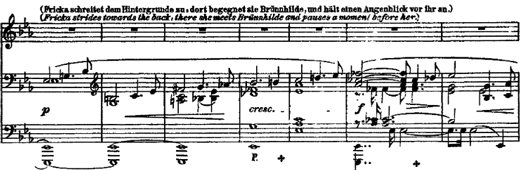
Preview: Fricka vs. Wotan --
The final confrontation*

*When we get to the main post, you'll see that we can maybe think of this as "Part 1a" of our Josephine Veasey remembrance.

Or: How Fricka & Wotan get from "Example 1" --


to "Example 2" --


Both clips: Berlin Philharmonic, Herbert von Karajan, cond. DG (1966)

by Ken

In a moment we're going to hear fuller versions of the above "examples," and in multiple performances. First I should explain, though, that (ever so unusually!) we're encountering a mild detour. I thought we would be continuing with the remembrance, begun two weeks ago, of the fondly remembered English mezzo Josephine Veasey (tentatively labeled "Part 1?"), and I've been pondering some intereting repertory. What I should have realized is that the chances were never great that we might tiptoe past the great Fricka-Wotan scene of Act II of Die Walküre with just a polite wave. Sure enough, I got sucked in.

Some of it had to do with the curious moment in time we stumbled into with the Covent Garden Walküre we sampled, from late September 1965, in which Veasey sang Fricka with Georg Solti conducting, as he was weeks away from heading to Vienna to complete the Ring recording, the first ever, with Walküre, with Christa Ludwig as Fricka, even as Herbert von Karajan was preparing to being the second-ever Ring recording the following year with, of all things, Walküre -- and with, of all people, Josephine Veasey as Fricka both in Walküre and, the following year, Das Rheingold. Meanwhile, when Karajan actually launched Ring stage production, in 1967 at the brand-new Salzburg Easter Festival (engineered by guess-who), the Fricka of the broadcast was not Veasey but Ludwig, who was also Karajan's Fricka when he brought the Salzburg Walküre production to the Met that fall! So I've been rooting around among this material, trying to hear what there is to hear.

Some of this we're going to hear in this week's main post, currently in production -- along with some of the other material I've retrieved from the Sunday Classics Archive, I mentioned in last week's under-construction post. Plus, I actually wound up typing out an English text for the whole Fricka-Wotan scene, which again has entailed all manner of complications -- and opportunities.


FOR NOW LET'S JUST HEAR OUR ASSORTED TAKES
ON THAT FULLER VERSION OF EXAMPLES 1 AND 2


Sunday, April 26, 2020

We hear the kinship between the Adagietto of Mahler 5 and "Ich bin der Welt abhanden gekommen," right? How about the differences?

Including an unflinching glimpse into the rarely
visited innards of the Sunday Classics blogworks


REVISED CAUTIONARY NOTE: This post as, er, "finished" grew really long ("hellaciously long" is how I put it in an earlier cautionary note). Feel free to jump around, picking at anything that may catch your eye. You can always go back and fill in. Note that there's a surprise at the end.

[PRE-CAUTIONARY LOOKBACK: In case anyone happens to have seen earlier versions of this post and remembers the post-in-progress "cautionary" notes, or if anyone who hasn't seen them is curious, I've snipped them out of here and dumped them in -- purely for the record! -- at the end.]


When Christa Ludwig (born March 16, 1928, and so now 92) made her splendid first (piano-accompanied) recording of the haunting Mahler Rückert setting "Ich bin der Welt abhanden gekommen," in November 1957, with her voice still in its sunny prime, she was at 29 already a veteran, remarkably mature singer. When she made her final recording of the song, in January 1993 (again with piano), she was closing in on 65, but you may decide that this last version is her most beautiful -- because before we're done today we'll have heard five performances recorded over this 35-year period. (Do I have to underscore what a remarkable span this is for a singer? Not just to still be singing at 65 but to be singing with such poised beauty as well as artistic purpose.) Before we get back to Christa, however, we have other business to take care of, including hearing two other singers' differently special performances of what may be Mahler's best-known song.


"Pervaded by the familiar romantic mood of withdrawal from the hurly-burly of life into the quietude of the inner self, not untouched with sadness, the Adagietto has much in common with Mahler's great song 'Ich bin der Welt abhanden gekommen' ('I am lost to the world'), which ends with the words 'I am alone, in my own heaven, in my love, in my music.' "
-- Deryck Cooke, from a CD booklet note on the Mahler Fifth Symphony

MAHLER: Symphony No. 5:
iv. Adagietto. Sehr langsam (Very slow)


BBC Symphony Orchestra, Pierre Boulez, cond. Live performance, 1970

Vienna Philharmonic, Pierre Boulez, cond. DG, recorded March 1996

MAHLER: "Ich bin der Welt abhanden gekommen"
("I have lost track of the world")

Janet Baker, mezzo-soprano; New Philharmonia Orchestra, Sir John Barbirolli, cond. EMI, recorded May 4, 1967

José van Dam, bass-baritone; Orchestre National de Lille, Jean-Claude Casadesus, cond. Forlane, recorded April 1986

by Ken

Okay, folks, we have a game plan of sorts, and we're by golly gonna stick to it, sort of. Two weeks ago I was lost in wonder ("Hokey-smoke, it's like we're actually in Berlin (sort of) for Easter week") over the Berlin Philharmonic's four-event free live-streamed virtual Easter Festival, during the time when they were supposed to be in Baden-Baden for their annual actual Easter Festival. Each of the four episodes consisted of material -- interviews, conversations, and some chamber performances -- coming to us direct from the orchestra's audienceless Berlin home, the Philharmonie, surrounding performances by the Berlin Philharmonic itself of single movements or in some cases whole works drawn from the orchestra's extensive video archive in its Digital Concert Hall.

As it happened, the first of the four episodes I saw, and the only one I'd seen when I started writing that piece, was Episode 2, an all-Mahler extravaganza, so that's what I was most caught up in, and what I first thought we might sort of re-create here at Sunday Classics. (Note that all four episodes are now safely ensconced in the DCH, still free. In fact, as I noted, in recognition of the current world crisis the DCH is offering everyone a free 30-day subscription for its paid content. You have to register for the site, but registration has always been free, and has always entitled everyone access to some wonderful always-free content: some concerts, but most importantly a splendid collection of guest-performer interviews conducted by members of the orchestra. Be sure to check it out.)


A QUESTION: WHAT MADE ME FEEL SO "DANGLY"
HEARING THE FINALE OF MAHLER 5 ON ITS OWN?


Sunday, April 12, 2020

Hokey-smoke, it's like we're actually in Berlin (well, sort of) for Easter week

[Cross-posted from DownWithTyranny, though somewhat revised and expanded here -- well, considerably expanded. See the NOTE ON THE CROSS-POSTING quite a ways down.]


We see the interior of the Great Hall of Berlin's Philharmonie, the (shall we say) unusual building built in 1960-63 -- under the watchful eye of then-chief conductor Herbert von Karajan -- to house one of the world's elite orchestras, the Berlin Philharmonic. Imagine it even emptier, with nothing on the stage floor and dimly lit, since at present the orchestra, like so many performers of all descriptions around the world, is unable to perform before live audiences.


Now imagine, in the empty, sparsely lit Philharmonie, Stefan Dohr (the Berlin Phil's principal horn since 1993, in which year he turned 28!), alone on the stage floor in casual dress (jeans, as I recall), playing this:


(Yes, that's Stefan playing. At least I'm pretty sure -- see the box below.)

by Ken

So here I was a few days ago going on and on about the treasure trove of riches providentially available to us online in our time of crisis [Editorial reminder: This part is the original version as it appeared on DWT; the link is to an earlier DWT post, "Can You Imagine What This Crisis Would Be Like If We -- Or At Least Lots Of Us -- Didn't Have Access To Today's Onilne Resources?" -- Ed.], and now I'm spending half my time sharing a week's worth of Easter with the Berlin Philharmonic, absolutely free.

The other Stefan, de Laval Jezierski
It's a moment I won't soon forget, watching Stefan Dohr standing alone on the darkish Philharmonie stage floor, talking to a live-stream camera about the music of Gustav Mahler and the "festival of horns" he bequeathed to the world's horn players in his symphonies, then playing the haunting horn call that opens the first of the two "Nachtmusik" ("Night Music") movements, the 2nd and 4th movements overall, of Mahler's five-movement Seventh Symphony. After Stefan told us that one thing he misses when he practices some of Mahler's great horn solos at home is the echo the composer liked to provide, usually played by the 3rd horn, he raised his instrument and started sounding this gorgeous horn call -- and lo! there were answering echoes! The camera showed us that they were coming from a farther-up reach of the empty Philharmonie, where Stefan's Berlin Phil colleague Stefan de Leval Jezierski could be seen manning his horn. Wow!!!

IN THE AUDIO CLIP WE JUST HEARD,
DID STEFAN ALSO MISS THE ECHOES?


Monday, April 6, 2020

We need music! Now, I was thinking about Mahler's "Die zwei blauen Augen," the last of the four Wayfarer Songs --

Plus: We have a special musical bonus at the end!

Want a hint? I'll go you one better: Here's an audio tease --


Now could we have a post (of some sort?)


Irmgard Seefried sings Richard Strauss's "Morgen!," Op. 27, No. 4, in the composer's own orchestration, with Piero Bellugi conducting the Orchestre National de l'ORTF in Paris's Salle Pleyel, Jan. 20, 1965. Note -- as the camera does! -- the soloist playing the violin solos around which Strauss built his orchestration of the song. Isn't it interesting that in January 1965 the Orchestre National, at least for this concert, had a female concertmaster?

by Ken

This is a time, it seems to me, when we need more music. So that's pretty much what we're going to do today.

WHERE WE ARE NOW, BLOG-WISE?

Yes, I know we've got a growing tangle of loose threads, and I hope gradually to work our way through them. I'm even adding a couple of more. Last week's two-item "Rita Gorr sings Gluck" mini-compendium led me to want to listen to her performances of those two arias (Orfeo's "Che farò senza Euridice?" and Alceste's "Divinités du Styx") in context with other singers', to get a better sense of why Gorr's mean so much to me. As I've played with this, the project has become more and more intriguing, as to what makes these arias work and not work, so I still want to pursue this.

What's more, the SC vault has a good helping of Gorr as Saint-Saëns's Dalila, and a couple of snatches of her Walküre Fricka, which I want to bring out. And considering that I made particular reference to these roles along with Verdi's Amneris, I'd like to add some samples of that to what shapes up as yet another post.

AS FOR TODAY, WE NEED MUSIC NOW, DON'T WE?

Like it says up top, during the week I found myself thinking about, and hearing in my head, "Die zwei blauen Augen, the last of Mahler's four Songs of a Wayfarer, a song to which we once devoted a good deal of attention, icluding most of a post of its own (see below). I vaguely recalled that I had the Wayfarer Songs on a DVD of some sort, and finally tracked it down to an extremely miscellaneous one that EMI issued in its "Classic Archive" series, which they couldn't find a better way of titling than:

Schwarzkopf    Seefried
Fischer-Dieskau

Which is (let the record show) absolutely accurate. We get soprano Elisabeth Schwarzkopf in an October 1961 staged-for-TV excerpt from her most famous role, the Marschallin in Der Rosenkavalier, giving us the final chunk of Act I, starting in the middle of the Marschallin's great monologue, at "Kann ich auch an ein Mädel erinnern"her sudden, haunting recollection of her innocent younger self, "fresh from the convent," with mezzo Hertha Töpper (who died just a week ago Saturday, a few weeks short of her 96th birthday); then soprano Irmgard Seefried is seen in two orchestral song groups via French TV: five by Richard Strauss from January 1965, including the "Morgen!" performance atop this post, and three by Mahler; and Dietrich Fischer Dieskau singing -- yes! -- Mahler's Wayfarer Songs from Japan's NHK, October 1960, with an outstanding Mahlerian, Paul Kletzki conducting. (There's also a Fischer-Dieskau "bonus": four core-repertory Schubert songs from 1959, with the great Gerald Moore at the piano.)


I WOUND UP WATCHING EVERYTHING ON THE DVD

Sunday, January 20, 2019

The troubles of Fricka and Wotan, part 3: Golden apples or no, these gods sure have grown older (preliminary version)


Christa Ludwig as Fricka and James Morris as
Wotan in Das Rheingold, at the Met in 1994

Remember these bits, which we heard back in the first installment of our expanded listen to mezzo Yvonne Minton?
FRICKA: (1) Dearest sister, sweetest delight,
are you restored to me?
(2) See how our pure one stands humiliated and ashamed:
her anguished look mutely pleads for release.
Wicked man, to ask this of a loved one!
-- from Scene 4 (the final scene) of Das Rheingold


Yvonne Minton (ms), Fricka; Staatskapelle Dresden, Marek Janowski, cond. Eurodisc-BMG, recorded Dec. 8-11, 1980


Irene Dalis (ms), Fricka; Metropolitan Opera Orchestra, Erich Leinsdorf, cond. Live performance, Dec. 16, 1961


Mignon Dunn (ms), Fricka; Metropolitan Opera Orchestra, Sixten Ehrling, cond. Live performance, Feb. 15, 1975


Christa Ludwig (ms), Fricka; Metropolitan Opera Orchestra, James Levine, cond. DG, recorded Apr.-May 1988
[To clarify: While we later heard singers besides Ms. Minton sing these bits (in longer clips), this is our first hearing of Dalis, Dunn, and Ludwig in this music.]

by Ken

O course by the end of Das Rheingold Wotan, at the cost of forking over both the Tarnhelm and the Ring, has earned back his sister-in-law, Freia, from the custody of the Giants Fasolt and Fafner, which presumably means that the gods will once again have free access to the golden apples, the golden apples that grow in Freia's garden, which have heretofore kept them perpetually young. And so, once again, they should in theory no longer be aging.

Except that, with the passage of time and the accumulation of life experience, they clearly do age in at least some ways.

Now hear this:
FRICKA [pausing with dignity before WOTAN]:
Here in the mountains where you hide
to escape your wife's view,
here in solitude I seek you out,
that you may promise me help.
WOTAN: What troubles Fricka,
let her announce freely.
FRICKA: I have learned of Hunding's distress;
he called on me for vengeance:
the guardian of wedlock heard him,
promised severely to punish the deed
of the shameless impious pair
who so boldly wronged the husband.
-- Fricka's next appearance, in Act II of Die Walküre

Yvonne Minton (ms), Fricka; Theo Adam (bs-b), Wotan; Staatskapelle Dresden, Marek Janowski, cond. Eurodisc-BMG, recorded Aug. 22-29, 1981

Irene Dalis (ms), Fricka; Otto Edelmann (bs-b), Wotan; Metropolitan Opera Orchestra, Erich Leinsdorf, cond. Live performance, Dec. 23, 1961

Mignon Dunn (ms), Fricka; Donald McIntyre (bs-b), Wotan; Metropolitan Opera Orchestra, Sixten Ehrling, cond. Live performance, Mar. 1, 1975

Christa Ludwig (ms), Fricka; James Morris (bs-b), Wotan; Metropolitan Opera Orchestra, James Levine, cond. DG, recorded April 1987

Wow, that is one giant leap, for mankind and womankind and every other kind of kind. Though our second Rheingold bit above isn't quite the last thing we hear from Fricka in Das Rheingold, it's close. And the Walküre bit is definitely the first thing we hear from her following the long gap between the operas. In a bit we're going to be more precise about the contexts of all of our bits, which means going back over a stretch of interchange we already heard last week, this time breaking it down a bit, as we ponder the obvious question --


HOW THE HECK DID WE (AND OF COURSE
THEY) GET FROM POINT A TO POINT B?


Most of this is ready to go (at least I think it's most of it; these things rarely work out so easily, though), but for now I have to ask you to check back.
#

Sunday, August 12, 2018

"An die Musik": How does a musical setting (of a "not strikingly original" poem) that's "conventional in every way save for its greatness" achieve that greatness? (Part C of A-B-C)

Or: "Speaking of Schubert's 'An die Musik,' Strauss's 'Zueignung,' and the Ariadne Prologue, a few (eventually) final questions, Part 1Yc" (following last week's Part "1X")

EXTRA! EXTRA! READ ALL ABOUT IT! In the light of (another) day, I've brazenly added a sixth version, Christa Ludwig's, to the five performances we were already tracking through Graham Johnson's observations about "An die Musik."


In this continuation of the February 2012 master class at the Jerusalem Music Centre we dipped into in Part B, Graham Johnson works with Hungarian-born mezzo-soprano Hanna Bardos (with pianist Emma Walker) on Schubert's "Death and the Maiden."
TODAY'S A-B-C POST AT THE TIP
OF YOUR CLICKING FINGER


Part A (nos. 1-3 + other stuff)
Part B (nos. 4-7 + other stuff)
Part C (nos. 8-10 + other stuff)
by Ken

Once again, for reasons of capacity somewhere along the distribution line, presumably on account of all those damned (oops, that just slipped out) audio and other embedded files, I had to break this post up -- and broke it, for safety's sake, into not two but three postlets. In part B we left off with no. 7 (in my pedantically imposed numeration), the piano postlude to the first stanza of "An die Musik":
The piano postlude mirrors this descent in a succession of sequences of chords built around appoggiaturas which lean and sigh, tugging on the sleeve and pulling the heartstrings. A simple yet heart-stopping excursion into the subdominant subtly emphasises that this hymn of praise is also a type of prayer.

[We're going to hear that postlude again (and again and again and . . .) in the audio clips for no. 8. -- Ed.]

OKAY, LET'S GET BACK TO IT!

"An die Musik": How does a musical setting (of a "not strikingly original" poem) that's "conventional in every way save for its greatness" achieve that greatness? (Part B of A-B-C)

Or: "Speaking of Schubert's 'An die Musik,' Strauss's 'Zueignung,' and the Ariadne Prologue, a few (eventually) final questions, Part 1Yb" (following last week's Part "1X")

EXTRA! EXTRA! READ ALL ABOUT IT! In the light of (another) day, I've brazenly added a sixth version, Christa Ludwig's, to the five performances we were already tracking through Graham Johnson's observations about "An die Musik."
"In reality, the song is a dialogue between the voice and the pianist's left hand, the quasi-cello bass line of the music. The right hand is the true accompanist and mediator in this heavenly conversation; it pulsates in a way which is crucial to the mood of the song although the listener may only be subliminally aware of its magic."
-- from Graham Johnson's commentary on "An die Musik," in
the
Hyperion Schubert Edition (©1994 Graham Johnson)

Part of a February 2012 master class at the Jerusalem Music Centre in which Graham Johnson works with Hungarian-born mezzo-soprano Hanna Bardos (and pianist Emma Walker) on Schubert's "Death and the Maiden" -- and among many interesting points gives her his thinking about tempo and composers' metronome markings (and what he considers the understandable but often misplaced desire to manufacture "drama"), offering her the opportunity to persuade him otherwise! (We'll see and hear a good deal more of this in Part C.)
TODAY'S A-B-C POST AT THE TIP
OF YOUR CLICKING FINGER


Part A (nos. 1-3 + other stuff)
Part B (nos. 4-7 + other stuff)
Part C (nos. 8-10 + other stuff)
by Ken

This isn't the time or place for fooling around, so let's just pick up right where we left off in Part A, at no. 3: "After 'wilder Kreis umstrickt' an eloquent little falling chromatic motif in the left hand (a single bar) is a prelude to the magic which will lift the spirits (and the vocal line) into higher regions."

Before we go on, however, one question: Does it occur to other listeners, with regard to the observation of Graham's requoted above, "In reality, the song is a dialogue between the voice and the pianist's left hand, the quasi-cello bass line of the music," that others of the pianists we've been tracking -- perhaps all of them? -- make more of this in their performances than Graham does in his?

Anyway, onward!

[4] "At this point a generous and eloquent four-bar phrase takes wing ('hast du mein Herz zu warmer Lieb entzunden'), this time without the dallying on long low notes which has characterised earlier phrases. It is as if the whole song has caught fire and is aglow with the warmth of the music itself."

"An die Musik": How does a musical setting (of a "not strikingly original" poem) that's "conventional in every way save for its greatness" achieve that greatness? (Part A of A-B-C)

Or: "Speaking of Schubert's 'An die Musik,' Strauss's 'Zueignung,' and the Ariadne Prologue, a few (eventually) final questions, Part 1Ya" (following last week's Part "1X")

EXTRA! EXTRA! READ ALL ABOUT IT! In the light of (another) day, I've brazenly added a sixth version, Christa Ludwig's, to the five performances we were already tracking through Graham Johnson's observations about "An die Musik."
"The poem . . . is not strikingly original . . . . [T]he setting is conventional in every way . . . save for its greatness. Sincerity and heartfelt devotion seem to emanate from every note, and also a type of exaltation which enable us to glimpse for a moment the transfigured state, remarked on by his contemporaries, in which Schubert wrote his music."
-- from Graham Johnson's commentary on "An die Musik,"
in Vol. 21 of the 37-volume
Hyperion Schubert Edition

"In reality, the song is a dialogue between the voice and the pianist's left hand, the quasi-cello bass line of the music. The right hand is the true accompanist and mediator in this heavenly conversation; it pulsates in a way which is crucial to the mood of the song although the listener may only be subliminally aware of its magic."
-- also from Graham Johnson's commentary

TODAY'S A-B-C POST AT THE TIP
OF YOUR CLICKING FINGER


Part A (nos. 1-3 + other stuff)
Part B (nos. 4-7 + other stuff)
Part C (nos. 8-10 + other stuff)
by Ken

Last week we had an overview of "An die Musik", drawing on the above-sourced commentary on the song by Graham Johnson, who in addition to being one of the day's most acclaimed accompanists served as both artistic director and album commentator for Hyperion Records' invaluable Schubert Edition, a gathering of all the composer's songs in 37 volumes -- by comparison, setting aside the zillion other records he's made, the other song-compendia he's undertaken for Hyperion (of Brahms, Schumann, and Fauré and Poulenc and a number of less prolific French composers) seem like just another day's work. (Hyperion has enlisted other pianists for other song compendia, including Liszt and Richard Strauss.)

I said that this week Graham would be leading us through the song, and so he will -- through its entire vast spaces -- all of three minutes, and at that in strophic form, meaning that its two stanzas (or strophes) are essentially identical musically. And so, while we have a number of issues, both substantive and procedural to address, I thought we would plunge right in with the first of ten specific points Graham makes. (I should add that the pedantic numbering of those points has been added by yours truly, to help us keep track of where we are in this broken-up format.)


WELL, BEFORE WE PLUNGE IN, MAYBE WE SHOULD
HAVE ONE MORE BIT OF OVERVIEW FROM GRAHAM

In reality, the song is a dialogue between the voice and the pianist's left hand, the quasi-cello bass line of the music. The right hand is the true accompanist and mediator in this heavenly conversation; it pulsates in a way which is crucial to the mood of the song although the listener may only be subliminally aware of its magic. Except in the postlude to each verse, these chords have no special thematic significance, but the piano needs to repeat notes in order to sustain a harmonic background, and the accompanist has to find a means of allowing these chords to 'happen' without appearing to strike each one individually -- something which would break the music into a succession of pedantic downbeats. Underneath what should be a gliding stream of harmony, the left hand sings its heart out, warming the voice into action.
©1994 Graham Johnson

AND SHOULD WE MAYBE HEAR THE SONG STRAIGHT
THROUGH AGAIN? YES, I REALLY THINK WE SHOULD


Sunday, July 22, 2018

We have more "An die Musik," "Zueignung," and "Musik ist eine heilige Kunst" -- but remember, this only SOUNDS like a "good news" post

We have our missing recording of "An die Musik"!
So let's hear it along with its intended companion --


Pavel Lisitsian, baritone; Naum Valter, piano. Melodiya, recorded 1961

Fritz Wunderlich, tenor; Hubert Giesen, piano. DG, recorded November 1965

by Ken

Last week, for possibly predictably perverse purposes of your proprietor, we focused on three bits of music that almost inevitably suggest some connection to the proposition that life is good, life is worth living ("Today's sacred word is 'heilig' ('holy' or 'sacred'), chez Schubert and R. Strauss -- make of it what you will"). Our cases in point were the Schubert song "An die Musik," Richard Strauss's song "Zueignung," and the moment in the final minutes of the Prologue to Strauss's Ariadne auf Naxos when the super-serious Composer of the super-serious opera seria Ariadne auf Naxos, in the countdown to its first performance (under troubled circumstances, to put it mildly, in the home of "the richest man in Vienna"), declares, "Music is a sacred art."

However, we only heard two of the three song performances we should have, performances I've lived with so long and so closely that they're inextricably woven into my consciousness. The problem was that one of the two intended "An die Musik"s I had only on an old MK LP I've cherished for more than 40 years (since I plucked it out of a 99-cent bin in the old Sam Goody bargain store across 49th Street from the old West Side store), and at the moment I'm unable to make audio files from LP. Anyway, as I hope you've heard above, the Armenian-born Soviet baritone Pavel Lisitsian's "An die Musik" is now united, as intended, with the much-lamented tenor Fritz Wunderlich's, originally recorded as part of a glorious group of Schubert songs to fill Side 4 of his wonderful 1965 DG Schöne Müllerin (the way the Schubert song cycle, which now fits comfortably on a single CD, usually came to us in those days, on three LP sides).

Over this past week I've scouted for a companion to Jussi Bjoerling's March 1958 Carnegie Hall encore performance of "Zueignung," again with the limitation that it would have to come from my CD holdings, or possibly via digital download. We heard some pretty good ones last week, and I heard lots more this week, but just now we're not looking for pretty good, we're looking for magic. As often happens, though, the joke was on me. I found magic, but not with "Zueignung." Oh, I'd just heard a very very good one, but again, we're not looking for very very good. I couldn't be bothered to stop the disc after the very very good "Zueignung," and wound up hearing something like this:

R. STRAUSS: "Zueignung," Op. 10, No. 1,
plus a special bonus performance (at 2:09)


Christa Ludwig, mezzo-soprano; Geoffrey Parsons, piano. BBC Legends, recorded live at Summer Festival, Wigmore Hall, July 15, 1978


OHMYGOODNESS! ARE THERE ANY WORDS? WELL,
FIRST OFF, I HAVE TO EAT SOME UNKIND ONES


Sunday, November 1, 2015

Why won't everyone just let poor abandoned Ariadne die in peace?

"There is a realm where all is pure"

Ernst Stern's design for the original 1912 Ariadne auf Naxos (click to enlarge)
There is a realm where all is pure:
it has a name too: Realm of Death.
[Rises from the ground.]
Here nothing is pure.
All is finished here.

[She pulls her robe close around her.]
But soon a messenger will draw nigh,
Hermes they call him.
With his staff
he rules all souls:
Like birds on the wing,
like dry leaves,
he drives them before him.
Thou beautiful, serene god!
See! Ariadne awaits!

Oh, my heart must be cleansed
of all wild grief,
then your presence will call me,
your footsteps will approach my cave,
darkness will cover my eyes,
your hand will touch my heart.
In the beautiful festal robes
that my mother bequeathed me
my body will remain;
the silent cave will be my tomb.
But mutely my soul
will follow its new lord,
as a light leaf in the wind
flutters downward, gladly falling.
Darkness will cover my eyes
and fill my heart;
this body will remain,
richly adorned and all alone.

You will set me free,
give me to myself,
this burdensome life,
take it from me.
I will lose myself entirely in you;
with you Ariadne will abide.
[She stands lost in thought.]
-- English translation by Peggie Cochrane

Maria Cebotari, soprano; Vienna Philharmonic, Herbert von Karajan, cond. EMI, recorded Nov. 16, 1948

Leontyne Price, soprano; London Symphony Orchestra, Fausto Cleva, cond. RCA, recorded 1965


"Playgoers, I bid you welcome. The theater is a temple, and we are here to worship the gods of comedy and tragedy. Tonight I am pleased to announce a comedy."
-- the principal player at the outset of A Funny
Thing Happened on the Way to the Forum

by Ken

We've already had a taste of the comedy of Ariadne auf Naxos, in the October 11 Sunday Classics snapshots post "Meet the Composer, Richard Strauss-style," observing the comically serious young Composer make his way backstage through the craziness preceding the performance of his opera seria of the same name. Now, above, we've gotten a taste of the tragedy.

(In studio recordings, I should add, of just this excerpt. The lovely Maria Cebotari [seen at right], heard here less than seven months before her untimely death, at 39, did sing Ariadne, and must have been radiant in the role, but Leontyne Price didn't take it on until years after she recorded this stand-alone "Es gibt ein Reich" in her Art of the Prima Donna series, in which she sampled roles she hadn't sung. (Eventually -- not this week, but eventually -- we'll hear more of her eventual Ariadne.)

We've also had a masterful exposition, two weeks ago, of the conventional way of handling comedy and tragedy, from the principal player at the top of Burt Shevelove, Larry Gelbart, and Stephen Sondheim's A Funny Thing Happened on the Way to the Forum, the first show for which Stephen Sondheim wrote music as well as lyrics. It's probably still my favorite Sondheim song, and I can't ever hear it enough. So . . .

LET'S HEAR IT AGAIN -- AND AGAIN, AND AGAIN

Saturday, February 1, 2014

Preview: One loose end we CAN tie up -- our missing movements from Mahler's "Song of the Earth"


by Ken

Das Lied von der Erde (The Song of the Earth) is sort of Mahler's Symphony No. 8½. Even though it's a series of six songs with orchestra, alternating between tenor and alto (or baritone) soloists, he probably would have called is his Ninth Symphony if the already-dying composer hadn't been such a baby about that "Ninth Symphony" business -- their Ninths had been so fateful for Beethoven and Bruckner. Since he had his next symphony mapped out, he thought that by calling that his Ninth, when it was really his Tenth, he would have the jinx beaten. As we know, though, the joke was on him. He did complete the symphony he called his Ninth, but died leaving his Tenth incomplete.

Saturday, January 11, 2014

Approaching Mahler's heartbreaking "Kindertotenlieder"

For the final stanza of "In diesem Wetter," the last of the Kindertotenlieder, Mahler switches from minor to major


Thomas Hampson, baritone; Vienna Philharmonic, Leonard Bernstein, cond. DG, recorded live, October 1988
In this weather, in this storm, in this bluster,
they're resting as if in their mother's house,
not frightened by any storm,
by God's hand protected,
they're resting as if in their mother's house.

by Ken

I'm trying to think -- among the infinity of loose ends and gaps we'll leave when the tent folds up -- which few among them we might still deal with. It seems rather hopeless, but it has occurred to me that for all the Mahler we've listened to (I always want to compile a master list, but it's a big job; would it be of interest to anyone?), we haven't done the song cycle Kindertotenlieder (Songs on the Death of Children).

However, we have done the final song, "In diesem Wetter" ("In this weather"), in a December 2011 post devoted to "The old minor-to-major switcheroo as practiced by Mahler, Schubert, and Donizetti" (preview and main post), in which we listened to the opening song of Schubert's great song cycle Winterreise (Winter Journey), "Gute Nacht" ("Good night"), and Nemorino's haunting aria "Una furtiva lagrima" ("A furtive tear") from Donizetti's Elixir of Love in addition to "In diesem Wetter."


TO APPROACH THE KINDERTOTENLIEDER,
WE'RE GOING BACK TO "IN DIESEM WETTER"

Sunday, September 15, 2013

The First Symphony sets out the modus operandi for Mahler's symphonic career

MAHLER: Songs of a Wayfarer:
iv. "Die zwei blauen Augen" ("The two blue eyes")

Thomas Allen sings the last of Mahler's Wayfarer Songs, "Die zwei blauen Augen" ("The two blue eyes"), with Václav Neumann conducting the Mahler Youth Orchestra, in Frankfurt's Alte Oper, 1991.

Christa Ludwig, mezzo-soprano; Philharmonia Orchestra, Sir Adrian Boult, cond. EMI, recorded Oct. 18, 1958

Maureen Forrester, contralto; Boston Symphony Orchestra, Charles Munch, cond. RCA-BMG, recorded Dec. 28, 1958

Thomas Quasthoff, baritone; Vienna Philharmonic, Pierre Boulez, cond. DG, recorded June 2003

by Ken

In Friday night's preview, preparing for today's assault on the Mahler First Symphony, we heard, or rather reheard, the transformation Mahler wrought to transform the second of his four Songs of a Wayfarer into the exposition of the symphony's first movement, something we first heard in the March 2012 preview post "From song to symphony -- the journey of Mahler's lonely wayfarer," when we were tackling the Wayfarer Songs. In another preview post a couple of weeks later we listened to the transformation of the second section of the final Wayfarer Song, "Die zwei blauen Augen" ("The two blue eyes"), which we just hear complete, into the haunting central section of the third movement of the First Symphony. As I also mentioned, we've also heard the second movement of the First, meaning that the only thing that will be (mostly) new for us is the Finale.


LET'S DIG RIGHT IN WITH THE FIRST MOVEMENT

Saturday, September 14, 2013

Preview: Preparing to attack Mahler's First Symphony


The young Gustav Mahler

Start

Finish

Concertgebouw Orchestra, Bernard Haitink, cond. Philips, recorded September 1962

Start

Finish

New York Philharmonic, Leonard Bernstein, cond. CBS/Sony, recorded Oct. 4 and 22, 1966

by Ken

Every now and then I remind myself that, while we've "done" a bunch of Mahler symphonies, including the whole of the Fourth, Sixth, Seventh, and Ninth, and while we've had posts that took us inside the first, second, and third movements of the Mahler First, we still haven't properly done the symphony.

So we've started, above, by hearing how the Mahler First starts and finishes. That's the introduction and exposition from the first movement (the Bernstein version, you'll note, takes the first-movement exposition repeat), and the final five-minute-plus chunk of the finale.

AND THEN, AS LONG AS WE'VE ALREADY HEARD
THE EXPOSITION OF THE FIRST MOVEMENT . . .


Sunday, June 2, 2013

Colin Davis's surprising triumph in Mahler's "Song of the Earth"

The firmament is eternally blue, and the earth
will long stand fast and blossom in spring.
But thou, O man, how long then livest thou?
Not a hundred years canst thou delight
in all the rotten trash of this earth!
-- from "Das Trinklied vom Jammer der Erde" ("The Drinking Song of Earth's Sorrow"), the opening movement of Mahler's Das Lied von der Erde (The Song of the Earth); English translation by Deryck Cooke

Jon Vickers, tenor; London Symphony Orchestra, Sir Colin Davis, cond. Philips, recorded March 1981

by Ken

In Friday night's preview I argued that Jon Vickers's massive but "slow-speaking" tenor was heard to limited advantage in "On Youth," the finely detailed second of the three tenor songs of Mahler's song-symphony The Song of the Earth. I certainly wouldn't say the same of at least this fraught chunk of the opening song. This seems to me very much the kind of sound -- that of a full-fledged heroic tenor -- that Mahler must have had in mind.

We're going to hear the full song momentarily, but first I think we need to repeat an experiment we've done before in approaching Mahler's Song of the Earth(1908-09), his six-movement setting of Hans Bethge's then-recently-published German renderings of classical Chinese poems, which was the first work he conceived after learning that he had untreatable heart disease. We're going to listen again to his final, confidently heaven-storming musical utterance before the fateful diagnosis. (It's the conclusion of Goethe's Faust.)

MAHLER: Symphony No. 8 in E-flat (1906):
conclusion, "Alles Vergängliche ist nur ein Gleichnis"

All things transitory are but parable;
here insufficiency becomes fulfillment,
here the indescribable is accomplished;
the ever-womanly draws us heavenward.
[much repeated]
-- English translation by Peggie Cochrane

Soloists, choruses, Bavarian Radio Symphony Orchestra, Sir Colin Davis, cond. BMG, recorded live, July 7-8, 1996

Soloists, choruses, London Symphony Orchestra, Jascha Horenstein, cond. BBC Legends, live performance from the Royal Albert Hall, March 20, 1959

Sunday, August 12, 2012

In "Elektra," a "recognition" scene in which neither party actually recognizes the other

Elektra (Deborah Polaski) and Chrysothemis (Karita Mattila)
in Strauss and Hofmannsthal's Elektra at the Met, 2002
[CHRYSOTHEMIS rushes in through the courtyard gate, howling loudly like a wounded animal.]
CHYRSOTHEMIS: Orest! Orest is dead!
ELEKTRA: Be quiet!
CHYRSOTHEMIS: Orest is dead!
I came out -- they knew it there already. They were all
standing around and they all knew it already.
Only we didn't.
ELEKTRA: No one knows it.
CHYRSOTHEMIS: They all knew it!
ELEKTRA: No one can know it, for it is not true.
It is not true! It is not true! I tell you, however,
it is not true!
CHYRSOTHEMIS: The strangers stood by the wall. The strangers
who were sent here to announce it: two --
an old one and a young one. They had
already told everyone. They were all standing
in a circle around them and they all,
all knew it already.
ELEKTRA: It is not true!
CHYRSOTHEMIS: No one thinks of us. Dead! Elektra, dead!
Died in a foreign land! Dead!
Died there in a foreign land,
by his own horses killed and dragged along.
[She sinks down on the doorstep beside ELEKTRA. A YOUNG SERVING MAN hurries out of the house and stumbles over the sisters.]

Alessandra Marc (s), Chrysothemis; Deborah Polaski (s), Elektra; Staatskapelle Berlin, Daniel Barenboim, cond. Teldec, recorded February 1995

Deborah Voigt (s), Chrysothemis; Alessandra Marc (s), Elektra; Vienna Philharmonic, Giuseppe Sinopoli, cond. DG, recorded September 1995

by Ken

My goodness, the things people do! To each other, I mean, though also to themselves. And no "others" are more readily in the line of fire than family.

As promised in Friday night's preview, today we're targeting the extraordinary scene in which a brother and sister are reunited, each thinking he or she was left all alone in the world to right the wrong of the murder of their father, Agamemnon, king of Myecenae, at the hands of their mother, Klytämnestra, and her lover, Aegisth (for the sake of sanity I'm going to try to stick to the German forms of the Greek names used in the libretto), following the king's return from the Trojan War.

There's so much we should be talking about here. About the creative breakthrough by which Richard Strauss, already a world-famous composer, had finally, and all at once, made his operatic breakthrough -- at age 40 -- with his previous opera, Salome. About the happy turn of fate that brought him together with the playwright Hugo von Hofmannsthal, after he had already begun shaping Hofmannsthal's adaptation of the Sophoclean version of Elektra. Very likely what Strauss wanted from him was his permission, not his collaboration, but he wound up getting both, and the start of one of the most remarkable collaborations in the annals of artistic creation. About how much the one-act Salome and Elektra have in common as well as how much they don't.

And certainly, within the drama itself, there's all sorts of stuff we should talk about. Like the specific human urgencies of each of the characters, with consideration of what first Sophocles and then Hofmannsthal and then Strauss-Hofmannsthal have chosen to include and omit with regard to the story.

But for today we'll keep it simple. The fundamental human reality is that Elektra's world has been permanently denatured by the murder of her father. In this respect she is fundamentally different from her significantly younger sister Chrysothemis, the closest thing she has at this point to another person in her life. Chrysothemis just wants to get on with a normal life. By contrast, as I like to think of it, if one were to suggest to Elektra, "Life goes on," she would be apt to reply, "Oh yeah?" or "Says who?" This is, I think, a wholly recognizable family dynamic -- capable of being explained in large part by the difference in age.

This is no ordinary family here in the House of Atreus, of course, but I think we can all readily enough appreciate familiar patterns of family dysfunction, even -- or perhaps especially? -- when they're carried to this extreme. We have two sisters who have experienced the events of their family's history, coming as they did at such different points in their lives, in very different ways. In Elektra's reality, the only hope for restoring her disordered world to any kind of order is for her brother Orest to return home from his long exile -- an exile designed to keep him safely out of the reach of his mother and her paramour -- so she can assist him in avenging their father's death.

It is, of course, that scene, the scene of Orest's return, a Recognition Scene in which, in fact, neither sibling does recognize the other, that we're looking at today. And I thought we needed to start today -- in the scene we heard up top -- with the added circumstance that makes it so much more likely that Elektra would fail to recognize her long-lost brother: She has been brought, kicking and screaming, to an understanding that he's dead.


I WANT TO SPEND A BIT MORE TIME WITH THIS SCENE
BEFORE WE PROCEED TO THE RECOGNITION SCENE

Sunday, June 17, 2012

Meet Saint-Saëns's Dalila

Including a recording that Maria Callas refused
to allow to be released (don't ask me why!)


Just 'cause we slipped into Act II of Samson et Dalila in Friday night's preview is no reason to go crazy and think we're going to make it to Act III today, but here's the famous "Bacchanale," from the Met's 1983 Centennial Gala, conducted by James Levine.

by Ken

Friday night we heard Maria Callas's riveting 1961 recording of Dalila's Act II-opening "Amour! viens aider ma faiblesse!," one of three excerpts from Samson et Dalila she recorded for the first Callas in Paris LP. Only two of those excerpts -- "Amour! viens aider" and the Act I solo "Printemps qui commence" -- found their way onto the record, though. Callas refused to allow the recording of the opera's best-known number (maybe along with the "Bacchanale") to be released, and in fact it wasn't in her lifetime, not slipping into print until 1982, five years after she died.

Our goal today is going to be to get (finally!) to the end of Act I of Samson. But we're going to digress again into Act II to hear what has become one of Callas's best-known recordings, the amping up of Dalila's seduction of Samson.

SAINT-SAËNS: Samson et Dalila: Act II, Dalila, "Mon coeur s'ouvre à ta voix" ("My heart opens at your voice")
My heart opens at your voice like the flowers open
at the kisses of dawn!
But, o my beloved, to better dry my tears,
let your voice speak again!
Tell me that you return to Dalila forever!
Say again to my tenderness
those promises of before, those promises that I loved!
Ah! answer, answer my tenderness!
Fill me, fill me with delight!
Answer my tenderness, etc.

As one sees ears of corn undulating
under a light breeze,
just so my heart flutters,
ready to take comfort
from your voice, which is dear to me!
An arrow is less swift in carrying death
than is your lover to fly into your arms,
to fly into your arms!
Ah! answer etc.

Maria Callas (s), Dalila; Orchestre National de la Radiodiffusion Française, Georges Prêtre, cond. EMI, recorded Mar.-Apr. 1961


IN THE INTEREST OF MAKING OUR WAY TO
THE END OF ACT I, LET'S TAKE ONE SMALL STEP


When we left off in April, the High Priest of Dagon had just discovered the body of Abimélech, the satrap of Gaza, "struck down by slaves," meaning the Israelite rabble newly roused by their young rabble-rouser Samson. He storms off, vowing to make those uppity Hebrews pay. We'll hear the end of that again in the click-through, but for now let's listen to the very next thing that happens: this ravishing orchestral daybreak.

SAINT-SAËNS: Samson et Dalila: Act I, Daybreak

Orchestra of the Théâtre National de l'Opéra de Paris, Georges Prêtre, cond. EMI, recorded Sept.-Oct. 1962


NOW LET'S FORGE AHEAD IN ACT I OF SAMSON

Saturday, June 16, 2012

Preview: In which we hear a lady weighted by a heap of hurt

Yes, in the click-through we're going to hear Callas,
in what I think of as one of her great recordings.

by Ken

I'm not being intentionally mysterious . . . okay, I guess I am, but not gratuitously mysterious. The lady whose musical acquaintance we're about to make isn't normally thought of as a victim, but we're going to hear her in a condition of pain that -- in a good performance -- I find almost palpable. (It shouldn't be any surprise that we're setting up for a performance by Maria Callas. She was especially good at rooting out characters' pain.)

I just thought it would be interesting to hear how the lady's composer sets up this outpouring. So we're going to hear this musical introduction, and then in the click-through we'll go straight into


Bavarian Radio Symphony Orchestra, Sir Colin Davis, cond. Philips, recorded February 1989


TO MAKE OUR HURTING ACQUAINTANCE --