Showing posts with label Ring of the Nibelung. Show all posts

Sunday, March 20, 2022

Preview: Fricka vs. Wotan --
The final confrontation*

*When we get to the main post, you'll see that we can maybe think of this as "Part 1a" of our Josephine Veasey remembrance.

Or: How Fricka & Wotan get from "Example 1" --


to "Example 2" --
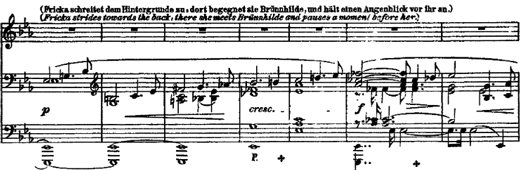

Both clips: Berlin Philharmonic, Herbert von Karajan, cond. DG (1966)

by Ken

In a moment we're going to hear fuller versions of the above "examples," and in multiple performances. First I should explain, though, that (ever so unusually!) we're encountering a mild detour. I thought we would be continuing with the remembrance, begun two weeks ago, of the fondly remembered English mezzo Josephine Veasey (tentatively labeled "Part 1?"), and I've been pondering some intereting repertory. What I should have realized is that the chances were never great that we might tiptoe past the great Fricka-Wotan scene of Act II of Die Walküre with just a polite wave. Sure enough, I got sucked in.

Some of it had to do with the curious moment in time we stumbled into with the Covent Garden Walküre we sampled, from late September 1965, in which Veasey sang Fricka with Georg Solti conducting, as he was weeks away from heading to Vienna to complete the Ring recording, the first ever, with Walküre, with Christa Ludwig as Fricka, even as Herbert von Karajan was preparing to being the second-ever Ring recording the following year with, of all things, Walküre -- and with, of all people, Josephine Veasey as Fricka both in Walküre and, the following year, Das Rheingold. Meanwhile, when Karajan actually launched Ring stage production, in 1967 at the brand-new Salzburg Easter Festival (engineered by guess-who), the Fricka of the broadcast was not Veasey but Ludwig, who was also Karajan's Fricka when he brought the Salzburg Walküre production to the Met that fall! So I've been rooting around among this material, trying to hear what there is to hear.

Some of this we're going to hear in this week's main post, currently in production -- along with some of the other material I've retrieved from the Sunday Classics Archive, I mentioned in last week's under-construction post. Plus, I actually wound up typing out an English text for the whole Fricka-Wotan scene, which again has entailed all manner of complications -- and opportunities.


FOR NOW LET'S JUST HEAR OUR ASSORTED TAKES
ON THAT FULLER VERSION OF EXAMPLES 1 AND 2


Sunday, December 20, 2020

Post tease: Two case studies in ignorance -- Siegfried and Parsifal

Siegfried meets Fafner: Oh joy, Fafner's turned into a murderous dragon!

by Ken

One issue that's extensively tested in Wagner's Ring cycle, and that has been quietly bedeviling us in our enquiries, is whether we really know how to deal with innocence: recognizing it, understanding it, coping with it. I thought that at this point, as we're meeting Siegfried at perhaps his most exposed, we needed at least to drag it out into the open -- as it were, outside the opening to the cave where the giant Fafner, since murdering his brother Fasolt at the end of Das Rheingold and taking sole possession of the Nibelung hoard, including the all-power-conferring Ring and the Tarnhelm that enables the wearer to transform into any form desired, has Tarnhelmed into a murderous dragon and taken up solitary (he hopes) residence in a remote deep-forest cave, where he mostly sleeps on top of the hoard, guarding it against any would-be hoard-snatchers.

We're in Act II of Siegfried, earlier in the act than we were last week ("Not just a tease for next week's post: A little birdie told him"), when we heard Siegfried actually hearing and understanding tidings shared by a newsy Woodbird. Those mutually antagonistic lordlings Alberich and Wotan have just met for the first time since the final scene of Das Rheingold, when Wotan stole the Nibelung hoard from Alberich (who is of course "the Nibelung" of The Ring of the Nibelung) and Alberich, powerless to do anything else, placed a curse on the Ring -- as if that order of wealth didn't come with its own built-in curse. Or maybe Alberich was aiming his curse at some kind of certainty of enforcement of the curse implied by acquisition of all that treasure?


IT'S BEEN OCCURRING TO ME THAT THE THEME
OF SIEGFRIED'S HOPELESS IGNORANCE . . .


Sunday, December 6, 2020

On the pleasures of getting lost
in Götterdämmerung: revisiting the path to here, Part 2

SUNDAY 8:30pm UPDATE: After the earlier fillings-in, mostly around the Götterdämmerung and Walküre selections, I've added some Siegfried performance notes, and barring some likely (hoped for?) post cleanup, that should be about it!

OH WAIT! The missing "Norn Scene" audio clip is found -- and is now in place below! It's from the Met, March 1974: the beautiful (and beautifully cast) Götterdämmerung broadcast conducted by Rafael Kubelik during his sadly brief time as music director.

Brünnhilde (Deborah Voigt) has been awakened by Siegfried
(Jay Hunter Morris), at the Met, 2013.
[photo by Ken Howard]
After being kissed by SIEGFRIED, BRÜNNHILDE opens her eyes. SIEGFRIED stands up and stands before her. BRÜNNHILDE slowly rises to a sitting position. She raises her arms in solemn gestures, greeting the heaven and earth that now she sees again.

BRÜNNHILDE: Hail to you, sun! Hail to you, light!
Hail to you, radiant day!
My sleep was long; I am awakened.
Who is the hero who awoke me?
SIEGFRIED [deeply moved by her look and her voice, stands as if rooted to the spot]:
Through the fire I struggled, which blazes around the rock;
I broke you out of your tight helmet;
I am Siegfried, who awakens you.
BRÜNNHILDE [sitting straight up]: Hail to you, gods!
Hail to you, world!
Hail to you, shining earth!
My sleep is at an end.
I am awakened: it is Siegfried who awakens me!
SIEGFRIED [breaks out in ecstasy]:
I bless my mother, giving me birth!
bless the earth that gave me my strength!
Now I behold those eyes,
bright stars which laugh on my joy!
BRÜNNHILDE [overlapping, in impassioned accents]:
I bless your mother, giving you birth!
bless the earth, that gave you your strength.
Your eyes alone could behold me,
my heart to you alone wakes!
[Each remains in radiant, rapt contemplation of the other.]

Deborah Voigt (s), Brünnhilde; Plácido Domingo (t), Siegfried; Orchestra of the Royal Opera House, Covent Garden, Antonio Pappano, cond. EMI, from a Voigt-Domingo Wagner CD recorded January 2000

[kind of scrunched to fit the 78 side] Frida Leider (s), Brünnhilde; Rudolf Laubenthal (t), Siegfried; Berlin State Opera Orchestra, Leo Blech, cond. EMI, recorded Aug. 27, 1927

Kirsten Flagstad (s), Brünnhilde; Lauritz Melchior (t), Siegfried; Metropolitan Opera Orchestra, Artur Bodanzky, cond. Live performance, Jan. 30, 1937

Helen Traubel (s), Brünnhilde; Set Svanholm (t), Siegfried; Metropolitan Opera Orchestra, Fritz Stiedry, cond. Live performance, Feb. 10, 1951

Birgit Nilsson (s), Brünnhilde; Wolfgang Windgassen (t), Siegfried; Bayreuth Festival Orchestra, Karl Böhm, cond. Philips, recorded live, July 1966

by Ken

For a post that flaunts Götterdämmerung in the title -- and doesn't it seem to go on for inches and inches? -- we're going to be hearing precious little of it today. There will be a little, though, coming up in just a moment, as we revisit, in somewhat expanded form, the first two of the three iterations of what we're calling "the 'Awakening' music," from the "Second Day" (Siegfried) and "Third Day" (Götterdämmerung) of Wagner's Ring of the Nibelung.

So no, there won't be any trace this week of the third iteration, which comes so, um, dramatically in the next-to-last scene of Götterdämmerung. We've still got too much ground to cover before we might logically come to it. Nevertheless, even though it wasn't part of my original plan, I'm thinking that maybe we do want to get there at some point, but for sure not this week, or likely even next.

My thinking for this week is that, considering that last week ("On the pleasures of getting lost in Götterdämmerung: revisiting the path to here, Part 1") we were poking around the actual awakening of Brünnhilde, in Scene 3 of Act III of Siegfried, why not start with the awakening itself? And as long as we're awakening her, why not revisit the great succession of Brünnhildes, from Frida Leider to Kirsten Flagstad to Helen Traubel (maybe not unequivocally part of this line of succession, but so close, I think, to rating a place in this line of succession) to Birgit Nilsson?

By the way we're not done with this scene, which is on today's itinerary. But before we come back to it, I thought we might have another reminder of the point we're aiming to get back to, which is the second of the three "Awakening" iterations, in such strikingly altered musical form. Trust Wagner to begin the vastest of his operatic creations in such seemingly understated, and yet such richly detailed, form. And so, without further ado --

WE'RE BACK AT THE START OF GÖTTERDÄMMERUNG, AND NOW (AS PROMISED) WE'RE GOING JUST A BIT DEEPER IN

Sunday, November 29, 2020

On the pleasures of getting lost
in Götterdämmerung: revisiting the path to here, Part 1

Siegfried tries to awaken Brünnhilde
[As SIEGFRIED approaches the sleeper again, he is again filled with tender emotion at the sight of her. He bends over her.]
Sweet and quivering, her lovely mouth.
A gentle gladness charms fear from my heart!
Ah! how enchanting her warm, fragrant breath!
[As if in despair] Awaken! Awaken! Holiest maid!
-- from Siegfried, Act III, Scene 3 (singing translation by
Andrew Porter, used in the Remedios-Goodall performance)

[in English] Alberto Remedios (t), Siegfried; Sadler's Wells Opera Orchestra, Reginald Goodall, cond. EMI-Chandos, recorded live, August 1973

Lauritz Melchior (t), Siegfried; Berlin State Opera Orchestra, Robert Heger, cond. EMI, recorded May 12, 1930

Lauritz Melchior (t), Siegfried; Metropolitan Opera Orchestra, Artur Bodanzky, cond. Live performance, Jan. 30, 1937

Günther Treptow (t), Siegfried; Vienna Symphony Orchestra, Rudolf Moralt, cond. Myto, live recording of a 1949 concert performance of the act

Set Svanholm (t), Siegfried; Orchestra of the Teatro alla Scala, Wilhelm Furtwängler, cond. Live performance, Mar. 23, 1950

Wolfgang Windgassen (t), Siegfried; Bayreuth Festival Orchestra, Karl Böhm, cond. Philips, recorded live, July 1966

Siegfried Jerusalem (t), Siegfried; Bayreuth Festival Orchestra, Daniel Barenboim, cond. Teldec, recorded live, June-July 1992

[Note: We'll be hearing a fuller version of this scene in Part 2 of this post, when we'll talk a little about the performances. Meanwhile, I hope you're storing up your impressions of them! -- Ed.]

by Ken

As I explained in last week's still-unfollowed-up-on "post taste," "This is where we'd really like to start this week, but --," our inquiry into that starkly mysterious and foreboding character Hagen has led us back to the start of Götterdämmerung. Because what precedes in Wagner's Ring cycle is such a vast expanse of meticulously detailed music drama, it can be easy to forget how massive its final leg is in its own right -- at least until we're buckled in for the nearly two-hour expanse of Götterdämmerung's Prologue and Act I.

Götterdämmerung: Prologue: Orchestral prelude


Bavarian State Orchestra, Wolfgang Sawallisch, cond. EMI, recorded live at the Bavarian State Opera, November 1989

This two-minute prelude is the low-keyed and nevertheless magisterial opening of Götterdämmerung, aka Twilight of the Gods, the "Third Day" of The Ring of the Nibelung -- or by normal counting standards the fourth opera, since Wagner counted Das Rheingold, a massive expanse in its own right (running an uninterrupted two and a half to two and three-quarters hours), strictly as a prologue to the three "days" that follow.

What I'm trying to give a feel for is the way Wagner's unique operatic method enables him to create such finely detailed moments -- and there are no moments in the entire expanse of The Ring (let's call it roughly 14-15 hours; even among the handful of recorded Rings I spot-checked there were outliers: Böhm-Bayreuth 1966-67 at the quick end, at 13:39, and Goodall-English National Opera,1973-77, at the gradual end, at 16:03) that aren't finely detailed -- that are nevertheless bound musicodramatically to countless other moments in that vast expanse. In a bit we're going to hear the little Götterdämmerung orchestral prelude again and this time continue on a bit in the Prologue, taking in just a little of the chillingly awesome Norn Scene.

For now, though, let's just note that the music out of which this two-minute orchestral intro is fashioned is what I'm going to call "the 'Awakening' music," the music to which we witness Brünnhilde awakening from her long sleep in the final act of Siegfried, the "Second Day" of The Ring.


AS YOU'VE PROBABLY GATHERED, ONE OF OUR DESTINATIONS
TODAY IS THE "AWAKENING" ITSELF, BUT NOT BEFORE . . .


Sunday, November 15, 2020

"About the Nibelung I recently heard a rumor . . . "

TUESDAY NIGHT UPDATE: Progress is made. We've got the Götterdämmerung Prologue-to-Act I texts in place, and the cleaning up and filling in of the post text has begun.

It all started with Alberich (here, Eric Owens at the Met) and his discovery of the superpower he could enjoy if he managed to get hold of the Rhinegold and shape it into a ring.

by Ken

FIRST, A FEW EXPLANATORY NOTES
(in case you're wondering what the heck this is you're looking at!)

Explanatory Note No. 1: Last week we met the character who for me is one of the most engrossing not just in opera but in any theatrical or for that matter any fictional medium: Hagen, one of the final trio of characters Wagner presents to us in The Ring of the Nibelung, in the company of his half-siblings Gunther and Gutrune. We meet them chatting in their home, the Hall of the Gibichungs, as the curtain rises on Act I of the final installment of The Ring, Götterdämmerung (Twilight of the Gods) -- following, that is, the 40-minute-or-so Prologue, which together will form one of Wagner's super-acts, clocking in at not a whole lot less than two hours.

I pointed out that we were not meeting Hagen at the point of his actual presentation to the audience, though I promised we'd eventually get back to that. Instead we met him at a stunningly personal moment: as he is left alone to sit watch over the hall while Gunther heads off on a mad adventure with their recently arrived guest Siegfried -- a scheme of Hagen's devising, aimed at bringing within his reach the much-sought-after superpower-giving Ring of the Nibelung.


JUST TO REFRESH OUR MEMORIES --

Sunday, November 8, 2020

Ladies and gents, meet Hagen
[in fullest and final(ish) post form]

TUESDAY MORNING (FINAL) UPDATE: I did finally add some extra thumbs-up versions of our chosen scenelet, but this still leaves loads of stuff undone, as summarized in the note at the end.

Let's eavesdrop -- for now just a bit --
on Hagen, left alone with his thoughts


"Hier sitz' ich zur Wacht": William Wildermann as Hagen
"sits watch" over the Hall of the Gibichungs in Seattle, 1975.
You sons of freedom,
joyful companions,
merrily sail on your way!
Though you may scorn me,
you'll serve me soon,
the Nibelung's son.
-- singing translation by Andrew Porter,
used in our English-language recording
[1]

[Suggestion: Dial back the volume on [1]; my source is loud (and noisy).]
[2]

[3]

[4 (in English)]

Patience, Hagen fans! Credits for the performances will appear in due time.

by Ken

Not a "whistle a happy tune" kind of guy is our Hagen.

One of the above performances is very much not like the others, and I'm not thinking about the difference in language between our first performance and the others. I've intentionally omitted identification of the performances so we can focus on the performances themselves, but be assured that eventually they'll be fully identified, when we'll also clarify another, even more obvious trick embedded in the layout of the performances. For now, I'm just curious whether the difference I have in mind will be as obvious to other listeners.

Now, this isn't literally our meeting with Hagen, as might have been assumed from the post title. That occurred roughly 40 minutes earlier in Götterdämmerung, at the start of Act I -- and we need to remember that Act I isn't the start of Götterdämmerung, inseparably attached as it is to the roughly 40-minute Prologue, counting the extraordinary orchestral bridge known as "Siegfried's Rhine Journey," which takes us from the ecstasies of Brünnhilde's sendoff to her beloved Siegfried, as he sets out on his journey on the Rhine, to the more workaday world of the Gibichungs, specifically the king and queen of the Gibichungs, the brother and sister Gunther and Gutrune, and their half-brother (same mother, different fathers) Hagen.

(According to present plan -- and for those of you who are new to these parts, "plans" hereabouts have a way of, er, mutating -- we are eventually going to hear our initial encounter with Hagen.)

Let's hop on the boat with Siegfried for his "Rhine Journey"!

Sunday, November 1, 2020

A closer look at, or anyway listen to, "persondom" at play in Act I of Die Walküre

Furtwängler rehearses with the Vienna Philharmonic on tour in London's Royal Festival Hall, 1948.

by Ken

For all sorts of reasons, this week's sights are set low: We're not going to do much more than cover the same ground we did last week ("If we're aiming to focus on Hunding -- and we are -- then first we need to get him onstage"), the chunk of Act I of Die Walküre from the start of the pounding orchestral prelude through Hunding's reply to Siegmund, with a small tack-on, the stage business as Hunding sends his wife off off to prepare a meal for himself and their uninvited guest, including his startled observation of the physical resemblance between his wife and the stranger, and with two changes of "reference":

* attention-wise, as close consideration as possible of what I described last week as the characters' "persondom," which is to say the way the writing for them connects to our experience of being human, and --

* performance-wise, listening to a set of recordings I've hankered for some time to butt up against one another: the four recorded performances of this seminal act we have by that unique Wagner conductor Wilhelm Furtwängler.

Of course "persondom" is easier to detect in Die Walküre Act I than in much of the rest of The Ring. This doesn't mean it's any less important in the rest of The Ring, as I hope has been clear in the considerable assortment of excerpts we've heard over the years. I'm thinking that maybe if we pay due attention here, it'll be more apparent elsewhere.

(Next week, according to plan, as we finish up with Hunding we're slated to eavesdrop on the chilling and yet riveting Hagen in Götterdämmerung. And you know, it might be interesting at some point to dive into the SC audio archive and, from this perspective of "persondom," revisit the Ring excerpts we've heard. Think of, say, the giants Fasolt and Fafner in Rheingold fighting to get fair payment for their labors, and then fighting with each other, or the Nibelung Mime, arguably the least sympathetic character in The Ring, grappling with his humongous problem in the singularly tormented opening of Siegfried.)


WHAT, FOUR FURTWANGLER RECORDINGS?