Showing posts with label Walkuere (Die). Show all posts

Sunday, March 20, 2022

Preview: Fricka vs. Wotan --
The final confrontation*

*When we get to the main post, you'll see that we can maybe think of this as "Part 1a" of our Josephine Veasey remembrance.

Or: How Fricka & Wotan get from "Example 1" --


to "Example 2" --
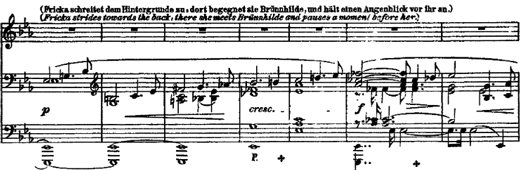

Both clips: Berlin Philharmonic, Herbert von Karajan, cond. DG (1966)

by Ken

In a moment we're going to hear fuller versions of the above "examples," and in multiple performances. First I should explain, though, that (ever so unusually!) we're encountering a mild detour. I thought we would be continuing with the remembrance, begun two weeks ago, of the fondly remembered English mezzo Josephine Veasey (tentatively labeled "Part 1?"), and I've been pondering some intereting repertory. What I should have realized is that the chances were never great that we might tiptoe past the great Fricka-Wotan scene of Act II of Die Walküre with just a polite wave. Sure enough, I got sucked in.

Some of it had to do with the curious moment in time we stumbled into with the Covent Garden Walküre we sampled, from late September 1965, in which Veasey sang Fricka with Georg Solti conducting, as he was weeks away from heading to Vienna to complete the Ring recording, the first ever, with Walküre, with Christa Ludwig as Fricka, even as Herbert von Karajan was preparing to being the second-ever Ring recording the following year with, of all things, Walküre -- and with, of all people, Josephine Veasey as Fricka both in Walküre and, the following year, Das Rheingold. Meanwhile, when Karajan actually launched Ring stage production, in 1967 at the brand-new Salzburg Easter Festival (engineered by guess-who), the Fricka of the broadcast was not Veasey but Ludwig, who was also Karajan's Fricka when he brought the Salzburg Walküre production to the Met that fall! So I've been rooting around among this material, trying to hear what there is to hear.

Some of this we're going to hear in this week's main post, currently in production -- along with some of the other material I've retrieved from the Sunday Classics Archive, I mentioned in last week's under-construction post. Plus, I actually wound up typing out an English text for the whole Fricka-Wotan scene, which again has entailed all manner of complications -- and opportunities.


FOR NOW LET'S JUST HEAR OUR ASSORTED TAKES
ON THAT FULLER VERSION OF EXAMPLES 1 AND 2


Monday, March 14, 2022

Raiding the archive for sounds
of Fricka and Wotan from Die Walküre [Caution: Post under construction -- step carefully!]

Mark Delevan and Stephanie Blythe as Wotan and Fricka at the Met
[Ruby Washington/New York Times]

IN CASE YOU HAVEN'T FIGURED THIS OUT --
I haven't quite figured out yet just what to make of all this, or how to make it. But I reached the point, as often happens in the making of these posts, where I needed to be able to hear the audio clips that were piling up -- all having to do, obviously, with the great confrontation between Fricka and Wotan in Scene 1 of Act II of Die Walküre, which we stumbled into last week in Part 1 of a remembrance of the fine English mezzo-soprano Josephine Veasey. I should have known better than to think that I could get by with just a passing wave at this scene, which I've written about in one form or another, in one place or another, a heckuva lot over the many years I've been living with it.

One thing that happened since I put that post up was that I took a peek in the Sunday Classics Archive to see what was already stockpiled there, and hardly surprisingly found a bunch, some of which you can hear here (everything that's in place as of now except the performances of the complete Fricka-Wotan scene). Another thing that happened, while I was trying to focus in on Veasey's Fricka, which I've admired (on records only, I should specify) since the Karajan-DG Walküre was released. -- Ken


WAGNER: Die Walküre: Act II, Scene 1,
from the Fricka-Wotan scene:
from Fricka, "Wo in Bergen du dich birgst"
("Here in the mountains, where you hide")

On the rocky pass, as the raging FRICKA, after leaping from her chariot drawn by rams, nears WOTAN, she moderates her pace and approaches him in a dignified manner.

FRICKA: Here in the mountains, where you hide
in order to escape your wife's eye,
here in solitude
I seek you out,
that you may promise me help.
WOTAN: What it is that troubles Fricka
let her freely tell.
FRICKA: I have learned of Hunding's distress;
he called on me for vengeance:
the guardian of wedlock
heard him
and promised to punish
with severity the deed
of the shameless impious pair
who so boldly wronged the husband.

Irene Dalis (ms), Fricka; Otto Edelmann (bs-b), Wotan; Metropolitan Opera Orchestra, Erich Leinsdorf, cond. Live performance, Dec. 23 1961

Mignon Dunn (ms), Fricka; Donald McIntyre (bs-b), Wotan; Metropolitan Opera Orchestra, Sixten Ehrling, cond. Live performance, Mar. 1 1975

Christa Ludwig (ms), Fricka; James Morris (bs-b), Wotan; Metropolitan Opera Orchestra, James Levine, cond. DG, recorded in Manhattan Center, April 1987

Yvonne Minton (ms), Fricka; Theo Adam (bs-b), Wotan; Staatskapelle Dresden, Marek Janowski, cond. Eurodisc-BMG, recorded in the Lukaskirche, Aug. 22-29, 1981

Sunday, December 6, 2020

On the pleasures of getting lost
in Götterdämmerung: revisiting the path to here, Part 2

SUNDAY 8:30pm UPDATE: After the earlier fillings-in, mostly around the Götterdämmerung and Walküre selections, I've added some Siegfried performance notes, and barring some likely (hoped for?) post cleanup, that should be about it!

OH WAIT! The missing "Norn Scene" audio clip is found -- and is now in place below! It's from the Met, March 1974: the beautiful (and beautifully cast) Götterdämmerung broadcast conducted by Rafael Kubelik during his sadly brief time as music director.

Brünnhilde (Deborah Voigt) has been awakened by Siegfried
(Jay Hunter Morris), at the Met, 2013.
[photo by Ken Howard]
After being kissed by SIEGFRIED, BRÜNNHILDE opens her eyes. SIEGFRIED stands up and stands before her. BRÜNNHILDE slowly rises to a sitting position. She raises her arms in solemn gestures, greeting the heaven and earth that now she sees again.

BRÜNNHILDE: Hail to you, sun! Hail to you, light!
Hail to you, radiant day!
My sleep was long; I am awakened.
Who is the hero who awoke me?
SIEGFRIED [deeply moved by her look and her voice, stands as if rooted to the spot]:
Through the fire I struggled, which blazes around the rock;
I broke you out of your tight helmet;
I am Siegfried, who awakens you.
BRÜNNHILDE [sitting straight up]: Hail to you, gods!
Hail to you, world!
Hail to you, shining earth!
My sleep is at an end.
I am awakened: it is Siegfried who awakens me!
SIEGFRIED [breaks out in ecstasy]:
I bless my mother, giving me birth!
bless the earth that gave me my strength!
Now I behold those eyes,
bright stars which laugh on my joy!
BRÜNNHILDE [overlapping, in impassioned accents]:
I bless your mother, giving you birth!
bless the earth, that gave you your strength.
Your eyes alone could behold me,
my heart to you alone wakes!
[Each remains in radiant, rapt contemplation of the other.]

Deborah Voigt (s), Brünnhilde; Plácido Domingo (t), Siegfried; Orchestra of the Royal Opera House, Covent Garden, Antonio Pappano, cond. EMI, from a Voigt-Domingo Wagner CD recorded January 2000

[kind of scrunched to fit the 78 side] Frida Leider (s), Brünnhilde; Rudolf Laubenthal (t), Siegfried; Berlin State Opera Orchestra, Leo Blech, cond. EMI, recorded Aug. 27, 1927

Kirsten Flagstad (s), Brünnhilde; Lauritz Melchior (t), Siegfried; Metropolitan Opera Orchestra, Artur Bodanzky, cond. Live performance, Jan. 30, 1937

Helen Traubel (s), Brünnhilde; Set Svanholm (t), Siegfried; Metropolitan Opera Orchestra, Fritz Stiedry, cond. Live performance, Feb. 10, 1951

Birgit Nilsson (s), Brünnhilde; Wolfgang Windgassen (t), Siegfried; Bayreuth Festival Orchestra, Karl Böhm, cond. Philips, recorded live, July 1966

by Ken

For a post that flaunts Götterdämmerung in the title -- and doesn't it seem to go on for inches and inches? -- we're going to be hearing precious little of it today. There will be a little, though, coming up in just a moment, as we revisit, in somewhat expanded form, the first two of the three iterations of what we're calling "the 'Awakening' music," from the "Second Day" (Siegfried) and "Third Day" (Götterdämmerung) of Wagner's Ring of the Nibelung.

So no, there won't be any trace this week of the third iteration, which comes so, um, dramatically in the next-to-last scene of Götterdämmerung. We've still got too much ground to cover before we might logically come to it. Nevertheless, even though it wasn't part of my original plan, I'm thinking that maybe we do want to get there at some point, but for sure not this week, or likely even next.

My thinking for this week is that, considering that last week ("On the pleasures of getting lost in Götterdämmerung: revisiting the path to here, Part 1") we were poking around the actual awakening of Brünnhilde, in Scene 3 of Act III of Siegfried, why not start with the awakening itself? And as long as we're awakening her, why not revisit the great succession of Brünnhildes, from Frida Leider to Kirsten Flagstad to Helen Traubel (maybe not unequivocally part of this line of succession, but so close, I think, to rating a place in this line of succession) to Birgit Nilsson?

By the way we're not done with this scene, which is on today's itinerary. But before we come back to it, I thought we might have another reminder of the point we're aiming to get back to, which is the second of the three "Awakening" iterations, in such strikingly altered musical form. Trust Wagner to begin the vastest of his operatic creations in such seemingly understated, and yet such richly detailed, form. And so, without further ado --

WE'RE BACK AT THE START OF GÖTTERDÄMMERUNG, AND NOW (AS PROMISED) WE'RE GOING JUST A BIT DEEPER IN

Sunday, November 29, 2020

On the pleasures of getting lost
in Götterdämmerung: revisiting the path to here, Part 1

Siegfried tries to awaken Brünnhilde
[As SIEGFRIED approaches the sleeper again, he is again filled with tender emotion at the sight of her. He bends over her.]
Sweet and quivering, her lovely mouth.
A gentle gladness charms fear from my heart!
Ah! how enchanting her warm, fragrant breath!
[As if in despair] Awaken! Awaken! Holiest maid!
-- from Siegfried, Act III, Scene 3 (singing translation by
Andrew Porter, used in the Remedios-Goodall performance)

[in English] Alberto Remedios (t), Siegfried; Sadler's Wells Opera Orchestra, Reginald Goodall, cond. EMI-Chandos, recorded live, August 1973

Lauritz Melchior (t), Siegfried; Berlin State Opera Orchestra, Robert Heger, cond. EMI, recorded May 12, 1930

Lauritz Melchior (t), Siegfried; Metropolitan Opera Orchestra, Artur Bodanzky, cond. Live performance, Jan. 30, 1937

Günther Treptow (t), Siegfried; Vienna Symphony Orchestra, Rudolf Moralt, cond. Myto, live recording of a 1949 concert performance of the act

Set Svanholm (t), Siegfried; Orchestra of the Teatro alla Scala, Wilhelm Furtwängler, cond. Live performance, Mar. 23, 1950

Wolfgang Windgassen (t), Siegfried; Bayreuth Festival Orchestra, Karl Böhm, cond. Philips, recorded live, July 1966

Siegfried Jerusalem (t), Siegfried; Bayreuth Festival Orchestra, Daniel Barenboim, cond. Teldec, recorded live, June-July 1992

[Note: We'll be hearing a fuller version of this scene in Part 2 of this post, when we'll talk a little about the performances. Meanwhile, I hope you're storing up your impressions of them! -- Ed.]

by Ken

As I explained in last week's still-unfollowed-up-on "post taste," "This is where we'd really like to start this week, but --," our inquiry into that starkly mysterious and foreboding character Hagen has led us back to the start of Götterdämmerung. Because what precedes in Wagner's Ring cycle is such a vast expanse of meticulously detailed music drama, it can be easy to forget how massive its final leg is in its own right -- at least until we're buckled in for the nearly two-hour expanse of Götterdämmerung's Prologue and Act I.

Götterdämmerung: Prologue: Orchestral prelude


Bavarian State Orchestra, Wolfgang Sawallisch, cond. EMI, recorded live at the Bavarian State Opera, November 1989

This two-minute prelude is the low-keyed and nevertheless magisterial opening of Götterdämmerung, aka Twilight of the Gods, the "Third Day" of The Ring of the Nibelung -- or by normal counting standards the fourth opera, since Wagner counted Das Rheingold, a massive expanse in its own right (running an uninterrupted two and a half to two and three-quarters hours), strictly as a prologue to the three "days" that follow.

What I'm trying to give a feel for is the way Wagner's unique operatic method enables him to create such finely detailed moments -- and there are no moments in the entire expanse of The Ring (let's call it roughly 14-15 hours; even among the handful of recorded Rings I spot-checked there were outliers: Böhm-Bayreuth 1966-67 at the quick end, at 13:39, and Goodall-English National Opera,1973-77, at the gradual end, at 16:03) that aren't finely detailed -- that are nevertheless bound musicodramatically to countless other moments in that vast expanse. In a bit we're going to hear the little Götterdämmerung orchestral prelude again and this time continue on a bit in the Prologue, taking in just a little of the chillingly awesome Norn Scene.

For now, though, let's just note that the music out of which this two-minute orchestral intro is fashioned is what I'm going to call "the 'Awakening' music," the music to which we witness Brünnhilde awakening from her long sleep in the final act of Siegfried, the "Second Day" of The Ring.


AS YOU'VE PROBABLY GATHERED, ONE OF OUR DESTINATIONS
TODAY IS THE "AWAKENING" ITSELF, BUT NOT BEFORE . . .


Sunday, November 15, 2020

"About the Nibelung I recently heard a rumor . . . "

TUESDAY NIGHT UPDATE: Progress is made. We've got the Götterdämmerung Prologue-to-Act I texts in place, and the cleaning up and filling in of the post text has begun.

It all started with Alberich (here, Eric Owens at the Met) and his discovery of the superpower he could enjoy if he managed to get hold of the Rhinegold and shape it into a ring.

by Ken

FIRST, A FEW EXPLANATORY NOTES
(in case you're wondering what the heck this is you're looking at!)

Explanatory Note No. 1: Last week we met the character who for me is one of the most engrossing not just in opera but in any theatrical or for that matter any fictional medium: Hagen, one of the final trio of characters Wagner presents to us in The Ring of the Nibelung, in the company of his half-siblings Gunther and Gutrune. We meet them chatting in their home, the Hall of the Gibichungs, as the curtain rises on Act I of the final installment of The Ring, Götterdämmerung (Twilight of the Gods) -- following, that is, the 40-minute-or-so Prologue, which together will form one of Wagner's super-acts, clocking in at not a whole lot less than two hours.

I pointed out that we were not meeting Hagen at the point of his actual presentation to the audience, though I promised we'd eventually get back to that. Instead we met him at a stunningly personal moment: as he is left alone to sit watch over the hall while Gunther heads off on a mad adventure with their recently arrived guest Siegfried -- a scheme of Hagen's devising, aimed at bringing within his reach the much-sought-after superpower-giving Ring of the Nibelung.


JUST TO REFRESH OUR MEMORIES --

Sunday, November 1, 2020

A closer look at, or anyway listen to, "persondom" at play in Act I of Die Walküre

Furtwängler rehearses with the Vienna Philharmonic on tour in London's Royal Festival Hall, 1948.

by Ken

For all sorts of reasons, this week's sights are set low: We're not going to do much more than cover the same ground we did last week ("If we're aiming to focus on Hunding -- and we are -- then first we need to get him onstage"), the chunk of Act I of Die Walküre from the start of the pounding orchestral prelude through Hunding's reply to Siegmund, with a small tack-on, the stage business as Hunding sends his wife off off to prepare a meal for himself and their uninvited guest, including his startled observation of the physical resemblance between his wife and the stranger, and with two changes of "reference":

* attention-wise, as close consideration as possible of what I described last week as the characters' "persondom," which is to say the way the writing for them connects to our experience of being human, and --

* performance-wise, listening to a set of recordings I've hankered for some time to butt up against one another: the four recorded performances of this seminal act we have by that unique Wagner conductor Wilhelm Furtwängler.

Of course "persondom" is easier to detect in Die Walküre Act I than in much of the rest of The Ring. This doesn't mean it's any less important in the rest of The Ring, as I hope has been clear in the considerable assortment of excerpts we've heard over the years. I'm thinking that maybe if we pay due attention here, it'll be more apparent elsewhere.

(Next week, according to plan, as we finish up with Hunding we're slated to eavesdrop on the chilling and yet riveting Hagen in Götterdämmerung. And you know, it might be interesting at some point to dive into the SC audio archive and, from this perspective of "persondom," revisit the Ring excerpts we've heard. Think of, say, the giants Fasolt and Fafner in Rheingold fighting to get fair payment for their labors, and then fighting with each other, or the Nibelung Mime, arguably the least sympathetic character in The Ring, grappling with his humongous problem in the singularly tormented opening of Siegfried.)


WHAT, FOUR FURTWANGLER RECORDINGS?

Sunday, October 25, 2020

If we're aiming to focus on Hunding -- and we are -- then first we need to get him onstage

BUT FIRST WE'LL NEED TO GET OUR OTHER
WALKÜRE ACT I PRINCIPALS ONSTAGE


The "oil sketch" for Walküre Act I by the Austrian painter
and scenic designer Josef Hoffmann (1831-1904)

Revivified by the drink of water provided by Sieglinde,
Siegmund sings, "Kühlende Labung gab mir der Quell"

SIEGMUND: Cooling relief
the draught has given me;
the burden of my weariness
is lightened;
my courage revives;
my eyes enjoy
the pleasure of sight.
Who is it who has so restored me?

Lauritz Melchior (t), Siegmund; Vienna Philharmonic, Bruno Walter, cond. EMI, recorded June 20-22, 1935

Ramón Vinay (t), Siegmund; Bayreuth Festival Orchestra, Joseph Keilberth, cond. Testament, recorded live, July 25, 1955

Siegfried Jerusalem (t), Siegmund; Staatskapelle Dresden, Marek Janowski, cond. Eurodisc, recorded Aug. 22-29, 1981

Plácido Domingo (t), Siegmund; Bayreuth Festival Orchestra, Giuseppe Sinopoli, cond. Live performance, July 27, 2000

by Ken

Right off the bat you're probably suspicious, and not just because this week's Sunday Classics offering is now slipping out late-ish of a Sunday that's already a full week overdue. You're thinking, "No, wait! If our announced goal is to get Hunding onstage, how come we're listening here to Siegmund?"

A fair question, to which the simple answer is that before we can get Hunding onstage, we've got to get Siegmund onstage -- and, really, Sieglinde as well. Technically speaking we managed in the last post ("Probably next week we'll hear what higher-class singing can mean for even a grim character like Hunding -- this week we've got some other business"). We could read in the stage directions about Siegmund making his appearance, stealing wordlessly into Hunding's house before collapsing by the hearth, but I ended the relevant audio clip just before we would have heard him.

We're going to fix that in a moment, but for now, if you think it would help get us on track -- I mean, to hear a bit of Hunding -- we can do that!


SURE, WE COULD HEAR A BIT OF HUNDING --
WE'LL JUST NEED TO JUMP AHEAD IN ACT I


Sunday, October 11, 2020

Probably next week we'll hear what higher-class singing can mean for even a grim character like Hunding -- this week we've got some other business

STORMY WEATHER -- AS IF SIEGMUND DIDN'T HAVE ENOUGH
TROUBLES! NO WONDER HE'S SO DESPERATE FOR SHELTER


Inside a dwelling. In the middle stands a mighty ash tree, whose prominent roots spread wide and lose themselves in the ground. The summit of the tree is cut off by a jointed roof, so pierced that the trunk and the boughs branching out on every side pass through it, through openings made exactly to fit. We assume that the top of the tree spreads out above he roof. Around the trunk of the ash, as central point, a room has been constructed. The walls are of rudely hewn wood, here and thre hung with plaited and woven rugs.

In the foreground, right, is a hearth, whose chimney goes up sideways to the roof; behind the hearth is an inner room, like a store room, reached by a few wooden steps. In front of it, half drawn, is a plaited hanging. In the background, an entrance door with a simple wooden latch. Left, the door to an inner chamber, similarly reached by steps. Further forward, on the same side, a table with a broad bench fastened to the wall behind it and wooden stools in front of it.

A short orchestral prelude of violent, stormy character introduces the scene. When the curtain rises,
SIEGMUND from without, hastily opens the main door and enters. It is towards evening; a fierce thunderstorm is just about to die down. For a moment, SIEGMUND keeps his hand on the latch and looks around the room; he seems to be exhausted by tremendous exertions; his raiment and general appearance proclaim him a fugitive. Seeing no one, he closes the door behind him, walks to the hearth, and throws himself down there, exhausted, on a bearskin rug.
-- translation by Andrew Porter
This storm has more menacing weight:

Bayreuth Festival Orchestra, Daniel Barenboim, cond. Teldec, recorded live, June-July 1992
While this storm has more slashing drive:

Cleveland Orchestra, Christoph von Dohnányi, cond. Decca, recorded 1992

by Ken

The above should provide a gentle reminder that coming off last week's post ("Last week I stuck up for Josef Greindl as Wagner's Daland, and this week too, as both Daland and Hunding -- but only up to a point"), we're lodged in Act I of Die Walküre, with particular focus on that shrouded-in-darkness householder Hunding, into whose house we have just slipped, mere minutes in advance of Siegmund. The idea for this week was that we were going to listen closely to Hunding's contributions to the grisly little domestic scene. We're looking to see what singing of real vocal distinction, allied with seriousness of purpose, of course, can add to the character's dimension.


I STILL WANT TO DO THAT -- JUST NOT RIGHT NOW

Friday, August 7, 2020

You remember those clips of Siegmund's monologue I mentioned?* Just for laughs, let's see what happens if I try to "publish" them

"A sword my father promised me": Stuart Skelton as Siegmund, so starkly alone and defenseless, literally and figuratively in the dark, in Seattle, 2012 (set by Thomas Lynch, photo by Elise Bakketun)

by Ken

Okay, this is maybe actually just possibly working, in a very limited way.*

[*To understand what I'm talking about, you would need to have read my earlier doom-engulfed outpouring. I'm not necessarily recommending it, I'm just saying.]

Much to my surprise, we've got the Walküre clips posted (I'll bet you thought I was making it up, about having them made and ready to go!), and I've successfully -- as far as I can tell -- taken the further step of adding the promised English texts, though typographically I can't help feeling that this is sort of the way Ben Franklin would have cobbled his blog together. Still, if it works, it works! (You'll notice that I've even managed to add images to the previous post and this one.) There's time ahead for contemplating the implications, if any.

So let's go ahead, in pursuit of our listening project, and listen to Siegmund's monologue from Act I of Die Walküre; then we'll rehear Florestan's Act II monologue from Fidelio sung by the same three tenors. The idea is to see whether, and in what ways, we can hear the strong vocal kinship between the roles of Florestan and Siegmund. First off, we're hearing, twice each, probably the two most notable Siegmunds since Melchior, Jon Vickers and James King, and then we'll hear no-sort-of-dramatic-tenor at all but instead that jack-of-all-tenor-trades Plácido Domingo.

The plan then, in the event that we can actually get away with this much madness, is to retrieve from last week's post ("The Minister is coming! The Minister is coming! Don Fernando and the lesson of Fidelio, Part 2) the Vickers, King, and Domingo performances of Florestan's monologue.

NOTE ON THE EDITING OF THE AUDIO CLIPS: This bothered me while I was doing it, and it bothers me now. Normally with multiple clips of a selection, I try to make them start and stop at pretty much the same points. In this case, though, with all six sources containing Siegmund's monologue by itself on a single CD track, in the interest of sanity I just went with the CD track placements; doing otherwise would have involved having, for all six versions, the preceding and following tracks at hand in case it proved necessary to edit in bits from them. I sorta wish I'd done it that way. (On second thought, maybe not. As it turns out, the clips start in pretty much the same place, though the King-Böhm and Domingo-Barenboim go back a bit farther. More importantly, the King-Böhm continues on significantly farther, and if I'd done the editing as per "rule" it might regrettably not have -- see below.)

WAGNER: Die Walküre: Act I, Scene 2, Siegmund's monologue
("Ein Schwert verhiess mir der Vater")

Thanks to the ravaging savages at Google, I don't know when, if ever, I'll be able to figure out how to do another post

UPDATE: Well, after thrashing my way through a follow-up post-of-sorts, I decided to try inserting an image here, and it sort-of-worked -- more cumbersomely and stupidly and with less satisfactory results than the way it used to work, but still, there's unquestionably an image here. (I've also found the buried option to "Revert to legacy Blogger" -- for as long as it works.)

by Ken

It looks like no post this Sunday, and maybe no Sunday to follow, thanks to Google, which has imposed not just a new interface for Blogger/Blogspot, the blog host that has been owned (and degraded) for several years now by Google, a change I knew was coming and was dreading, but what seems, now that I've been forcibly plunged into it, to be a different way of doing absolutely everything I've previously learned how to do. I have no idea what will happen when I gather all my nerve and press "Publish" on whatever I wind up writing here.

My fallback might have been to just share some music, but ironically that's one of the things I now don't know whether I have any clue how to do, since the new interface has been dismissing my HTML code as "incorrect code" even though it's just like code that's been working perfectly well -- and still seems to read okay even in already-posted posts I've had occasion to tinker with using the dreaded new interface.

I'M NOT JUST BEING THEORETICAL ABOUT THE IRONY

Sunday, July 19, 2020

The Minister is coming! The Minister is coming! Don Fernando and the lesson of Fidelio, Part 1


-- from Beethoven's setting of Schiller's "Ode 'To Joy',"
in the final movement of the Ninth Symphony

Jessye Norman, soprano; Brigitte Fassbaender, mezzo-soprano; Plácido Domingo, tenor; Walter Berry, bass-baritone; Vienna State Opera Concert Chorus, Vienna Philharmonic, Karl Böhm, cond. DG, recorded 1980


NOW, WHAT'S THE DEAL WITH DON FERNANDO?
DON FERNANDO: Our best of kings' will and pleasure
leads me here to you, poor people,
that I may uncover the night of crime,
which black and heavy encompassed all.
No longer kneel down like slaves,
stern tyranny be far from me!
A brother seeks his brothers,
and gladly helps, if help he can.
CHORUS: Hail the day! Hail the hour!
DON FERNANDO: A brother seeks his brothers,
and gladly helps, if help he can. . . .
-- from the final scene of Fidelio

Martti Talvela (bs), Don Fernando; Leipzig Radio Chorus, Staatskapelle Dresden, Karl Böhm, cond. DG, recorded c1968

by Ken

Even a seasoned operagoer may be forgiven for forgetting, even when Don Fernando appears at the top of a Fidelio cast list, as he often does, just who the heck he is. The fact is, if you add to what we've just heard a few lines we're going to hear in a while and just a few more we heard a few weeks ago ("'In this life scoundrels always receive their just desserts': Now that we know the lesson of Don Giovanni, how does it square with the lesson of Fidelio?," June 28), you've got the entire role!

And listen to who we've got singing it! Yes, it's early-career Martti Talvela, but he'd already established himself as a star, and just listen to that voice. There's none of that yawny, slidey quality that settled in dispiritingly quickly. (A reference point: the King Marke he sang in the 1965 live-from-Bayreuth Tristan und Isolde with Birgit Nilsson and Wolfgang Windgassen (and Christa Ludwig the spectacular Brangäne, one of my favorites of her recordings, conducted by, well, as it happens, Karl Böhm.) Here that ringing, booming bass slashes and soars and I'm going to say dazzles with its strength and beauty and ease. I think I need to revisit some more of those early recordings!


BUT THEN, "A-LIST" CASTING OF THE ROLE
IS MORE THE RULE THAN THE EXCEPTION


Sunday, January 20, 2019

The troubles of Fricka and Wotan, part 3: Golden apples or no, these gods sure have grown older (preliminary version)


Christa Ludwig as Fricka and James Morris as
Wotan in Das Rheingold, at the Met in 1994

Remember these bits, which we heard back in the first installment of our expanded listen to mezzo Yvonne Minton?
FRICKA: (1) Dearest sister, sweetest delight,
are you restored to me?
(2) See how our pure one stands humiliated and ashamed:
her anguished look mutely pleads for release.
Wicked man, to ask this of a loved one!
-- from Scene 4 (the final scene) of Das Rheingold


Yvonne Minton (ms), Fricka; Staatskapelle Dresden, Marek Janowski, cond. Eurodisc-BMG, recorded Dec. 8-11, 1980


Irene Dalis (ms), Fricka; Metropolitan Opera Orchestra, Erich Leinsdorf, cond. Live performance, Dec. 16, 1961


Mignon Dunn (ms), Fricka; Metropolitan Opera Orchestra, Sixten Ehrling, cond. Live performance, Feb. 15, 1975


Christa Ludwig (ms), Fricka; Metropolitan Opera Orchestra, James Levine, cond. DG, recorded Apr.-May 1988
[To clarify: While we later heard singers besides Ms. Minton sing these bits (in longer clips), this is our first hearing of Dalis, Dunn, and Ludwig in this music.]

by Ken

O course by the end of Das Rheingold Wotan, at the cost of forking over both the Tarnhelm and the Ring, has earned back his sister-in-law, Freia, from the custody of the Giants Fasolt and Fafner, which presumably means that the gods will once again have free access to the golden apples, the golden apples that grow in Freia's garden, which have heretofore kept them perpetually young. And so, once again, they should in theory no longer be aging.

Except that, with the passage of time and the accumulation of life experience, they clearly do age in at least some ways.

Now hear this:
FRICKA [pausing with dignity before WOTAN]:
Here in the mountains where you hide
to escape your wife's view,
here in solitude I seek you out,
that you may promise me help.
WOTAN: What troubles Fricka,
let her announce freely.
FRICKA: I have learned of Hunding's distress;
he called on me for vengeance:
the guardian of wedlock heard him,
promised severely to punish the deed
of the shameless impious pair
who so boldly wronged the husband.
-- Fricka's next appearance, in Act II of Die Walküre

Yvonne Minton (ms), Fricka; Theo Adam (bs-b), Wotan; Staatskapelle Dresden, Marek Janowski, cond. Eurodisc-BMG, recorded Aug. 22-29, 1981

Irene Dalis (ms), Fricka; Otto Edelmann (bs-b), Wotan; Metropolitan Opera Orchestra, Erich Leinsdorf, cond. Live performance, Dec. 23, 1961

Mignon Dunn (ms), Fricka; Donald McIntyre (bs-b), Wotan; Metropolitan Opera Orchestra, Sixten Ehrling, cond. Live performance, Mar. 1, 1975

Christa Ludwig (ms), Fricka; James Morris (bs-b), Wotan; Metropolitan Opera Orchestra, James Levine, cond. DG, recorded April 1987

Wow, that is one giant leap, for mankind and womankind and every other kind of kind. Though our second Rheingold bit above isn't quite the last thing we hear from Fricka in Das Rheingold, it's close. And the Walküre bit is definitely the first thing we hear from her following the long gap between the operas. In a bit we're going to be more precise about the contexts of all of our bits, which means going back over a stretch of interchange we already heard last week, this time breaking it down a bit, as we ponder the obvious question --


HOW THE HECK DID WE (AND OF COURSE
THEY) GET FROM POINT A TO POINT B?


Most of this is ready to go (at least I think it's most of it; these things rarely work out so easily, though), but for now I have to ask you to check back.
#

Monday, January 14, 2019

The troubles of Fricka and Wotan, part 2: He's always out making a big deal -- big deal!


from Scene 2 of Das Rheingold
FRICKA: A splendid dwelling, beautifully appointed,
might tempt you to tarry here and rest.
But you in building an abode
thought only of defenses and battlements.

Yvonne Minton (ms), Fricka; Staatskapelle Dresden, Marek Janowski, cond. Eurodisc-BMG, recorded Dec. 8-11, 1980

Mignon Dunn (ms), Fricka; Metropolitan Opera Orchestra, Sixten Ehrling, cond. Live performance, Feb. 15, 1975

from Scene 4 of Das Rheingold
WOTAN [turning solemnly to FRICKA]:
Follow me, wife:
in Valhalla dwell with me.

Friedrich Schorr (b), Wotan; Berlin State Opera Orchestra, Leo Blech, cond. EMI, recorded June 17, 1927

Ferdinand Frantz (bs-b), Wotan; Vienna Symphony Orchestra, Rudolf Moralt, cond. Broadcast performance, 1948

by Ken

In the "The troubles of Fricka and Wotan, part 1: A tease for this week's post, spotlighting those troubles" (a follow-up to last week's "Yes, we're going to do a bit more Rheingold business, but first we have to solve a Mystery Baritone conundrum"), we heard a bunch of performances of the above snatches from the second and fourth of the four scenes of Das Rheingold, the first two installments in what I think of as a triptych of "Scenes from a Marriage" embedded in Wagner's Ring cycle: the Fricka-Wotan confrontations that reach their blow-out climax in Act II of Die Walküre.

I really tried to present both Fricka and Wotan at their human best, even if, in one of the two cases, that "best" exists mostly in the character's own head. As I mentioned in the "tease," I also tried hard to keep those moments just that, moments, but I promised that we would hear fuller, more contextual versions, and we will. First, however --

SHOULDN'T WE BACKTRACK TO ESTABLISH MORE
CLEARLY HOW WE GOT TO THIS POINT IN SCENE 2?


Sunday, January 13, 2019

The troubles of Fricka and Wotan, part 1: A tease for this week's post, spotlighting those troubles


from Scene 2 of Das Rheingold:
FRICKA: A splendid dwelling, beautifully appointed,
might tempt you to tarry here and rest.
But you in building an abode
thought only of defenses and battlements.

Yvonne Minton (ms), Fricka; Staatskapelle Dresden, Marek Janowski, cond. Eurodisc-BMG, recorded Dec. 8-11, 1980

Irene Dalis (ms), Fricka; Metropolitan Opera Orchestra, Erich Leinsdorf, cond. Live performance, Dec. 16, 1961

Mignon Dunn (ms), Fricka; Metropolitan Opera Orchestra, Sixten Ehrling, cond. Live performance, Feb. 15, 1975

Regina Resnik (ms), Fricka; Bayreuth Festival Orchestra, Rudolf Kempe, cond. Live performance, July 26, 1961

from Scene 4 of Das Rheingold
WOTAN [turning solemnly to FRICKA]:
Follow me, wife:
in Valhalla dwell with me.

Friedrich Schorr (b), Wotan; Berlin State Opera Orchestra, Leo Blech, cond. EMI, recorded June 17, 1927

Rudolf Bockelmann (bs-b), Wotan; Berlin State Opera Orchestra, Franz Alfred Schmidt, cond. Telefunken, recorded Feb. 10, 1933

Ferdinand Frantz (bs-b), Wotan; Vienna Symphony Orchestra, Rudolf Moralt, cond. Broadcast performance, 1948

George London (bs-b), Wotan; Vienna Philharmonic, George Solti, cond. Decca, recorded September 1958

Dietrich Fischer-Dieskau (b), Wotan; Berlin Philharmonic, Herbert von Karajan, cond. DG, recorded December 1967

by Ken

Really, I had enough audio files ready, and a sketchy but sufficiently conscious sense of where they were going to lead us, that I should have been able to put up at least some sort of tease for this week's post bright and early this morning. And yet I didn't. Instead I blew off my schedule for the day and instead spent it playing and weighing, making still more clips and contemplating different paths through them. For once I've kind of had fun doing it. That counts for something.

Even now I can't say for sure where exactly we're going to wind up, not to mention exactly how we're going to get there. Even once I decided on something like the above array of musical excerpts, they've undergone considerable mutation, mostly (perhaps not surprisingly) in the direction of expansion. But in the end I fought the temptation to let the basic clips grow. Though we'll hear longer versions of them, for now I want to limit them to just interestingly diverse iterations of these two very small but very powerful moments.

I'm pretty sure there's going to be a significant-size "main" post yet to come this week, and possibly in more than one installment. For now, however, I'm going with this. Enjoy these morsels.
#

Sunday, January 6, 2019

A tease for this week's actual post, in which we hear more from Yvonne Minton (plus maybe, uh, some other stuff)

Yvonne Minton as the Rheingold Fricka in a production by . . . no, no, I can't try to pretend that this is one of those don't-mean-no-goddamn-thing modern-style misstagings. Actually, I did find a shot of YM as the Walküre Fricka -- a kind of funny-looking one, at that -- but I thought I'd best save that for the "real" post. No apologies for depicting her as the title character of Der Rosenkavalier, though -- as we heard in last week's post spotlighting "Four variously special singers," she was a radiant Octavian.

Now, speaking of the two Frickas --

"It's very difficult to do very much with Rheingold. One just looks dignified, and you just really do what the text dictates because [Fricka] never has more than two lines at a time. There are one or two really beautiful phrases, but they are very short."
-- Yvonne Minton, in a 1981 interview with Bruce Duffie, asked how
different the roles of Fricka in Das Rheingold and Die Walküre are

And I'd guess these are among those "really beautiful phrases" --
Dearest sister, sweetest delight,
are you restored to me?

See how our pure one stands humiliated and ashamed:
her anguished look mutely pleads for release.
Wicked man, to ask this of a loved one!

Yvonne Minton (ms), Fricka; Staatskapelle Dresden, Marek Janowski, cond. Eurodisc-BMG, recorded Dec. 8-11, 1980

by Ken

Yes, I know, you don't want to hear this week's litany of woes -- you know, all the difficulties and obstructions and whatnot. I think I know how a post of some sort will come together, and the two Frickas will be at the heart of it. So enjoy this hint, and this other maybe-sort-of-hint.

JULE STYNE with BETTY COMDEN and ADOLPH GREEN:
Do Re Mi: "Take a job"


Nancy Walker (Kay) and Phil Silvers (Hubie), vocals; Original Broadway Cast recording, Lehman Engel, cond. RCA, recorded 1961


NOT SERIOUS ENOUGH FOR YOU? OKIE-DOKE --

Saturday, November 16, 2013

Preview: The long-separated twin brother and sister Siegmund and Sieglinde recognize each other


Plácido Domingo and Adrienne Pieczonka as Siegmund and Sieglinde at the Met, April 2009

by Ken

This week I want to finish up with my contention that that extraordinary depth of pain we hear coming out of Wotan, first in Act II of Die Walküre and then, of course, in the his final farewell to his cherished daughter Brünnhhilde at the end of the opera, is tempered by our knowledge that most of this pain is self-inflicted.

Last time we listened to the whole of Act I of the Walküre, the second opera (but properly speaking "First Day") of Wagner's Ring of the Nibelung tetralogy. In preparation for Sunday's installment, we're going to back to the end of Act I, and pick up after Sieglinde, having heard her mysterious guest's woeful life story, has drugged her husband Hunding and returned to share some of her background. Suddenly the door of Hunding's house blew open, and Sieglinde has asked who left.

This is of course one of the supreme scenes in the musical literature. We're going to start with the Melchior-Lehmann performance we already heard as part of the complete Act I recorded by EMI in Vienna in 1935 under the baton of Bruno Walter, but then we're going to hear an earlier Melchior recording -- unfortunately acoustical -- with the great Brünnhilde and Isolde Frida Leider as Sieglinde. Then we hear Jon Vickers, who I think it's safe to say has been the most successful of the post-Melchior Siegmunds, in the Karajan recording with the surprising choice of the lyric soprano Gundula Janowitz as Sieglinde (I happen to enjoy her performance a lot), and finally we have the sturdy Siegmund of Sieglinde coupled with the vocally strongest Sieglinde at least since Leonie Rysanek.

Sunday, October 27, 2013

"Up to now I have done nothing even approaching it" (Richard Wagner on Act I of "Die Walküre")


We've already heard the stormy orchestral introduction to Die Walküre -- in the February 2012 post "Storms that set three great operatic scenes in motion (aka: Musical storms, part 3)."

Vienna Philharmonic, Sir Georg Solti, cond. Decca, recorded Oct.-Nov. 1965

Bayreuth Festival Orchestra, Daniel Barenboim, cond. Teldec, recorded live, June-July 1992

New Philharmonia Orchestra, Otto Klemperer, cond. EMI, recorded 1969


"The score for Act I of The Valkyrie will soon be ready. It is extraordinarily beautiful; up to now I have done nothing even approaching it."
-- Richard Wagner, in a letter to Franz Liszt dated
February 16, 1855 (translated by M. M. Bozman)

by Ken

For the record, Wagner's guess about the score for Act I of Die Walküre being ready "soon" was wrong, just as he had been wrong in June 1852 when he was finishing the libretto and estimating to Liszt that he would "be able to polish off the music very quickly and easily, for it is only the carrying out of what is complete already." After all, as my friend Conrad Osborne suggested when I mentioned this to him once, Wagner could already hear it in his head.

It wasn't until October 3, 1855, that he was able to send Liszt not just Act I but Acts I and II. That said, the part about Act I being "extraordinarily beautiful" and the composers's "hav[ing] done nothing even approaching it" up to that point -- that part could hardly have been more true. Neither he nor anyone else had done anything like it.

In that spirit, perhaps, we've never done anything like what we're doing today either.

I had the post to follow last week's "Can we fully feel Wotan's pain knowing that it's mostly self-inflicted?" pretty well mapped out (as set up in Friday night's preview, "Brünnhilde asks, 'Who am I if I were not your will?' Question: Is it ever OK for a daughter to say such a thing to her father?," and a number of audio files and some of the texts were already prepared. But to be honest, I just didn't have the energy or concentration to do all the choosing and editing still to be done, not to mention figuring out what to say about it all.

Then it occurred to me that we're at a perfect juncture to just listen to Act I of this First Day of the Ring cycle (Das Rheingold being formally a prologue). In Das Rheingold we left the gods making their grand entrance across the rainbow bridge into Valhalla, Wotan having finessed his original ethical and contractual breach by stealing the ring recently forged by the Nibelung Alberich after he stole the Rhinegold -- the titular Ring of the Nibelung.


WHEN THE CURTAIN RISES ON ACT I OF DIE WALKÜRE --

Saturday, October 26, 2013

Preview: Brünnhilde asks, "Who am I if I were not your will?" Question: Is it ever OK for a daughter to say such a thing to her father?


Deborah Voigt as Brünnhilde and Bryn Terfel as Wotan in the new Met production of Die Walküre, 2011
BRÜNNHILDE [answers WOTAN softly]:
To Wotan's will you're speaking;
you can say what you will;
what am I,
if not your will alone?
-- English singing translation by Andrew Porter
[A]

[B]

[C]

[D]

Our four Brünnhildes could be drawn from this list (in alphabetical order): Kirsten Flagstad, Rita Hunter, Birgit Nilsson, and Astrid Varnay

by Ken

There are, of course, parents who truly don't want their children to be independent -- indeed, whole cultures that depend on squelching any such impulse. But through time there have also been lots of seemingly enlightened parents who wish this devoutly, as long as said independence leads the children to think and behave exactly as they would wish. It doesn't usually work out this way. It's a dilemma.

Now Wotan has particular reasons for needing independence in his children, which we won't go into now, except to wonder how feasible it is for his own flesh and blood to be truly independent of him. This week we're continuing to deal with his unbearable pain at being forced to part with his Valkyrie daughter Brünnhilde, as he does in the great Farewell at the end of Die Walküre, which we heard last week ("Can we fully feel Wotan's pain knowing that it's mostly self-inflicted?"). It's after he has been bitch-slapped by his wife, Fricka, over the whole mess he's gotten into, dating back to his flagrant breach of contract with the giants Fasolt and Fafner, violating a contract he never had any intention of honoring, that he finds himself in dialogue with Brünnhilde.

Brünnhilde has found her father in a state of despair unlike anything she has ever seen, and has implored him to open up to her. He responded with one of the musical literature's most extraordinary outbursts -- an expression of rage and self-pity (which we're going to hear in a moment). Getting a bit of control of himself, he asked whether unburdening himself might not cost him the grip of his will. She responds with the extraordinary passage we've just heard.


LET'S HEAR OUR FOUR BRÜNNHILDES AGAIN,
THIS TIME PROPERLY IDENTIFIED


Sunday, October 20, 2013

Can we fully feel Wotan's pain knowing that it's mostly self-inflicted?

UPDATE: I had the text for the complete Farewell all ready to paste in, and then -- already running late for an appointment -- I forgot to do it! It's done now.


Brünnhilde (Lisa Gasteen) and Wotan (James Morris) at the Met, 2008
BRÜNNHILDE, moved and exalted, sinks on WOTAN's breast: he holds her in a long embrace. She throws her head back again and, still embracing WOTAN, gazes with solemn rapture in his eyes.

WOTAN: These eyes so warm and bright,
which, smiling, often I kissed,
when courage
I acclaimed with kisses,
while childish prattle
in heroes' praise
was heard to pour from your lips:
yes, these gleaming, radiant eyes,
which shone so bright in the storm,
whn hopeless yearning
consumed my spirit,
and worldly pleasures
wee all I longed for,
when fear fastened upon me --
their glorious fire
gladdens me now,
as I take this loving,
last farewell!
On some happy mortal
one day they'll shine:
but I, hapless immortal,
I must lose them forever.
[He clasps her head in his hands.]
And sadly
the god must depart;
one kiss akes our godhead away!
[He presses a long kiss on her eyes. She sinks back with closed eyes, unconscious, in his arms. He gently supports her to a low mossy bank, which is overshadowed by a wide-branching fir tree, and lays her upon it. He looks upon her and closes her helmet; his eye then rests on the form of the sleeper, which he completely covrs with the great steel shield of the Valkyrie. He turns slowly away, then turns round again with a sorrowful look. Then he strides with solemn decision to the middle of the stage, and directs the point of his spear towards a massive rock.]
-- English singing translation by Andrew Porter,
used in the Goodall-English National Opera recording

[in English] Norman Bailey (b), Wotan; English National Opera Orchestra, Reginald Goodall, cond. EMI-Chandos, recorded live, Dec. 18, 20, and 23, 1975

Friedrich Schorr (b), Wotan; Berlin State Opera Orchestra, Leo Blech, cond. EMI, recorded June 17, 1927

George London (b), Wotan; London Symphony Orchestra, Erich Leinsdorf, cond. RCA-Decca, recorded September 1961

Thomas Stewart (b), Wotan; Berlin Philharmonic, Herbert von Karajan, cond. DG, recorded Aug., Sept., and Dec. 1966

John Tomlinson (bs), Wotan; Bayreuth Festival Orchestra, Daniel Barenboim, cond. Teldec, recorded live, June-July 1992

by Ken

As promised in Friday night's preview ("Wotan's Farewell -- feeling the pain"), today we're hearing the whole of Wotan's Farewell, the conclusion of Die Walküre, and we're going to listen to it in the context of the question: Can we feel Wotan's pain even knowing that it's largely self-inflicted?

Above we've heard the "missing" portion -- the central section that follows the opening, which we heard Friday night, and the concluding section that begins with Wotan's call to Loge, the god of fire, which we heard in last week's preview ("To prepare for some serious Bruckner business, we need to consult Wagner's fiery demigod Loge"). Actually, we originally heard the opening and closing orchestral sections attached to the respective opening and closing sections., but I thought it would be nice to hear this central section in full context.


AS TO MY ASSERTION THAT WOTAN'S PAIN IS LARGELY
SELF-INFLICTED, IN THE EVENT THAT IT ISN'T OBVIOUS . . .


Saturday, October 19, 2013

Preview: Wotan's Farewell -- feeling the pain


The final parting of Brünnhilde (Anne Evans) and Wotan (John Tomlinson) in Harry Kupfer's Bayreuth production of Die Walküre -- we hear a snatch below.
WOTAN, overcome and deeply moved, turns eagerly towards BRÜNNHILDE, raises her from her knees, and gazes with emotion into her eyes.

WOTAN: Farewell, my valiant,
glorious child!
You were the holiest pride of my heart!
Farewell! Farewell! Farewell!
[Very passionately] Though I must leave you,
and may no longer
embrace you in greeting;
though you may no more
ride beside me,
nor bear my mead in Walhall;
though I abandon you
whom I love so,
the laughing delight of my eye:
a bridal fire
shall blaze to protect you,
as never has burned for a bride.
Threatening flames
shall flare from the rock;
the craven will fear it,
cringe from its fury;
the weak will flee
from Brünnhilde's rock!
For one alone wins you as bride,
one freer than I the god.
[BRÜNNHILDE, moved and exalted, sings on WOTAN's breast: he holds her in a long embrace. She throws her head back again and, still embracing WOTAN, gazes with solemn rapture in his eyes.]
-- English singing translation by Andrew Porter,
used in the Goodall-ENO recording

[in English] Norman Bailey (b), Wotan; English National Opera Orchestra, Reginald Goodall, cond. EMI-Chandos, recorded live, Dec. 18, 20, and 23, 1975

Norman Bailey (b), Wotan; New Philharmonia Orchestra, Otto Klemperer, cond. EMI, recorded 1970

by Ken

Change of plans. I know the purpose of our making the acquaintance of Loge, the god of fire (and of lies), last week was to set the stage for a final Sunday Classics Bruckner exploration, but in the process we inevitably stumbled into the ineffable final scene of Die Walküre, from the point at which Wotan summons Loge to resume his original form as fire to protect the now-sleeping Brünnhilde on her mountaintop from any but the hardiest suitor. And I don't see how we can come this close without pausing to take account of the whole of Wotan's Farewell.

We're hearing the start of the Farewell proper, after Wotan has informed his cherished daughter Brünnhilde that, because she disobeyed him, she is to be stripped of her Valkyrie-dom and abandoned on the mountaintop to be awakened by some passing hero, and she has suggested that he protect her with a ring of fire. And speaking of heroes, ours has to be Norman Bailey, who manages to sustain not only Reginald Goodall's but also Otto Klemperer's extremely gradual tempos -- with the reward that I really don't know of any other performance that communicates more intensely the pain Wotan is suffering.

We're going to round out this preview with pretty much the same group of Wotans we heard last week close out this great scene. And then on Sunday we can take a closer listen to Wotan's pain.


Friedrich Schorr (b), Wotan; Berlin State Opera Orchestra, Leo Blech, cond. EMI, recorded June 17, 1927

George London (b), Wotan; London Symphony Orchestra, Erich Leinsdorf, cond. RCA-Decca, recorded September 1961

Thomas Stewart (b), Wotan; Berlin Philharmonic, Herbert von Karajan, cond. DG, recorded Aug., Sept., and Dec. 1966

John Tomlinson (bs), Wotan; Bayreuth Festival Orchestra, Daniel Barenboim, cond. Teldec, recorded live, June-July 1992


IN THIS WEEK'S SUNDAY CLASSICS POST

How deeply can we feel Wotan's pain if we conclude that most of it is self-inflicted?
#