Showing posts with label Wilhelm Furtwaengler. Show all posts

Monday, April 8, 2024

Rassling with the symphonic adagios of Bruckner and Mahler, Part 2

We left off Part 1 of this post:
BEFORE WE PROCEED TO THE LAST THREE BRUCKNER SYMPHONIES, LET'S CONNECT WITH A MAHLER ADAGIO --
Which is where we'll pick up in Part 2.


FIRST LET'S CONSIDER A COUPLE OF NEAR-ADAGIOS

First, let's consider a couple of near-adagios. Mahler 1 and 2 have slow movements we wouldn't even think to call adagios. Mahler 3, about as strange a pile of symphonic construction as I'm aware of, actually concludes with an extended slow movement that might qualify, and the precedent of concluding a large symphony with a large slow movement is certainly going to catch fire with Mahler, but in M3 I think he's playing at something else here, especially when we consider the long opening section that begins all-strings and then for a good piece allows only small-bore wind intrusions. Let's listen -- I think you'll hear what I mean.

MAHLER: Symphony No. 3 in D: vi. Langsam. Ruhevoll. Empfunden. (Slow. Peaceful. Felt.)


Chicago Symphony Orchestra, Sir Georg Solti, cond. Decca, recorded in Orchestra Hall, November 1982

Boston Symphony Orchestra, Erich Leinsdorf, cond. RCA, recorded in Symphony Hall, Oct. 10-11, 1966

London Symphony Orchestra, Jascha Horenstein, cond. Unicorn-Kanchana, recorded in Fairfield Hall, Croydon, London, July 27-29, 1970

New York Philharmonic, Leonard Bernstein, cond. DG, recorded live in Avery Fisher Hall, Nov. 25-28, 1987

Rassling with the symphonic adagios of Bruckner and Mahler, Part 1

NOTE TO READERS: It was hard enough getting this post strung out from start to finish. When that was done, I knew that one thing I'd most feared had happened: There are too many files, and these files are big ones, to have much hope of the post loading properly or easily. It already wasn't going to be finished at the finish line, but now it would have to be split in two. Part 2 will post pretty much any time now. -- Ken

[No. 7] Adagio - Sehr feierlich und sehr langsam
(Adagio - Very solemn and very slow)


[No. 8] Adagio - Feierlich langsam, doch nicht schleppend
(Adagio - Solemnly slow, yet not dragging)


The first statement of the main theme of the Adagios of Anton Bruckner's Seventh and Eighth Symphonies, played by, respectively: [7] the Berlin Phil under Seiji Ozawa and [8] the Vienna Phil under Herbert von Karajan


WHILE ALL ADAGIOS ARE SLOW MOVEMENTS,
ONLY SOME SLOW MOVEMENTS ARE ADAGIOS


And here we hear prime specimens of "NOT AN ADAGIO" slow movements from the undisputed masters of symphonic adagio-making:

BRUCKNER: Symphony No. 4 in E-flat:
ii. Andante quasi allegretto


Munich Philharmonic, Rudolf Kempe, cond. Acanta, recorded in the Bürgerbräukeller, Dec. 14-15, 1975 & Jan. 20-21, 1976
MAHLER: Symphony No. 6 in A minor:
iii. [or ii.] Andante moderato

[Mahler himself, you'll recall, was of two minds about the order of the symphony's middle movements, the Andante moderato and the Scherzo]

Cleveland Orchestra, George Szell, cond. Columbia-CBS-Sony, recorded live in Severance Hall, October 1967
by Ken

In last week's post, we "chart[ed] our course from Beethoven's visionary symphonic adagio to the great symphonic adagios of Bruckner and Mahler," which is the course that lies ahead of us. It hasn't worked out quite the way -- that is, any of the ways -- it was meant to, but here we are, somewhere between Plan C and Plan D, forging ahead, starting with this idea I had (it seemed like a good idea at the time) that it might be helpful, in getting a handle on these symphonic adagios, to separate out slow movements that aren't adagios.

Okay, the performances I've slotted in above are skewed just a little, in the direction of "non-adagio-tizing" these specimen movements -- with performances that underscore these movements' non-adagio-ness, in particular Szell's almost breezy take on the Mahler 6's "Andante moderato" tempo marking. Still just drawing on the SC archive (meaning that these are performances we've heard before, unless a clip was made for a post that never got posted), which is overflowing with performances of this movement, which I love a lot, I could have inserted these broader and emotionally weightier statements --

MAHLER: Symphony No. 6 in A minor:
iii. [or ii.] Andante moderato


New Philharmonia Orchestra, Sir John Barbirolli, cond. EMI, recorded in Abbey Road Studio No. 1, London, Sept. 26-27, 1969

London Philharmonic Orchestra, Klaus Tennstedt, cond. EMI, recorded live in the Royal Festival Hall, November 1991
I love pretty much everything about the Barbirolli M6, not least the bold and soul-stirring Andante moderato, and I also love the darker, more insinuating quality of the Tennstedt live M6 Andante moderato. (I very much like the 1983 studio recording Tennstedt made as part of his LPO Mahler cycle, but I'm happy EMI also issued the later live performances of M6 and M7.)

Similarly with the Bruckner 4 Andante quasi allegretto --

Sunday, March 31, 2024

In which we chart our course from Beethoven's visionary symphonic adagio to the great symphonic adagios of Bruckner and Mahler

(And we run smack into the dread Ninth Symphony snafu)

Maestro Furtwängler will get us from Beethoven's sublime symphonic adagio to Bruckner; then Carlo Maria Giulini will carry us on to Mahler.

BEETHOVEN: Symphony No. 9 in D minor, Op. 125:
iii. Adagio molto e cantabile


Bayreuth Festival Orchestra, Wilhelm Furtwängler, cond. EMI, recorded live in the Festspielhaus, July 29, 1951

Berlin Philharmonic, Carlo Maria Giulini, cond. DG, recorded in the Philharmonie, Feb. 1989 & Feb. 1990

by Ken

Last week, you may recall, "Our ongoing Seiji Ozawa remembrance sidetracked me into some aural pondering of the symphonic adagio." I'm afraid we're not going to get much farther today than scouting the route, but that still leaves us in for some remarkable music.

You'll note that in last week's post I've upgraded the audio clip of the 1951 Furtwängler Beethoven Ninth, and this week we've heard it again, paired with Carlo Maria Giulini's performance, and that duo will escort us to -- in fact, all the way through -- Anton Bruckner's symphonic adagio-ing, to his final Adagio, the last movement he composed, the Adagio of his Ninth Symphony, whose intended finale he ran out of either time or inspiration to "complete."

The sound of Furtwängler's 1944 Bruckner 9 is less happy even than that of his 1951 Beethoven 9 [AFTERTHOUGHT: however, the upgraded Beethoven 9 audio clip sure sounds better (how 'bout those timpani?), and for that matter the Bruckner 9 clip sounds a lot better than I expected -- Ed.], but it's good enough, and will have to do, since it's the only Bruckner 9 he left us. And if there's one thing classical-music lovers generally agree on (there aren't many!), it's that the Furtwängler Bruckner 9 is one of the greatest and least dispensable recordings we have. That said, Carlo Maria Giulini's Bruckner 9 seems to me of comparable stature. In the fullness of his long career, Maestro G. had the opportunity to show us how deep and darkly perceiving an artist he was -- I've described this performance as "dripping blood."

Finally for this week, Maestro Furtwängler not being a Mahler guy, Maestro Giulini will lead us the final step to Mahler, represented by a movement I don't think is often thought of as a "symphonic adagio" -- only it is, isn't it?


LISTENING TO FURTWÄNGLER'S AND GIULINI'S
PERFORMANCES OF THE ADAGIO OF BRUCKNER 9 . . .


Monday, March 25, 2024

Our ongoing Seiji Ozawa remembrance sidetracked me into some aural pondering
of the symphonic adagio

UPDATE: Now with a better clip of the Adagio of the Furtwängler Beethoven Ninth

Carlo Maria Giulini (1914-2005) conducting the Los Angeles
Philharmonic, c1980
[photo: Los Angeles Philharmonic Archives]

"Adagio A"

Vienna Symphony Orchestra, Carlo Maria Giulini, cond. EMI-Testament, recorded in the Grosser Saal of the Musikverein, Dec. 8-10, 1974

"Adagio B"

Berlin Philharmonic, Carlo Maria Giulini, cond. DG, recorded in the Philharmonie, Feb. 1989 & Feb. 1990

by Ken

I don't expect that everyone will recognize one of these two movements, while I expect that most everyone will recognize the other, which is one of the core chunks of Western music from the 19th century forward. I hope that most listeners will hear in both of the above clips performances of attention-grabbing splendor. This performance of the lesser-known piece, and indeed of the symphony it comes from, made me think about the piece itself.

Later we're going to hear Giulini's performance of this movement alongside two other, really wonderful performances -- so good that it almost pains me to point out that they yield to Giulini's achievement in applying, from the outset, such an irresistible grabbing quality, a personal connection that animates a sense of the vitality and urgency of the piece which makes me hear its direct lineage from our other demonstration Adagio.


FIRST OFF, WHAT IS AN ADAGIO?

It's not easy to pin down, but attempts to do so often offer by way of example --

Adagio in G minor for organ and strings (arr. Giazoto)


David Bell, organ; Léon Spierer, violin; Berlin Philharmonic, Her­bert von Karajan, cond. DG, recorded in the Kammer­musik­saal of the Philharmonie, Sept. 30, 1983

Sunday, March 20, 2022

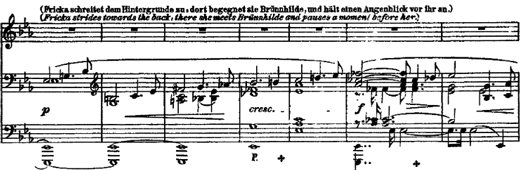
Preview: Fricka vs. Wotan --
The final confrontation*

*When we get to the main post, you'll see that we can maybe think of this as "Part 1a" of our Josephine Veasey remembrance.

Or: How Fricka & Wotan get from "Example 1" --


to "Example 2" --


Both clips: Berlin Philharmonic, Herbert von Karajan, cond. DG (1966)

by Ken

In a moment we're going to hear fuller versions of the above "examples," and in multiple performances. First I should explain, though, that (ever so unusually!) we're encountering a mild detour. I thought we would be continuing with the remembrance, begun two weeks ago, of the fondly remembered English mezzo Josephine Veasey (tentatively labeled "Part 1?"), and I've been pondering some intereting repertory. What I should have realized is that the chances were never great that we might tiptoe past the great Fricka-Wotan scene of Act II of Die Walküre with just a polite wave. Sure enough, I got sucked in.

Some of it had to do with the curious moment in time we stumbled into with the Covent Garden Walküre we sampled, from late September 1965, in which Veasey sang Fricka with Georg Solti conducting, as he was weeks away from heading to Vienna to complete the Ring recording, the first ever, with Walküre, with Christa Ludwig as Fricka, even as Herbert von Karajan was preparing to being the second-ever Ring recording the following year with, of all things, Walküre -- and with, of all people, Josephine Veasey as Fricka both in Walküre and, the following year, Das Rheingold. Meanwhile, when Karajan actually launched Ring stage production, in 1967 at the brand-new Salzburg Easter Festival (engineered by guess-who), the Fricka of the broadcast was not Veasey but Ludwig, who was also Karajan's Fricka when he brought the Salzburg Walküre production to the Met that fall! So I've been rooting around among this material, trying to hear what there is to hear.

Some of this we're going to hear in this week's main post, currently in production -- along with some of the other material I've retrieved from the Sunday Classics Archive, I mentioned in last week's under-construction post. Plus, I actually wound up typing out an English text for the whole Fricka-Wotan scene, which again has entailed all manner of complications -- and opportunities.


FOR NOW LET'S JUST HEAR OUR ASSORTED TAKES
ON THAT FULLER VERSION OF EXAMPLES 1 AND 2


Monday, August 9, 2021

You might still catch the Chamber Music Society of Lincoln Center's Schubert Quintet before 7:30pm tonight (Aug. 9). But if not --

Violinists Arnaud Sussmann and Paul Huang, cellists David Finckel and Nicholas Canellakis, and violist Matthew Lipman performed the sublime Schubert String Quintet in C in the "Evenings at the Frederick R. Koch Foundation Townhouse" concert streamed free on the Chamber Music Society of Lincoln Center website for a week beginning last Monday (August 2), and theoretically available until 7:30 tonight, when --
This week's program streams live --

with Paul Huang and Nicholas Canellakis returning, joined by violinist Sean Lee and violists Misha Amory and Hsin-Yun Huang, for (as I described it recently) Dvořák's "strange and surprising and also singularly luscious" Terzetto for two violins and viola, Op. 74 (which we listened to in the June 6 post, "At the very least, we can listen to this vaguely weird and utterly beguiling little Dvořák piece"), and Mendelssohn's added-viola Second String Quintet. Still to come: on August 16, Ravel's Violin Sonata and Rachmaninoff's Cello Sonata; from August 23, "Schubert Fantasies" (the great F minor for piano four hands, D. 940 and the C major for violin and piano, D. 934); and on August 23, the First Piano Trios of Beethoven and Saint-Saëns played by pianist Anne-Marie McDermott, violinist Chad Hoopes, and cellist Dmitri Atapine.

General tip: Keep an eye on the CMS website's "Watch & Listen" page to see what's currently available and coming up.

by Ken

Call it simple dereliction of duty, on account of that's what it is. When I got the idea for this stopgap post, stalling for time while I try to make one of the dozen or so stalled posts materialize, you would have had a good day, or maybe two, to catch the Chamber Music Society of Lincolin Center's offering of the above-referenced concert performance of the one-of-a-kind Schubert String Quintet. By now, alas, unless you've super-quickly found this post with enough time to spare, it's too late, since at 7:30 tonight (August 9) the next program in CMS's Evenings at the Frederick R. Koch Foundation Townhouse series takes over the slot, with two more programs to follow, starting August 16 and 23.

Assuming you've mised the CMS Schubert Quintet, and have finished venting (altogether appropriate under the circumstances), in partial compensation -- or even if you managed to squeeze it in -- here's a taste in the form of what may be the single most beautiful movement of music ever concocted.

SCHUBERT: String Quintet in C, D. 956:
ii. Adagio


Josef Suk and Jiří Baxa, violins; Ladislav Černý, viola; Saša Večtomov and Josef Simandl, cellos. Praga, recorded live in Dvořák Hall in the Rudolfinum, Prague, Jan. 31, 1971

Melos Quartet Stuttgart (Wilhelm Melcher and Gerhard Voss, violins; Hermann Voss, viola; Peter Buck, cello); Mstislav Rostropovich, cello. DG, recorded 1977

(If you're still feeling cheated, I can reveal that we're going to hear the whole of the quintet, in an interesting assortment of performances, including the entirety of the two we've just sampled. I hope you noticed, in the 1971 Prague performance, the special glow of the Adagio's gorgeous violin solos. It's worth remembering that the first violinist here, Josef Suk, one of the 20th century's great violinists, was also a compulsive chamber-music player, who from 1951 on pretty much always found time in his concert and recording schedules to accommodate a standing piano trio. Cellist Saša Večtomov, by the way, was a member of that inaugural 1951 Suk Trio.)


YOU'RE PROBABLY WONDERING WHAT THE PLAN IS
(OR WHETHER THERE'S ANY KIND OF PLAN AT ALL)

Sunday, November 1, 2020

A closer look at, or anyway listen to, "persondom" at play in Act I of Die Walküre

Furtwängler rehearses with the Vienna Philharmonic on tour in London's Royal Festival Hall, 1948.

by Ken

For all sorts of reasons, this week's sights are set low: We're not going to do much more than cover the same ground we did last week ("If we're aiming to focus on Hunding -- and we are -- then first we need to get him onstage"), the chunk of Act I of Die Walküre from the start of the pounding orchestral prelude through Hunding's reply to Siegmund, with a small tack-on, the stage business as Hunding sends his wife off off to prepare a meal for himself and their uninvited guest, including his startled observation of the physical resemblance between his wife and the stranger, and with two changes of "reference":

* attention-wise, as close consideration as possible of what I described last week as the characters' "persondom," which is to say the way the writing for them connects to our experience of being human, and --

* performance-wise, listening to a set of recordings I've hankered for some time to butt up against one another: the four recorded performances of this seminal act we have by that unique Wagner conductor Wilhelm Furtwängler.

Of course "persondom" is easier to detect in Die Walküre Act I than in much of the rest of The Ring. This doesn't mean it's any less important in the rest of The Ring, as I hope has been clear in the considerable assortment of excerpts we've heard over the years. I'm thinking that maybe if we pay due attention here, it'll be more apparent elsewhere.

(Next week, according to plan, as we finish up with Hunding we're slated to eavesdrop on the chilling and yet riveting Hagen in Götterdämmerung. And you know, it might be interesting at some point to dive into the SC audio archive and, from this perspective of "persondom," revisit the Ring excerpts we've heard. Think of, say, the giants Fasolt and Fafner in Rheingold fighting to get fair payment for their labors, and then fighting with each other, or the Nibelung Mime, arguably the least sympathetic character in The Ring, grappling with his humongous problem in the singularly tormented opening of Siegfried.)


WHAT, FOUR FURTWANGLER RECORDINGS?

Monday, September 28, 2020

Ohmygosh, it's turned into Garrulous Old Moneygrubbers' Week here at Sunday Classics --
or has it?

NOTE: If the audio clips don't all load, try refreshing the post -- more than once if necessary. They're all ready and waiting.

His chance encounter-at-sea with the mysterious -- and rich as all get-out -- Dutchman (Darren Jeffery) gives Daland (Steven Gallop) ideas about his marriageable daughter's future, in Melbourne's 2019 Flying Dutchman.


CAUTIONARY NOTE ABOUT THIS SET OF AUDIO CLIPS: They're all, er, special, in a particular way, and are here for a reason. (Okay, okay: We might call these "Garrulous Old Moneygrubbers' versions.") If your ears and brain are screaming, "Yuck, I can't stand it!," farther down we've got a heap of clips, of both selections, that are special in a way different way. -- Ed.

BEETHOVEN: Fidelio: Act I, Rocco, "Hat man nicht auch Gold beineben" ("If you don't have money too")
[FOR ENGLISH TEXT, SCROLL DOWN IN POST]


Kurt Böhme (bs), Rocco; Vienna Philharmonic, Lorin Maazel, cond. Decca, recorded March 1964

Herbert Alsen (bs), Rocco; Vienna Philharmonic, Wilhelm Furtwängler, cond. Live performance from the Salzburg Festival, Aug. 3, 1948

WAGNER: The Flying Dutchman: Act II, Daland, "Mein Kind, du siehst mich" ("My child, you see me") . . . "Mögst du, mein Kind" ("Might you, my child")
[FOR ENGLISH TEXT, SCROLL DOWN IN POST]


["Mögst du, mein Kind" at 1:43] Josef Greindl (bs), Daland; Annelies Kupper (s), Senta; RIAS Symphony Orchestra (Berlin), Ferenc Fricsay, cond. DG, recorded 1952

["Mögst du, mein Kind" at 1:45] Josef Greindl (bs), Daland; Anja Silja (s), Senta; Bayreuth Festival Orchestra, Wolfgang Sawallisch, cond. Philips, recorded live, August 1961

by Ken

We've got so many balls hanging precariously in the air that I was really hoping we snatch and ground one or two this week. Instead we're tossing up another.

The obvious follow-up to the "post-taste" I offered earlier today (or maybe it was yesterday -- you know, one of those days in there), which included performances of Beethoven's Creatures of Prometheus Overture, would have been something I've had in mind for several weeks, for some point in the future: a look into the mystery of the master's overture-making skills, as reflected in the four specimens he created over that nine-year period for Fidelio, which include two gems and -- yes, I'm going to use the word -- two duds.

First page of the Fidelio Overture
The mystery becomes a little less mysterious when we factor in that, as I pointed out in the post-taste, while by 1805 the 35-year-old Beethoven had already have produced a large body of music of a high level of mastery in a wide variety of genres, as an overture-writer he was still a novice, whereas by 2014, when he sealed the deal with the fourth and final overture for the opera, the one we know as the Fidelio Overture, he was one of music's all-time master overturists. What may be most amazing is that in his second attempt at an operatic overture, as early as 1806, he gave us what may not be a useful operatic curtain-raiser but nevertheless is one of the great masterpieces of music. And then he produced a real dud. Maybe it just goes to show that by and large "easy" wasn't in Beethoven's working vocabulary.

Again, though, this was a subject for the future -- no way it was going to be doable on the spot, even if I curtailed the plan I'd roughed out, which would have included hearing all of the canonical Beethoven overtures.

Similarly, I didn't see any way of jumping from where we are to the lesson of Fidelio.


WHAT WE'RE DOING, THOUGH, ISN'T UNRELATED

Sunday, July 12, 2020

Revisiting our musical glimpse into the sublime, Part 1

If what follows looks familiar, these are the performances we heard last week -- except now with the performers identified


Leon Fleisher, piano; Cleveland Orchestra, George Szell, cond. Epic-CBS-Sony, recorded Mar. 3-4, 1961

Emil Gilels, piano; Cleveland Orchestra, George Szell, cond. EMI, recorded Mar.-Apr. 1968

Emil Gilels, piano; Philharmonia Orchestra, Leopold Ludwig, cond. EMI, recorded Apr. 30-May 1, 1957

by Ken

This was supposed to be a ridiculously easy post, before I let it grow in my head -- as I so often do -- into something larger, and something important enough to me that I despair of being able to get it right.

So just to be clear, while we're on the subject of Beethoven's one and only opera, Fidelio, I interrupted this thread last week to share a piece of music that had come at me from an unexpected direction ("Found Music Dept.: When music that pops into your path grabs hold and won't let go"). It's a piece I know about as well as I know my own name, and yet I don't think I'd ever heard it in quite this way: as a prime example of Beethoven's singular ability to give us a musical glimpse into the sublime.


MAYBE I FELT I HAD TO EXPLAIN WHAT I MEAN
BY "A MUSICAL GLIMPSE INTO THE SUBLIME"


Sunday, November 17, 2013

Wotan's bad behavior goes back even before the carving of the spear


1st NORN: At the World-Ash-tree
once I wove,
when fair and green
there grew from its branches
verdant and shady leaves.
Those cooling shadows
sheltered a spring;
wisdom's voice I heard in its waves;
I sang my holy song.
A valiant god came to drink at the spring;
and the price he had to pay
was the loss of an eye.
From the World-Ash-tree
mighty Wotan broke a branch.
and his spear was shaped
from the branch he tore from the tree.
As year succeeded year,
the sound slowly weakened the tree;
dry, leafless, and barren --
death seized on the tree;
whisper waters then failed in the spring;
grief and sorrow stole through my song.
And so I weave at the World-Ash-tree no more;
today I use these branches to fasten the cord.

Lili Chookasian (c), First Norn; Berlin Philharmonic, Herbert von Karajan, cond. DG, recorded Oct. and Dec. 1969, Jan. 1970

by Ken

We're not going to get as far as I was hoping in Friday's preview, when we reviewed the triumphant love scene of Siegmund and Sieglinde at the end of Act I of Wagner's Die Walküre. Eventually you'll hear why that was important, but for today we're going to jump to another image of Wotan, from the Prologue to the final Ring opera, Götterdämmerung (Twilight of the Gods),  as the three Norns spin their web of fate and occupy themselves by remembering and predicting.

Eventually I hope to have the complete Norn Scene here, but my server has been balky all afternoon. So for now we're just going to have to make do with the opening and the first contributions of the First and Second Norns, the two older of the trio.

Remember that in looking at Das Rheingold, we saw how Wotan abused his spear from the very moment of its making, inscribing on the symbol of his authority a totally bogus contract for the building of Walhalla, one he never had any intention of honoring. From the Norns we learn that the making of that spear was even more corrupt and corrupting. We hear Wagner the ecologist, with the First Norn painting an extraordinary picture of the rich life systems supported by the great World-Ash tree.

HERE'S THAT LARGER CHUNK OF THE NORN SCENE