Tuesday, March 22, 2022

Fricka-Wotan 1 [files in preparation for our continued look at "Fricka vs. Wotan"]

SOMETIMES WE HAVE TO GO BACKWARDS TO GO FORWARD
(Can we make sense of Fricka and Wotan's final showdown in Die Walküre Act II without some experience of their clashes in Das Rheingold?)

Valhalla as painted in 1896 by scenic designer Max Brückner (who with
his younger brother Gottfried had designed for Wagner at Bayreuth)

WAGNER: Das Rheingold: scene change from Scene 1 (from Flosshilde, "Haltet den Räuber!") to Scene 2 (through Wotan, "Vollendet das ewige Werk!")
At the bottom of the Rhine: Previously in Scene 1, the Nibelung ALBERICH, frustrated in his romantic overtures to the three RHINEMAIDENS, has stolen the Rhinegold and retreated to the murkiest depths of the river, pursued by the MAIDENS.

FLOSSHILDE: Stop the robber!
WELLGUNDE: Save the gold!
WOGLINDE and WELLGUNDE: Help! Help!
THE THREE RHINEMAIDENS: Alas! Alas!
[The waters sink down with them, and from the lowest depths ALBERICH's mocking laughter is heard. The rocks vanish in thickest darkness; the whole stage is filled from top to bottom with black waving waters, which seem to go on falling for some time.]

Orchestral interlude

Scene 2: The waves are gradually transformed into clouds and then, as an increasingly bright dawn light passes behind them, into fine mist. When the mist has completely vanished aloft into clouds, and an --

Open space on the mountaintop becomes visible in the light of dawn. The daybreak illuminates with increasing brilliance a fortress with gleaming battlements standing on a rocky summit in the background. Between this and the foreground of the stage a deep valley is to be imagined, through which the Rhine flows. WOTAN and beside him FRICKA, both asleep, are lying on a flowery bank at one side. The fortress has become completely visible.

FRICKA [awakening, catches sight of the fortress and shrinks back, astonished]: Wotan, husband, awake!
WOTAN [still quietly dreaming]:
The sacred hall of delight
has gates and doors to guard me:
Man's honor, eternal might
stretch out to endless fame!
FRICKA [shakes him]:
Up, leave your dreams, delightful illusions!
Awake, husband, and reflect!
WOTAN [awakes and raises himself a little; his gaze is at once drawn by the sight of the fortress]:
The eternal work is completed!
On the mountaintop the gods' fortress
rears regally aloft, resplendent edifice!
Just as I saw in my dreams,
just as my wishes intended it,
strong and beautiful it stands on show;
majestic, marvelous building!
-- libretto by the composer, translation (mostly) by William Mann

[Scene 2 at 3:23] Helen Donath (s), Woglinde; Edda Moser (s), Wellgunde; Anna Reynolds (ms), Flosshilde; Josephine Veasey (ms), Fricka; Dietrich Fischer-Dieskau (b), Wotan; Berlin Philharmonic, Herbert von Karajan, cond. DG, recorded in the Jesus-Christus-Kirche, December 1967

[Scene 2 at 3:02] Oda Balsborg (s), Woglinde; Hetty Plümacher (ms), Wellgunde; Ira Malaniuk (ms), Flosshilde; (laughing) Gustav Neidlinger (bs-b), Alberich; Kirsten Flagstad (s), Fricka; George London (bs-b), Wotan; Vienna Philharmonic, Georg Solti, cond. Decca, recorded in the Vienna Sofiensaal, Sept.-Oct. 1958

[Scene 2 at 2:54] Lucia Popp (s), Woglinde; Uta Priew (ms), Wellgunde; Hanna Schwarz (ms), Flosshilde; (laughing) Siegmund Nimsgern (b), Alberich; Yvonne Minton (ms), Fricka; Theo Adam (bs-b), Wotan; Staatskapelle Dresden, Marek Janowski, cond. Eurodisc, recorded in the Lukaskirche, Dec. 8-11, 1980
ANOTHER VERSION TK? (Pring-Bailey-Goodall? Ludwig-Morris-Levine?)
[Scene 2 at XXXX] XXXX (s), Woglinde; XXXX (ms), Wellgunde; XXXX (ms), Flosshilde; (laughing) XXXX (bs-b), Alberich; XXXX (s), Fricka; XXXX (bs-b), Wotan; XXXX, XXXX, cond. XXXX, recorded iXXXX


I love that our intrepid translator William Mann uses "fortress" as the term for what Valhalla is. Wagner's word is "Burg," most often rendered as "castle." But one of my German-English dictionaries indeed offers "castle, fortress, citadel," and while Wotan might take his pick among these options, there's no question that what Fricka sees -- as we would have learned if I hadn't so ruthlessly ended the clips here -- is pure "fortress."

Sunday, March 20, 2022

Preview: Fricka vs. Wotan --
The final confrontation*

*When we get to the main post, you'll see that we can maybe think of this as "Part 1a" of our Josephine Veasey remembrance.

Or: How Fricka & Wotan get from "Example 1" --


to "Example 2" --


Both clips: Berlin Philharmonic, Herbert von Karajan, cond. DG (1966)

by Ken

In a moment we're going to hear fuller versions of the above "examples," and in multiple performances. First I should explain, though, that (ever so unusually!) we're encountering a mild detour. I thought we would be continuing with the remembrance, begun two weeks ago, of the fondly remembered English mezzo Josephine Veasey (tentatively labeled "Part 1?"), and I've been pondering some intereting repertory. What I should have realized is that the chances were never great that we might tiptoe past the great Fricka-Wotan scene of Act II of Die Walküre with just a polite wave. Sure enough, I got sucked in.

Some of it had to do with the curious moment in time we stumbled into with the Covent Garden Walküre we sampled, from late September 1965, in which Veasey sang Fricka with Georg Solti conducting, as he was weeks away from heading to Vienna to complete the Ring recording, the first ever, with Walküre, with Christa Ludwig as Fricka, even as Herbert von Karajan was preparing to being the second-ever Ring recording the following year with, of all things, Walküre -- and with, of all people, Josephine Veasey as Fricka both in Walküre and, the following year, Das Rheingold. Meanwhile, when Karajan actually launched Ring stage production, in 1967 at the brand-new Salzburg Easter Festival (engineered by guess-who), the Fricka of the broadcast was not Veasey but Ludwig, who was also Karajan's Fricka when he brought the Salzburg Walküre production to the Met that fall! So I've been rooting around among this material, trying to hear what there is to hear.

Some of this we're going to hear in this week's main post, currently in production -- along with some of the other material I've retrieved from the Sunday Classics Archive, I mentioned in last week's under-construction post. Plus, I actually wound up typing out an English text for the whole Fricka-Wotan scene, which again has entailed all manner of complications -- and opportunities.


FOR NOW LET'S JUST HEAR OUR ASSORTED TAKES
ON THAT FULLER VERSION OF EXAMPLES 1 AND 2


Monday, March 14, 2022

Raiding the archive for sounds
of Fricka and Wotan from Die Walküre [Caution: Post under construction -- step carefully!]

Mark Delevan and Stephanie Blythe as Wotan and Fricka at the Met
[Ruby Washington/New York Times]

IN CASE YOU HAVEN'T FIGURED THIS OUT --
I haven't quite figured out yet just what to make of all this, or how to make it. But I reached the point, as often happens in the making of these posts, where I needed to be able to hear the audio clips that were piling up -- all having to do, obviously, with the great confrontation between Fricka and Wotan in Scene 1 of Act II of Die Walküre, which we stumbled into last week in Part 1 of a remembrance of the fine English mezzo-soprano Josephine Veasey. I should have known better than to think that I could get by with just a passing wave at this scene, which I've written about in one form or another, in one place or another, a heckuva lot over the many years I've been living with it.

One thing that happened since I put that post up was that I took a peek in the Sunday Classics Archive to see what was already stockpiled there, and hardly surprisingly found a bunch, some of which you can hear here (everything that's in place as of now except the performances of the complete Fricka-Wotan scene). Another thing that happened, while I was trying to focus in on Veasey's Fricka, which I've admired (on records only, I should specify) since the Karajan-DG Walküre was released. -- Ken


WAGNER: Die Walküre: Act II, Scene 1,
from the Fricka-Wotan scene:
from Fricka, "Wo in Bergen du dich birgst"
("Here in the mountains, where you hide")

On the rocky pass, as the raging FRICKA, after leaping from her chariot drawn by rams, nears WOTAN, she moderates her pace and approaches him in a dignified manner.

FRICKA: Here in the mountains, where you hide
in order to escape your wife's eye,
here in solitude
I seek you out,
that you may promise me help.
WOTAN: What it is that troubles Fricka
let her freely tell.
FRICKA: I have learned of Hunding's distress;
he called on me for vengeance:
the guardian of wedlock
heard him
and promised to punish
with severity the deed
of the shameless impious pair
who so boldly wronged the husband.

Irene Dalis (ms), Fricka; Otto Edelmann (bs-b), Wotan; Metropolitan Opera Orchestra, Erich Leinsdorf, cond. Live performance, Dec. 23 1961

Mignon Dunn (ms), Fricka; Donald McIntyre (bs-b), Wotan; Metropolitan Opera Orchestra, Sixten Ehrling, cond. Live performance, Mar. 1 1975

Christa Ludwig (ms), Fricka; James Morris (bs-b), Wotan; Metropolitan Opera Orchestra, James Levine, cond. DG, recorded in Manhattan Center, April 1987

Yvonne Minton (ms), Fricka; Theo Adam (bs-b), Wotan; Staatskapelle Dresden, Marek Janowski, cond. Eurodisc-BMG, recorded in the Lukaskirche, Aug. 22-29, 1981

Sunday, March 6, 2022

Josephine Veasey (1930-2022) [part 1?]

TUESDAY UPDATE: The Dido and Aeneas clip was too important to be left sounding so crummy. I swallowed hard and did what had to be done to upgrade it. I feel better. -- K
FOLLOW-UP UPDATE: The promised synopsis of the Walküre Act II Fricka-Wotan scene, time-cued to our audio clip, is in place, for better or worse (or both). -- K again


The fine London-born mezzo, retired since 1982, died Feb. 22 at 91.
Recit., Dido: Thy hand, Belinda. Darkness shades me;
on thy bosom let me rest.
More I would, but death invades me;
death is now a welcome guest.

Song: When I am laid in earth,
may my wrongs create
no trouble in thy breast.
When I am laid in earth, &c.
Remember me, remember me, but ah! forget my fate.
Remember me, but ah! forget my fate. &c.
-- libretto by Nahum Tate, based on Book IV of Virgil's Aeneid

["When I am laid in earth" at 1:04]
Josephine Veasey (ms), Dido; John Constable, harpsichord; Academy of St. Martin in the Fields, Colin Davis, cond. Philips-Pentatone, recorded in Walthamstow Assembly Hall, Aug. 5-8, 1970
[TUESDAY UPDATE: The new clip sounds swell, I think. Phew! -- Ed.]

by Ken

If you've listened to the clip of the not-quite-conclusion (the chorus still has some obligatory moaning to do) of Purcell's amazingly concise opera Dido and Aeneas, I'm thinking there's not much chance you'll forget Josephine Veasey. With that generous midrange vocal weight (and the needed upward reach too), not something we necessarily expect in a Purcell Dido, she makes those "Remember me"s pretty unforgettable.

The thing is, for anyone who had significant experience of her singing, there wasn't much chance she was going to be forgotten, thanks to the generous aural documentation of her fine 30-year career -- her significant body of commercial recordings supplemented by an array of good-quality live-performance material. She's never been out of my "listening rotation." As it happens, I'd just recently been resampling with undiminished pleasure her Béatrice in the first-ever recording of Berlioz's opera Béatrice et Bénédict. (Don't worry. Though we've heard the clip of Béatrice's heart-rending -- but ultimately inspiring -- Act II monologue before, we're going to be hearing it again momentarily.)


SOME COMMEMORATIVE ROADS NOT TAKEN

I hope the Dido excerpt isn't too "on the nose" for a "remembrance" piece, though I like to think she wouldn't mind being remembered for such classy piece of singing. Initially, as I thought about this piece, I expected it to open with a taste of her Fricka, specifically the Walküre Fricka. As longtime readers may recall, I'm a big fan of her Fricka, and we've heard samples of the very different Rheingold and Walküre roles, one of the unalloyed casting successes of the Karajan-DG Ring cycle. Again, don't worry, we're still going to hear that -- and not from the Karajan recording. In fact, we're going to hear a complete performance of the great Fricka-Wotan scene of Act II of Die Walküre, with the conductor most responsible for grooming her as a legit Wagnerian.

Alternatively, we could have opened with a different Wagner excerpt, if only for the sheer beauty of the singing, though with Veasey, at least in my hearing experience, "characterfulness" was never a separate thing from vocal production.


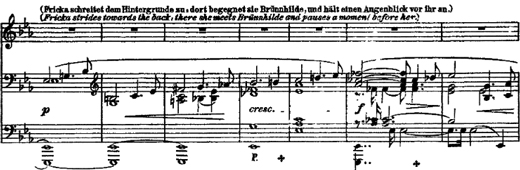
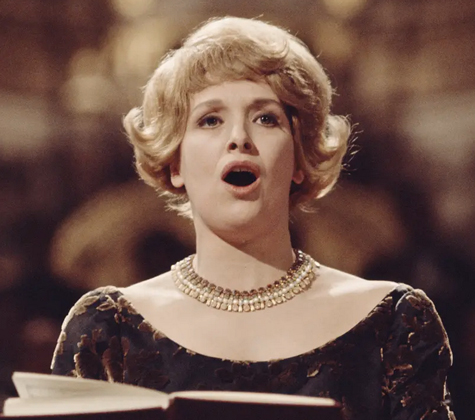
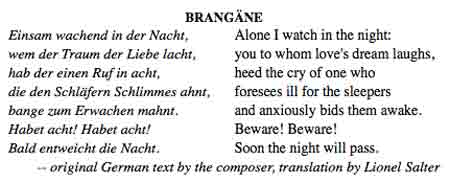
Josephine Veasey (ms), Brangäne; BBC Symphony Orchestra, Colin Davis, cond. Recorded for broadcast, 1969

Thursday, February 24, 2022

A few more words about (and a few more minutes with) Singer A


by Ken

After posting the sort-of-post "I wonder how much these three singers -- whom we heard recently, and who not so long ago would have been instantly recognizable (or almost) -- are even known now," I found myself remaking a couple of audio clips that have been in the DWT Archive for ages but that I thought I could do better, when it occurred to me that this might be a good time to share the "B" version. Partly I was also thinking that I hadn't done justice to "Singer A," or to my admiration for her. I might have mentioned, for example, that in the protracted period during which I've been toiling at various versions of this impending "post-cycle" I had occasion to dip into the archive and was startled but not really surprised to see how abundantly Singer A is represented there. Though I have no way of really knowing, it's possible that there are more clips of her than of any other performer in the history of Sunday Classics.

There was probably also some concern on my part that including any version of the clip we're about to hear would be a dead giveaway to Singer A's identity. That's even spooked me in my planning for the next post in this series, the one that's designed to give readers a proper samping of the singing of Singers A, B, and C. Well, too bad. As I've been thinking about my history with Singer A, I'm realizing that she is very likely the greatest singer whose career I've had the good fortune to witness at first hand. So without further ado, let's listen to the new version of this clip:


Singer A; Vienna Philharmonic, Herbert von Karajan, cond. Decca, from the Fledermaus "Gala" sequence, recorded in the Sofiensaal, June 1960


YOU KNOW, NOW THAT THE "SECRET" OF SINGER A'S
IDENTITY IS BLOWN, WE MIGHT AS WELL HEAR AS WELL --


Tuesday, February 22, 2022

I wonder how much these three singers -- whom we heard recently, and who not so long ago would have been instantly recognizable (or almost) -- are even known now


Let's call our first singer "Singer A" --


Singer A; National Philharmonic Orchestra, Charles Gerhardt, arr. and cond. RCA, recorded in Walthamstow Town Hall, London, May 10-13, 1982

by Ken

As I sort-of-explained in a post-placeholder that was up briefly, untold numbers of posts-in-progress, and in particular intersecting (or overlapping) cycles of posts, have been piling up in various state of incompletion, or maybe incompletability. What I put up briefly -- for the usual reason, that since the sh*ttification wrought by the Googlefiends since their takeover of Blogger, I still haven't found any way of seeing and hearing all the working parts of a post work short of actually publishing the thing -- was essentially a fleeting bit of what now stands to be the next-up post-cycle, and yet even so that pair of more or less self-contained scenes from a well-known show, totaling just about 15 minutes' playing time, had consumed a troubling number of hours over a bunch of days. For once instead of bitching and moaning about the grueling prospect of tending to all the details large and small, oh-so-many of them involving seemingly endless picayune picky-work, I had summoned uncommon stores of patience to just do it all, and by the end both excerpts were "done up" just about properly, including even the fully inserted vocal texts.

And "the end" is all too literally the case, since an hour or so after that chunk was posted, complete with a covering note explaining that at this point, now that I had the opportunity to check out and test those post-portions, I really no longer had any need to have them in "published" state but nevertheless meant to leave them up for a while in case any readers happened by -- well, at that hour-plus mark I worked my way through to the painful decision that I really couldn't use them, that thanks in part to the unaccustomed fastidiousness of the work product, it strayed too dangerously into copyright-infringement territory. So crashing down that stuff came.

Oh well.

SO, WE PROCEED -- TOWARD SOME CONSIDERATION OF
THE THREE SINGERS YOU'RE HEARING (AGAIN) TODAY


So much for my fleeting sensation of having brought all those grueling labors to an at least somewhat satisfactory result, not to mention the fleeing sensation of having finally gotten something, if not actually posted, finally, then at least made available for perusal.

So, to work. Before proceeding to Singers B and C --

Let's hear SINGER A sing the whole "Battle Hymn of the Republic"

Monday, January 3, 2022

We now hear our "elite" violin concertos in their entirety

As we edge forward with our Mendelssohn "sidebar" -- as I just explained -- it's time to hear these concertos in full.
[TUESDAY UPDATE: You might watch for updates to this post, like the one I just added for the Brahms Concerto.]

Last week ("Rondomania: A quick hit at violin-concerto rondo finales looking back from Mendelssohn to Mozart and Beethoven and ahead to Brahms and Sibelius"), pursuing the Mendelssohn "sidebar" that grew out of the Nov. 28 post "One Sunday afternoon in
August 1943 in Carnegie Hall . . .
," we listened to the great chain of violin concertos with rondo finales stretching out before and after Mendelssohn. I said at the time that I'd really like to be able to present those concertos in full. Well, here they are!


This all still needs to be integrated with a mostly written first part that continues the Mendelssohnian thread. And probably it should be improved in all sorts of other ways. I wouldn't hold my breath about that part, though. -- Ken

AGAIN, WE REALLY HAVE TO START WITH MOZART

In our original consideration of the place of the rondo finale in the line of the great violin concertos, we started with Mozart --

• not because he invented either the violin concerto or the rondo or even the use of the rondo in violin (and other) concertos, which he didn't, but because he grasped the possibilities of this combination in a way, or ways, that made it stick.

• and not because Mozart's violin concertos, taken on their own, are equivalent in stature to the line of violin concertos they did so much to inspire. The form -- the Classical concerto, that is, not to be confused with the Baroque one -- was still too new to aspire to that stature. (Thank you once again, Herr Beethoven.)

Not that the three "mature" concertos (which followed with scarcely any separation from the not-yet-mature ones) can't still hold their own on a concert platform. But you kind of feel that the audience needs at minimum a somewhat bigger kick, and the performer has to put out a portion more to earn his/her fee. So, with no disrespect to any of these much-loved works, I'm thinking of them maybe more as a collective than as separate entires in our violin-concerto sweepstakes. (If it were piano concertos we were tracking, I'm not sure I would take the same position. But Mozart's piano concertos come from a more developed stage of his creative energies. There are at least half a dozen Mozart piano concertos I'd consider worthy of inclusion in such a survey.

BUT: We're skipping the Mozart Violin Concertos Nos. 1-2

Continuing with our Mendelssohn "sidebar," moving backwards through the E minor Violin Concerto we reach the 2nd movement

-- from Classic FM


Jascha Heifetz, violin; Boston Symphony Orchestra, Charles Munch, cond. RCA, recorded in Symphony Hall, Feb. 23 & 25, 1959

Arthur Grumiaux, violin; New Philharmonia Orchestra, Jan Krenz, cond. Philips, recorded September 1972

Johanna Martzy, violin; Philharmonia Orchestra, Wolfgang Sawallisch, cond. EMI, recorded in Kingsway Hall, June 9-10, 1954

Yehudi Menuhin, violin; Philharmonia Orchestra, Efrem Kurtz, cond. EMI, recorded in Abbey Road Studio No. 1, April 1958

by Ken

I know, I know, this is a heckuva way of doing things. Midnight came and went, with a column called Sunday Classics, which thereby purports to appear on, you know, effing Sunday, and there was midnight, or rather there went midnight, and I was still making more audio files, presumably in some sort of effort to illustrate some kind of point -- God-only-knows what kind. (Probably not even God knows, but only because He has more useful things to worry about and doesn't care. Can anyone blame Him?) All I can say about this way of doing things is that I plan to figure out a better one and have it at the top of my "to do" list. I bet it'll be up and running by next week. I feel sure of it.

Well, pretty sure.

Only wait! There is a point here. In recent times I've been making increasingly frequent references to "what it is we're looking for in music" (or, really, any other art form), why we get involved with it, what we think it can do for and to us, and what it actually can do for and to us. And here in these 7-8 minutes of gorgeous musical outpouring are the answers. Why we're here, what it's all about, what we hope and dream, what challenges and sorrows us, how we nevertheless persevere. It's all there. Of course it's all still in musical form, so we still have to decipher it.

And of course a significant part of the musical genius is that it can provide such overwhelming beauty-in-sound as it offers up its secrets. It can do so even when the news it bears isn't happy -- or even is out-and-out tragic. And nobody does this better than Jascha Heifetz, as we can hear in his Mendelssohn Andante. Or note the even more arrestingly beautiful tone of Arthur Grumiaux, and the seemingly unconditional openness and forthrightness.

If you're not familiar with Johanna Martzy, her Andante is a splendid sample of the deep introspection and passion she served up in a career that somehow never measured up to her abundant gifts. And I encourage you to check out a deeply knowledgeable and understanding 2018 appreciation by Sudip Bose in The American Scholar, marred only by the off-putting -- no, let's call it what it is, "repulsive" -- title, "The Cult of Johanna Martzy." There really is a Martzy cult, as he describes in pungent detail at the outset: a cult of record collectors who pay mind-boggling prices for original issues of her sadly limited recorded output, prices based mostly on rarity rather than artistic merit. But the meat of the piece is precisely Martzy's considerable and singular artistic merit. (I was intrigued by Bose's enormous enthusiasm for her recording of the Dvořák Violin Concerto that I searched it out online, and was impressed enough that we're going to hear it in our violin-concerto survey.

Here's a sample. Our little clip begins with a brief but grabbing slow section that probably sounds to most listeners like a newly begun slow second movement. In fact, this little section marked "Andante moderato" is a kind of postlude to the first movement, or maybe just the start of a transitional section.


Johanna Martzy, violin; RIAS Symphony Orchestra (Berlin), Ferenc Fricsay, cond. DG, recorded in the Jesus-Christus-Kirche, June 1953


SPEAKING OF THE "ELITE"-VIOLIN-CONCERTO, THAT'S WHERE
WE'VE BEEN HEADING. MAYBE WE SHOULD JUST DIVE RIGHT IN!


Rather than tack it on to this post, I'm going to just leave it in the form it's been parked in, and direct you there from here.

Monday, December 27, 2021

Rondomania: A quick hit at violin-concerto rondo finales looking back from Mendelssohn to Mozart and Beethoven and ahead to Brahms and Sibelius

UPDATED with assorted touches here and there and at the end some promises of some "Mozart Rondo Bonuses" to come -- and maybe some other goodies.

FRIDAY UPDATE: Hey, what about the Dvořák Violin Concerto? Well, especially since we're focused on rondo finales, Dvořák needs to be here -- has anybody used the form better? (Note, by the way, how closely bunched in time the Brahms, Tchaikovsky, and Dvořák concertos are. Isn't this kind of amazing?)

rondo  n.  Music.  A composition having a principal theme that occurs at least three times in its original key between contrasting subordinate themes.
-- The American Heritage Dictionary of the
English Language
, 3rd ed., 1992
by Ken

No, Mozart didn't invent either the rondo (as we know it from the Classical era) or the idea of plunking it into emerging Classical sonata-form forms, let alone the idea of making it the standard way of rounding out the shape of the emerging Classical concerto. In the 1770s, it was just in the air. And if there's one thing that Mozart, growing out of adolescence into young adulthood, was alert to, it was what was in the air music-wise.

We know that he was interested early on in this newfangled kind of concerto that was coming into being. Goodness knows there'd been a ton of concertos in the now-passed Baroque era, but the burgeoning Classical world was developing something significantly different, and the 19-year-old Mozart had a good idea that he could do something with it.


MOZART SURE FIGURED OUT FAST WHAT THE RONDO COULD COULD DO FOR HIM -- AND HE COULD DO FOR THE RONDO

Which is why we're going to start our rondomania quick hit with the binge of concerto-writing Mozart did in 1775. As I mentioned in this week's main post (or, rather, main pre-post: "(Maybe one more little pre-post?) No, these 14 bars aren't The Most Beautiful Music Ever Written; they're what comes right after it"), these audio files were ready to go, and I'm putting them up in raw form so they'll be available for listening. And once the raw form is posted, I can listen to them too, and who knows? Maybe I'll figure out something to say about them.

[NOTE: While I don't usually include dates in composition listings, I've done so here since our vantage point here is the Mendelssohn E minor Violin Concerto and the place of its rondo finale in the line of the landmark violin concertos.]

Sunday, December 26, 2021

(Maybe one more little pre-post?)
No, these 14 bars aren't The Most Beautiful Music Ever Written; they're what comes right after it

Yes, we're still in "sidebar" mode from the Nov.28 post,
"One Sunday afternoon in August 1943 in Carnegie Hall"

We've already had a sidebar prompted by the opening work on that 1943 New York Philharmonic "Summer Broadcast Concert" program conducted by Fritz Reiner, the Overture to Dmitri Kabalevsky's opera Colas Breugnon ("Fun with Dmitri Kabalevsky," Dec. 5), in which we heard delicious compact concertos for violin, cello, and piano played by, respectively, David Oistrakh, Daniel Shafran, and Emil Gilels, with the composer conducting. And on Dec. 12 we edged forward with a "Pre-post to the upcoming post, 'Sidebars: (2) Mendelssohn and (4) More Mendelssohn'" -- mostly inspired by the second work on the August 1943 program, the Mendelssohn E minor Violin Concerto, which we heard in a recording made by Columbia in 1945 with the 1943 soloist, Nathan Milstein, rejoining the Philharmonic in Carnegie Hall, this time conducted by Bruno Walter. -- Ken


We have 8 performances by 4 violinists (from fastest to slowest):

[1] April 1944, violinist = age 43

[2] February 1959, violinist = age 58

[3] April 1935, violinist = age 60

[4] May 1945, violinist = age 41

[5] October 1949, violinist = age 41

[6] December 1955, violinist = age 47

[7] March 1973, violinist = age 69

[8] December 1926, violinist = age 51


by Ken

What we see and hear above is a mere 14 bars of music, music I'd heard, oh, probably a million times before it suddenly lodged in my head and wouldn't shake loose. As suggested in the post title, it follows immediately some music that's quite special to me -- music that in fact once did pretty much the same thing to me, back when I'd only heard it maybe a half-million times. But that at least was a whole movement, albeit not a terribly long one. Still, this is only a snippety 14 for-gosh-sakes bars.

So what I've done is gather these eight performances by four well-known violinists of the past, all long gone now -- the last survivor from the group left us in December 1992, and from this remove in time they probably all seem impossibly, even ridiculously ancient. Yet there are distinctions to be made. The oldest of them was a full 26 years older than the next-oldest. In fact, exactly 26 years older, as they shared a birthday, and I think it's fair to say that each was in turn the most famous violinist of his time. In fact, the older led the cheering for the wizardly upstart who had arrived to displace him.

The age gap matters. I think you'll instantly hear a stylistic difference between him and the younger men, who were born within an eight-year period of each other. And there's not just an age difference. One of our chaps hailed from Vienna, the other three from what we might call borderlands of the Soviet empire -- one from Lithuania, the other two from Ukraine (both from Odessa, actually).

The performances, you'll note, are arranged from fastest to slowest, though I can't claim scientific precision for my clip-making or -measuring. The three performances in the 46-47-second range can be considered a dead heat, for example. But note the gap between the two fastest peformances and the others, and for that matter between the slowest one and the others.

When we resume, we're going to have our eight perfomances again, this time all properly identified. And then we're going to call on our fiddlers four to answer the question these 14 hallowed bars so powerfully prompt.


Sunday, December 12, 2021

Pre-post to the upcoming post, "Sidebars: (2) Mendelssohn and (4) More Mendelssohn" -- in our series "One Sunday afternoon in August 1943 in Carnegie Hall . . . "

MONDAY EVENING UPDATE: Without quite intending it, I wound up giving this "pre-post" an overhaul, especially as regards the sequence of Mendelssohn excerpts at the end, which I'd assembled before posting with a speed that startled me, but at the expense of proper consideration of its explanatory requirements. I think we're way better prepared now to proceed to the post that this pre-post is supposed to set up. I just have to produce it. -- Ken

Columbia Masterworks' ML 4001 (1948), "the first classical long-playing record, and the first 12" LP of any kind" (per Wikipedia), was a rerelease of the May 1945 recording -- issued on 78s the year it was made -- of the Mendelssohn Concerto by Nathan Milstein, Bruno Walter, and the New York Philharmonic, which we first heard two weeks ago as a substitute for Milstein's August 1943 NY Phil broadcast performance with Fritz Reiner.
i. Allegro molto passionato
ii. Andante [at 11:06]
iii. Allegretto non troppo -- Allegro molto vivace [at 18:58]


Nathan Milstein, violin; New York Philharmonic, Bruno Walter, cond. Columbia, recorded in Carnegie Hall, May 16, 1945
by Ken

To catch up: We're enmeshed in a series of posts with the overall title "One Sunday afternoon in August 1943 in Carnegie Hall . . . ," which began on Nov. 28 with "Part 1: The concert." Part 2 was originally intended to present a series of "sidebars" to the concert post, which unfortunately turned out to be not amenable to single-post containment. As some readers will recall, the concert in question, by the New York Philharmonic under Fritz Reiner, on August 15, 1943, comprised three works: the Overture to Dmitiri Kabalevsky's first opera, Colas Breugnon; the Mendelssohn E minor Vioiin Concerto, with soloist Nathan Milstein; and the Shostakovich Sixth Symphony.

Last week we got as far as the Colas Breugnon sidebar, "(1) Fun with Dmitri Kabalevsky." (And even that post, I have to own, remains incomplete as of this writring. I haven't yet gotten to the promised follow-up insert music and performance thoughts prompted by the composer-conducted recordings we heard of Kabalevsky's Opp. 48-50: concertos for, respectively, violin, cello (No. 1, of two), and piano (No. 3, of four).

Which brings us to this week's installment, still under construction, with the working title "Sidebars: (2) Mendelssohn and (4) More Mendelssohn," leaving us still with one sidebar to come, "Sidebar (3)," which will take off from our hearing, in the Nov. 28 re-creation of the August 1943 concert, of the actual broadcast performance of the Shostakovich symphony, the work in which I was principally interested when I originally set us off on this post path. (At right we see again, from the New York Philharmonic Digital Archives, the Shostakovich Sixth score Leonard Bernstein marked up, which we can even digitally thumb through, for his 1963 Philharmonic performances and Columbia recording.)


IN OUR 1943 CONCERT RE-CREATION, THE ONLY
PERFORMANCE WE HEARD FROM THE CONCERT --


Sunday, December 5, 2021

'Sidebars' begin for last week's post, 'One Sunday afternoon in August 1943 in Carnegie Hall . . . ': (1) Fun with Dmitri Kabalevsky

NOTE: As you'll see when we get to the gap, this is a knowingly "to be filled in" post, which gives us a chance to do, as it were, some on-our-own listening together

Kabalevsky (1904-1987) at work

-- from the Carnegie Hall program for Sunday, August 15, 1943

KABALEVSKY: Colas Breugnon, Opp. 24/90:
Overture


Pittsburgh Symphony Orchestra, Fritz Reiner, cond. Columbia, recorded in the Syria Mosque, Pittsburgh, Mar. 26, 1945

Chicago Symphony Orchestra, Fritz Reiner, cond. RCA, recorded in Orchestra Hall, Mar. 14, 1959

by Ken

If you were here last week for the post in question, "One Sunday afternoon in August 1943 in Carnegie Hall . . ." [Nov. 28], you know that the date was August 15, the event was a New York Philharmonic "Summer Broadcast Concert," and that Fritz Reiner conducted a program consisting of the Overture to Dmitri Kabalevsky's opera Colas Breugnon, the Mendelssohn E minor Violin Concerto with Nathan Milstein as soloist, and the Shostakovich Sixth Symphony. And you know that we re-created the event after a fashion, though with the actual performance of the Shostakovich symphony that went out over the airwaves that day.

For the Kabalevsky overture we heard the recording we've just reherard above, which Reiner made a year and a half later, once Columbia Records made its peace with the striking musicians' union, with "his" orchestra at that time, the Pittsburgh Symphony. And for the Mendelssohn concerto we heard a 1945 performance when Milstein returned to Carnegie Hall to play and record the piece with Bruno Walter conducting the Philharmonic.

One other thing you may know from last week's post and the "pre-post" that preceded it, "Can we do a better job assembling the three movements of this symphony than, you know, the guy who composed them?" [Nov. 22], my main interest was the Shostakovich Sixth, of which we've also heard, in addition to the 1943 New York performance, a recording of the symphony that made in that flurry of activity when Reiner and the Pittsburgh Symphony were finally able to resume recording. In fact, the Colas Breugnon Overture was recorded as a filler for Side 8 of the four-78 set containing the Shostakovich Sixth.


IF YOU'VE BEEN HERE BEFORE, IT WON'T SHOCK YOU THAT
LAST WEEK'S POST PULLED MY MIND IN OTHER DIRECTIONS